Personalized Podcast
Golden Hook & Introduction
SECTION
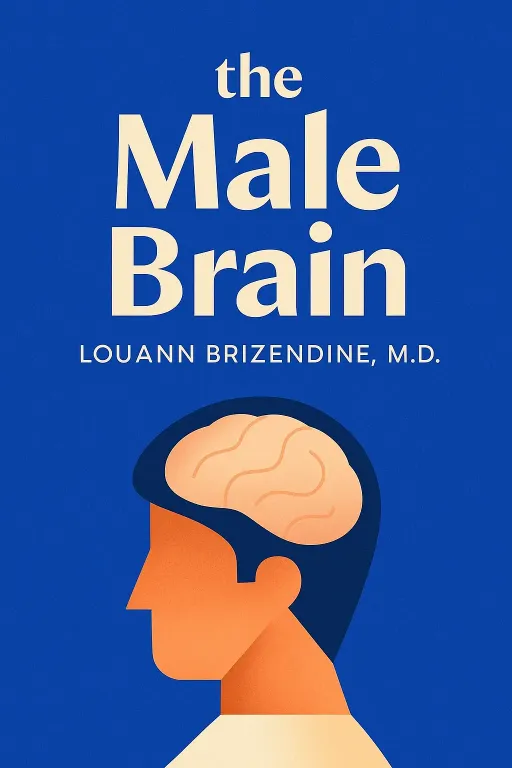
Prof. Eleanor Hart: Imagine coming home after a brutal day at work. You are exhausted, overwhelmed, and you just want to vent to your partner. You want to feel heard. But the very second you start sharing, they interrupt you with a five-step action plan to solve your problem. You feel dismissed and frustrated. They feel confused and helpless because, in their mind, they were just trying to help. Why does this happen? It is not a lack of love, and it is certainly not a lack of caring. It is a fundamental difference in brain architecture. Welcome to today's episode, where we are diving deep into the fascinating neurobiology of Dr. Louann Brizendine's landmark book,. I am joined today by analytical thinker laiba, whose sharp mind is going to help us connect the biological dots of human behavior. Welcome, laiba.
laiba: Thank you, Eleanor. I am absolutely thrilled to be here. You know, what fascinates me most about this book is how it challenges the lazy stereotype that the male brain is somehow simple or one-dimensional. When you look at the actual neuroscience, it is an incredibly complex, highly calibrated system. It is just calibrated differently than the female brain. I am really looking forward to dissecting how these biological blueprints manifest in our daily interactions and social structures.
Prof. Eleanor Hart: Exactly. We are going to tackle this from two distinct, powerful angles today. First, we will explore the "Cognitive Empathy Gap," looking at how specific structural hubs in the brain, like the Temporal Parietal Junction, wire men to be rapid, analytical problem-solvers. Then, we will map the "Hormonal Metamorphosis," tracing the chemical journey that systematically rewires a man's priorities from the competitive drive of youth to the nurturing instincts of fatherhood and, eventually, the quiet wisdom of mature age.
Deep Dive into Core Topic 1
SECTION
Prof. Eleanor Hart: Let us start with that classic relationship clash I mentioned in the intro. Dr. Brizendine illustrates this beautifully through a case study of a couple named John and Sarah. Sarah, a marketing manager, came home one evening completely overwhelmed by a stressful day. She was dealing with a difficult client and feeling immense pressure from her boss. She started sharing this with John, who is a software engineer. Now, John listened attentively for a few minutes, but then he immediately jumped in with solutions. He told her she needed to talk to her boss, delegate her tasks, or even start looking for a new job. Sarah felt completely unheard and shut down. John was left utterly bewildered. He thought he was doing exactly what a supportive partner should do.
laiba: It is the classic "fix-it-fast" response. And from an analytical perspective, what is happening here is a direct clash between two different neural networks. In the female brain, emotional distress in another person heavily activates the Mirror-Neuron System, or the MNS. This system allows for emotional empathy—it essentially mirrors the other person's emotional state, creating a sense of shared feeling, of being "in sync." But in the male brain, while the MNS activates initially, it very quickly hands off the task to another hub: the Temporal Parietal Junction, or the TPJ.
Prof. Eleanor Hart: Yes, the TPJ is what Dr. Brizendine calls the "solution seeker." It is the hub for cognitive empathy. Instead of sitting with the emotion, the male TPJ immediately rallies the brain's cognitive resources to analyze the problem, establish a boundary between the self and the other, and find a practical solution to alleviate the distress.
laiba: Right, and if we look at this through an evolutionary lens, it makes perfect sense. The TPJ's rapid handoff is highly efficient. If you are in a high-stakes, survival-oriented environment, spending too much time mirroring someone else's panic or fear could be catastrophic. You need to establish a cognitive boundary, analyze the threat, and fix it. John's brain was treating Sarah's work stress as a tactical problem requiring an immediate solution. He was using his cognitive empathy to protect her from the distress. But Sarah's brain was seeking emotional resonance. It is a fascinating mismatch of two highly evolved, highly functional systems.
Prof. Eleanor Hart: It really is. And this structural difference extends beyond the TPJ. The book also highlights the amygdala, which is the brain's alarm system for threats, fear, and danger. The amygdala is physically larger in men, and it is highly sensitive to testosterone and vasopressin. This means the male brain is biologically wired to register physical and territorial threats more intensely.
laiba: Which connects directly to another brain region mentioned in the book—the Dorsal Premammillary Nucleus, or the DPN. This area is also larger in males and contains circuits for territorial defense, one-upmanship, and physical aggression. So, when a man perceives a challenge to his territory or his status, his amygdala and DPN light up, flooding his system with adrenaline and cortisol. It is a rapid-fire threat response.
Prof. Eleanor Hart: And we see this in how boys play from a very young age. Dr. Brizendine shares stories of young boys, like David, who are naturally drawn to high-action, competitive, and physical play. In one study of a nursery school, the boys established a clear, stable dominance hierarchy by the end of just their second play session. They unanimously agreed on the ranking of every single boy in the group, and those rankings remained stable for six months. For boys, play is not just about having fun; its biological purpose is to determine social ranking.
laiba: That is a crucial point, Eleanor. The drive for status and hierarchy is deeply wired. And what is interesting is how the Prefrontal Cortex, the PFC—which is the brain's "CEO" responsible for impulse control and judgment—develops on a different timeline. The PFC is larger in women and matures much faster. In boys, the PFC is still under construction well into their early twenties, while their amygdala and reward centers are fully active. This creates a developmental gap where the drive for reward, status, and thrill-seeking is incredibly high, but the neurological "brakes" are not fully functional yet.
Prof. Eleanor Hart: It explains so much of the reckless behavior we see in teenage boys. Their reward systems are actually less sensitive than those of children or adults, meaning they require much more intense stimulation—like extreme sports, fast driving, or social risk-taking—to get that same dopamine hit.
laiba: Exactly. It is a systemic allocation of resources. The young male brain is optimized for exploration, competition, and establishing a place in the hierarchy. It is a high-risk, high-reward strategy designed by evolution to prepare them for the competitive arena of mate selection and resource acquisition.
Deep Dive into Core Topic 2
SECTION
Prof. Eleanor Hart: That transition into adulthood brings us naturally to our second core topic: the "Hormonal Metamorphosis." The male brain is not static; it undergoes profound chemical rewiring across a lifetime. And perhaps the most dramatic shift occurs when a man becomes a father. Dr. Brizendine shares the story of Tim, a thirty-four-year-old contractor. When his wife, Michelle, first got pregnant, Tim was incredibly anxious. He felt overwhelmed by the impending responsibility. But as the pregnancy progressed, something extraordinary happened. Tim started experiencing what is known as Couvade syndrome, or sympathetic pregnancy. He actually gained weight, experienced mild morning sickness, and became intensely focused on preparing the house—a biological "nesting" behavior.
laiba: This is where the science gets truly mind-blowing. Research shows that expectant fathers undergo significant hormonal shifts during their partner's pregnancy, likely triggered by maternal pheromones. Studies from Harvard and other institutions have found that in the weeks leading up to the birth, a father-to-be's testosterone levels drop by about thirty-three percent, while his prolactin levels—the hormone often associated with lactation and nurturing—increase by over twenty percent.
Prof. Eleanor Hart: Think about the elegance of that design. Testosterone, the hormone of aggression, dominance, and sexual pursuit, is dialed down. Prolactin, the "Mr. Mom" hormone, is dialed up. This chemical shift physically reshapes the "daddy brain," dampening the drive for competition and mating, and heightening sensitivity to a baby's cries and facial expressions.
laiba: It is a complete biological software update. From an analytical perspective, the brain is reallocating its resources. The energy that was once spent on defending territory and seeking mates is now redirected toward nurturing, protecting, and bonding with the infant. And the book notes that active, hands-on involvement in childcare actually strengthens these neural connections. The more a father holds, plays with, and cares for his child, the more his brain releases oxytocin—the "lion tamer" hormone—which fosters deep trust and emotional bonding.
Prof. Eleanor Hart: And fathers bring a very distinct parenting style to the table, which is equally crucial for a child's development. While mothers often excel at nurturing and emotional stabilization, fathers tend to engage in more physical, spontaneous, and unpredictable play. They wrestle, they throw children in the air, they encourage risk-taking within a safe boundary.
laiba: Yes, and that "rough-and-tumble" play serves a vital cognitive purpose. It teaches children how to regulate their own emotions, how to read nonverbal cues of dominance and submission, and how to navigate social boundaries. Dr. Brizendine points to studies showing that children of fathers who are active, structured disciplinarians actually achieve better grades and have fewer behavioral problems. It is a complementary system. The maternal and paternal brains offer different, yet equally necessary, developmental inputs.
Prof. Eleanor Hart: It is a beautiful partnership. And this hormonal journey does not end with fatherhood. As men enter their fifties and sixties, they undergo another shift—often referred to as andropause, or male menopause. Testosterone and vasopressin levels continue to decline, while the relative influence of estrogen and oxytocin increases. This leads to what Dr. Brizendine describes as a "kinder, gentler" mature male brain.
laiba: This shift is incredibly profound. The mature male brain moves away from the constant pressure of competition and dominance. The focus shifts toward legacy, mentorship, and companionship. We see this in the story of Tom, a sixty-four-year-old who, after navigating the physical and emotional challenges of andropause with his wife, Diane, found a completely renewed sense of purpose in becoming a grandfather to his grandson, Tommy. He went from being a career-driven, intense executive to a doting grandfather who would happily spend hours playing T-ball or teaching Tommy how to save money.
Prof. Eleanor Hart: It is a beautiful parallel to what we observe in nature, like the mature alpha-male silverback gorillas who transition from fierce warriors to gentle protectors of the entire troop, especially the young. And the neuroscience supports this. Brain imaging studies show that older brains actually have greater connectivity between the prefrontal cortex and the amygdala. This means mature men are biologically better at regulating negative emotions, letting go of grudges, and practicing forgiveness. As the saying goes, wisdom really does come with age.
laiba: It does. But there is a flip side to this stage of life that we must analyze: the critical importance of social connection. The book highlights research showing that loneliness is a massive health risk for mature men, comparable to smoking. Because men historically rely on their wives for social planning and connections, retirement can leave them incredibly isolated if they do not actively maintain their own relationships.
Prof. Eleanor Hart: Yes, the "warm touch" studies are so revealing here. Physical affection, holding hands, and social interaction actually lower blood pressure and reduce stress chemicals in mature men even more significantly than in women. Social connection is literally a matter of survival for the aging male brain.
Synthesis & Takeaways
SECTION
laiba: When you synthesize all of this, Eleanor, the overarching takeaway is that biology is not a cage, but it is a powerful, undeniable baseline. Throughout a man's life, his brain is being constantly reshaped by a dynamic interplay of genes, structural hubs, and hormones. From the high-octane, risk-taking teen brain to the protective father and the wise, empathetic grandfather, every stage has an evolutionary purpose.
Prof. Eleanor Hart: It really does. And understanding this biology is the key to bridging the empathy gap between men and women. Much of our relational conflict comes from having unrealistic expectations of each other because we fail to grasp these innate differences. When we realize that a partner's "fix-it" response is not a dismissal of our feelings, but a biological expression of care driven by their TPJ, we can stop taking it personally.
laiba: Exactly. "Biological literacy" allows us to depersonalize our conflicts. Instead of thinking, "He doesn't care about my feelings," we can think, "His brain is currently in solution-seeking mode." And we can communicate our needs more clearly—for example, by saying, "I just need you to listen right now, I don't need a solution yet." It empowers both sides. It turns frustration into collaboration.
Prof. Eleanor Hart: That is a beautiful and highly actionable takeaway, laiba. By understanding the unique architecture of the male brain, we do not excuse behavior, but we gain the compassion and clarity needed to build deeper, more resilient connections. Thank you so much for sharing your analytical insights with us today.
laiba: Thank you, Eleanor. It has been an absolute pleasure.
Prof. Eleanor Hart: And to our listeners, next time you find yourself in a communication mismatch, take a breath, remember the TPJ and the Mirror-Neuron System, and try to bridge the gap with a little biological empathy. Until next time, keep listening, keep learning, and stay curious.