The Founder's Compass: De-Risking Your Startup with The Lean Startup
Golden Hook & Introduction
SECTION
Nova: Imagine this: you pour your life into a startup. You have a brilliant idea, an amazing team, and a product that works flawlessly. You launch… and nothing happens. Crickets. This isn't a nightmare scenario; it's the grim reality for most new ventures. They, in the words of our author today, "achieve failure"—perfectly executing a plan that was fundamentally wrong.
Asoiso008: That's the thought that keeps founders up at night. The idea that all your hard work, all that capital, could be pointed in the wrong direction from day one. It’s terrifying.
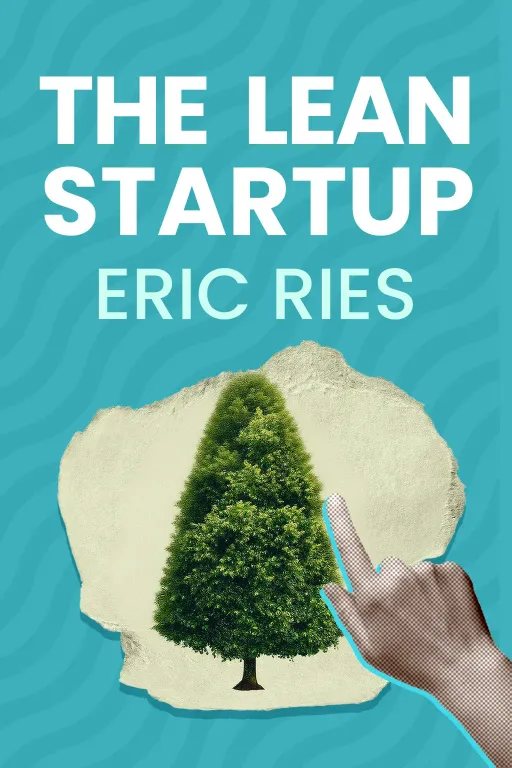
Nova: It is. But what if there was a way to navigate that uncertainty? Eric Ries, the author of "The Lean Startup," lived through this exact failure and it led him to a powerful question: What if we could build businesses more like scientists? Welcome to the show, Asoiso008. As a founder yourself, I can't think of a better person to explore this with.
Asoiso008: Thanks for having me, Nova. It's a topic that's less of an academic interest and more of a daily survival guide for me, so I'm excited to dive in.
Nova: Perfect. Today, we're going to tackle this from two perspectives. First, we'll explore the critical shift from just building a product to 'validated learning'—what it is and why it's the only metric that matters. Then, we'll demystify the most famous and misunderstood concept from the book: the Minimum Viable Product, or MVP, and show how it's really a tool for rapid experimentation.
Deep Dive into Core Topic 1: From 'Achieved Failure' to Validated Learning
SECTION
Nova: So let's start there, Asoiso008. This idea of 'achieving failure' is brutal. Eric Ries tells this incredibly vivid story about his first company during the dot-com bubble. The idea was to create online profiles for college kids to share with potential employers.
Asoiso008: Sounds like a pretty solid idea, even for today.
Nova: Exactly! They had a great team, amazing technology, and what seemed like the right idea at the right time. They worked tirelessly, perfecting the product. But then the dot-com bubble burst. Their funding dried up, and they couldn't raise more. Ries describes this rock-bottom moment of arguing with his co-founder in the street, not even able to agree on which direction to walk. The company failed. And his big, painful realization was that they didn't fail because their product was bad. They failed because they had the wrong.
Asoiso008: They were measuring their progress by how many features they built, not by whether anyone actually wanted them. They were flying blind, assuming their vision was correct.
Nova: Precisely. Now, contrast that with his next venture, IMVU. After that failure, his credibility was at an all-time low. But they had another huge vision: a 3D avatar-based social network. By traditional standards, they did everything wrong. They shipped a terrible, buggy, unstable first version of the product.
Asoiso008: That takes courage. Shipping something you know is broken.
Nova: It does! And they even charged money for it! They changed the product constantly, sometimes shipping new versions dozens of times a day. They were in a frantic cycle of building something small, measuring how customers reacted, and learning from it. That's the core of the Build-Measure-Learn feedback loop. The result? IMVU became a huge success, with over $50 million in annual revenue. Same founder, completely different process.
Asoiso008: Hearing those two stories side-by-side, the big takeaway for me is the redefinition of 'progress.' In the first story, progress was 'lines of code written' or 'features completed.' In the second, progress was 'valuable lessons learned.' It's the difference between vanity metrics and actionable metrics. We can be busy all day, but are we anything that will actually change our future decisions?
Nova: That's the heart of it! Ries calls it "validated learning." It's not just a gut feeling that you're learning; it's demonstrating empirically, with real data from real customers, that you've discovered valuable truths about your business. Anything else, any work that doesn't contribute to that learning, is waste.
Asoiso008: And that's a powerful filter for an early-stage founder. When you have a million things you be doing, the only question that matters is: which activity will teach us the most? It reframes the entire product roadmap. It's no longer a list of features to build; it's a list of hypotheses to test. Our backlog should be filled with questions, not just user stories.
Nova: I love that framing: a backlog of questions. It completely changes the goal of the work. You're not there to build, you're there to answer.
Asoiso008: Right. Are we building something people want? Will they pay for it? How will they find it? These are the real questions. The product is just the experiment we run to get the answers.
Deep Dive into Core Topic 2: The MVP: Your Fastest Path to the Truth
SECTION
Nova: Exactly! It’s all about learning. And the tool for that, the one everyone talks about but so many get wrong, is the Minimum Viable Product, or MVP. It's not about building a smaller, crappier version of your final product. It's about one thing: getting through that Build-Measure-Learn loop with the minimum amount of effort.
Asoiso008: This is a huge point of confusion. People think MVP means 'launch with fewer features.' But Ries argues it's about the fastest way to start learning. Sometimes, that doesn't involve building a product at all.
Nova: You are so right. And the book gives these brilliant, almost comically simple examples. Let's talk about Zappos. In the late 90s, the founder, Nick Swinmurn, had a hypothesis: people are willing to buy shoes online. A traditional approach would be to build a massive e-commerce site, lease a warehouse, stock it with thousands of shoes... a multi-million dollar gamble.
Asoiso008: A gamble based on a single, unproven assumption.
Nova: Right. So what did he do instead? He went to local shoe stores, asked if he could take pictures of their shoes, and posted the photos on a simple website. When someone ordered a pair, he would go back to the store, buy the shoes at full retail price, and ship them himself. That was his MVP.
Asoiso008: That's incredible. There was no inventory, no warehouse, no complex software. The 'product' was just him running around. But it answered the single most important question: will people click 'buy' on a picture of a shoe? He validated the core of the business model for the cost of a camera and a simple website.
Nova: He validated it perfectly! Or take Dropbox. The founder, Drew Houston, had a hypothesis that people wanted a seamless, 'it just works' file-syncing experience. But the technology to actually build that was incredibly complex. A real product would take months, maybe years.
Asoiso008: And it would be a massive technical risk. What if they built it and the sync was buggy or people just didn't get it?
Nova: Exactly. So, instead of building the product, he made a simple, three-minute video. It was just a screen recording of him narrating how the product work, filled with little in-jokes for the tech community he was targeting. He posted it on a forum for early adopters.
Asoiso008: And what happened?
Nova: The beta waiting list exploded. It went from 5,000 people to 75,000 people overnight. The video MVP proved, with overwhelming evidence, that people desperately wanted the solution he was describing. He got his validated learning without writing a single line of production code for the sync engine.
Asoiso008: Asoiso008: Wow. These MVPs aren't 'products' in the traditional sense at all. One is a concierge service, the other is a marketing asset. It completely shatters the idea that you need to be a coder to build an MVP. It makes me question everything we're building right now. Are we over-engineering our first version? What's our 'Zappos shoe photo' equivalent?
Nova: That's the question, isn't it? As a founder, how does hearing this change your thinking about your next product release or feature?
Asoiso008: It forces us to ask: what is the absolute riskiest assumption we're making? For many of us, it's not 'can we build it?' but 'should we build it?' and 'will anyone pay for it?'. These examples show that the most creative, and often most effective, MVPs are the ones that test customer behavior, not technical capability. It's about getting a commitment—a sign-up, a pre-order, their time—as a proxy for future business success.
Synthesis & Takeaways
SECTION
Nova: That's such a powerful insight. It's not about testing the tech, it's about testing the market. So, to bring it all together, we've seen that true startup success isn't about having a brilliant idea and executing it in a cave. It's about a scientific process of validated learning.
Asoiso008: A process of discovery, not just execution.
Nova: Exactly. And the fastest way to learn is by running these clever, simple experiments—these true MVPs—that test our biggest, scariest assumptions first. What's the one big idea you're taking away from this, Asoiso008?
Asoiso008: The biggest shift for me is thinking of my startup not as a company that builds a product, but as a laboratory that runs experiments. The product is just a byproduct of the successful experiments. It changes my role from 'Chief Builder' to 'Chief Scientist.' My job is to design the smartest, fastest experiments to find the truth.
Nova: I love that. 'Chief Scientist.' So for everyone listening, especially fellow founders, here's the challenge inspired by our conversation today: What is the single biggest, scariest, leap-of-faith assumption your entire business is built on?
Asoiso008: And once you have it, what is the absolute simplest, fastest, 'shoe-photo' experiment you can run this week—not next quarter, this week—to get some real, hard data on it?
Nova: A perfect question to end on. Asoiso008, thank you so much for bringing your founder's perspective to this. It was incredibly insightful.
Asoiso008: The pleasure was all mine, Nova. This was a great conversation.