The Network Effect is a Trap: Why You Need Antifragility for Innovation.
Golden Hook & Introduction
SECTION
Nova: Imagine you're trying to build the strongest possible bridge. You reinforce it, you protect it. You make it as robust as humanly possible. But what if the best way to make that bridge truly indestructible was to intentionally shake it, stress it, and even let it break a little?
Atlas: Hold on, Nova. Intentionally break it? That sounds… counterintuitive, to say the least. My first instinct, and I think for many of our listeners who are building strategic plans or innovative solutions, is to make things solid, resistant to damage. Why would we ever want to introduce weakness?
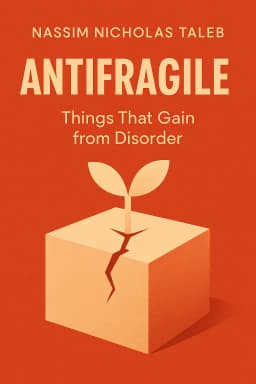
Nova: That's exactly the blind spot we're exploring today, Atlas. We're diving into a concept that flips our understanding of strength on its head, largely popularized by Nassim Nicholas Taleb in his highly acclaimed and influential book, Antifragile: Things That Gain from Disorder. Taleb, a former options trader and risk analyst, brought a unique, street-smart perspective to philosophy, challenging conventional notions of randomness and resilience.
Atlas: Right. He's not just an academic, he's someone who's seen the chaos of markets firsthand. That makes his insights particularly compelling for those of us who are trying to build enduring foundations.
Nova: Absolutely. And today, we'll dive deep into this from three perspectives. First, we'll challenge the conventional wisdom of 'robustness' and introduce antifragility. Then, we'll connect this powerful idea to a practical framework you might already know, The Lean Startup. And finally, we'll focus on how you can practically apply these concepts to strengthen your own ventures.
The Blind Spot: Beyond Robustness to Antifragility
SECTION
Nova: So, let's start with this idea of robustness. When we build something, whether it's a product, a company, or even a personal habit, our natural inclination is to make it robust. We want it to resist shocks, to bounce back, to endure. Think of a package designed to not break in transit. That's robustness.
Atlas: That makes sense. For anyone developing solid plans, the goal is always to create something that can withstand the inevitable bumps and challenges. Otherwise, what’s the point of building it in the first place?
Nova: Precisely. But here's Taleb's profound insight: robustness is often a trap. A robust system is designed to handle stressors. It's built to resist a specific range of shocks. But what happens when an shock hits? Something completely outside its design parameters?
Atlas: I mean, that sounds rough, but isn’t that just the nature of the game? You can’t plan for everything.
Nova: You can't plan for everything, but you can build systems that don't just the unknown, but from it. That's antifragility. An antifragile system doesn't just survive disorder; it gets stronger, better, more capable because of it. Think of the human immune system. Exposure to pathogens doesn't break it; it makes it more resilient, more knowledgeable for the next attack.
Atlas: So you're saying the network effect, for example, can create an illusion of strength because it’s robust to normal fluctuations, but it becomes incredibly brittle when faced with an unexpected, systemic shock?
Nova: Exactly! A highly optimized, rigid supply chain, for instance, might be incredibly robust to normal market demands. It's efficient, cost-effective. But introduce a global pandemic, and suddenly that robust system collapses because it wasn't designed to from that kind of disorder. It was only designed to resist known pressures.
Atlas: That’s a great way to put it. It’s like the difference between a meticulously organized library that can perfectly handle known requests, versus a dynamic research lab that thrives on unexpected discoveries and even failed experiments.
Nova: Perfect analogy! The lab gains knowledge, new pathways, new insights from every "disorder." The library, while robust to its purpose, doesn't necessarily from unexpected external events. It just tries to maintain its order.
Taleb's Antifragility Meets Ries's Lean Startup: A Symbiotic Relationship for Innovation
SECTION
Nova: This abstract philosophical concept of antifragility isn't just theory, Atlas. It has incredibly practical counterparts in the world of innovation. One of the best examples is Eric Ries's.
Atlas: The Lean Startup, I know that one! Build-measure-learn, MVPs, pivoting… These are core to how many innovators are solving problems today. But how does that connect to gaining from? It sounds more like avoiding disorder by being agile.
Nova: That's the beautiful synergy. The Lean Startup isn't just about avoiding disorder; it's about intentionally small, controlled doses of it. Each feedback loop, each minimum viable product, each pivot-or-persevere cycle – these are all micro-stressors.
Atlas: So you’re saying that the continuous feedback and adaptation aren't just good practices, but essential mechanisms for becoming stronger in the face of uncertainty?
Nova: Precisely. Imagine a tech startup launching an MVP. Initial user feedback is critical, and often, it's not what the founders to hear. It might be harsh, critical, pointing out flaws or misinterpretations of the market. A robust mindset might defend the original plan, or try to smooth over the feedback.
Atlas: Oh, I've been there. The temptation to convince users they're wrong, rather than admitting your perfect idea might have a flaw.
Nova: Exactly! But an antifragile, Lean mindset that "disorder." It sees the critical feedback as valuable data, a stressor that reveals weaknesses. The startup then pivots, adapts, redesigns based on this input. The product that emerges isn't just resilient; it's fundamentally better, more attuned to real needs because it from that initial disorder. It evolved.
Atlas: That gives me chills! So, the "failure" in "fail fast, fail often" isn't just about learning, it's about actually strengthening the core idea, making it more robust against future, larger failures. It's like the business itself is evolving, rather than just being fixed and hoping for the best.
Nova: You've hit the nail on the head. It's about designing your venture to learn and improve from every bump, every market shift, every piece of user input. The network effect can be a powerful force, but without this antifragile approach, even a large network can be brittle if its core offering hasn't been hardened and improved by continuous, intentional stressors.
Intentional Stressors: The Practical Path to Antifragile Innovation
SECTION
Nova: So, this brings us to the deep question for our listeners: How can you intentionally introduce small, controlled stressors into your current plan to identify hidden weaknesses and make your system stronger?
Atlas: Okay, so this is where the rubber meets the road. For someone building a strategic plan, or an innovator trying to make a lasting impact, how do you actually do that without just inviting chaos or undermining your own work?
Nova: That’s a great question, Atlas. It's about proactive stress-testing. Instead of waiting for a crisis to expose a weakness, you deliberately create mini-crises. For instance, A/B testing radical ideas, not just minor tweaks, to see how your audience truly reacts. Or actively seeking out critical feedback from diverse sources – people who think like you, who aren't afraid to challenge your assumptions.
Atlas: So, it’s not about asking for validation, it’s about asking for the holes in your logic.
Nova: Exactly. Another powerful technique is a "pre-mortem." Before launching a big project, gather your team and imagine it has completely failed six months from now. Then, work backward: what went wrong? What decisions led to that failure? This forces you to identify potential weaknesses you might otherwise overlook.
Atlas: That makes me wonder, how does this apply to a team dynamic? Could you introduce stressors there?
Nova: Absolutely! You could deliberately create small, controlled competitive scenarios within a team to foster innovative solutions, or rotate roles more frequently than comfortable to build cross-functional antifragility. It’s about building in optionality and redundancy, not just efficiency. It’s about making sure your foundations are not just solid but adaptable.
Atlas: So, it's about proactively finding the cracks, rather than waiting for them to become a chasm. It's like inoculating your plan against future shocks, making sure that what doesn't kill it truly makes it stronger.
Nova: Precisely. It’s about designing for evolution, not just endurance.
Synthesis & Takeaways
SECTION
Nova: So, when we talk about innovation and building lasting solutions, the core takeaway is this: antifragility isn't about avoiding problems; it's about structuring things so problems, disorder, and volatility actually make them better.
Atlas: That’s a great way to put it. The network effect can be a trap because it creates this illusion of strength and stability, but without intentional stressors, that strength is brittle. We need to build systems, plans, and even mindsets that get stronger from the unexpected.
Nova: This perspective shift is crucial for true, lasting innovation. It moves us from a defensive stance to an offensive one, where every challenge is an opportunity for improvement.
Atlas: For our listeners who are constantly refining their business blueprints and seeking lasting impact, this is a powerful framework. Instead of just trying to avoid failure, maybe we should be asking: "How can this challenge make us stronger? How can we deliberately invite the right kind of disorder to build something truly antifragile?"
Nova: That's the question we want to leave you with today. How can you intentionally introduce small, controlled stressors into your current plan to identify hidden weaknesses and make your system stronger?
Atlas: Think about it, and let us know what you discover.
Nova: This is Aibrary. Congratulations on your growth!