Stop Guessing, Start Shaping: The Guide to Data-Driven Innovation.
Golden Hook & Introduction
SECTION
Nova: We all love a good gut feeling, don't we? That flash of intuition that tells you exactly what to do, that spark of genius that just.
Atlas: Oh, absolutely! As leaders, we're often told to trust our instincts, to lead with conviction. It’s almost a badge of honor, isn't it? That visionary moment.
Nova: It is! But what if that gut feeling, that reliance on intuition alone, is actually holding your innovation back, turning every new product launch or strategic pivot into a high-stakes gamble?
Atlas: Hold on. Are you saying our instincts, the very thing that often propels us forward, could be a liability? That's a bit counterintuitive for someone trying to shape the future.
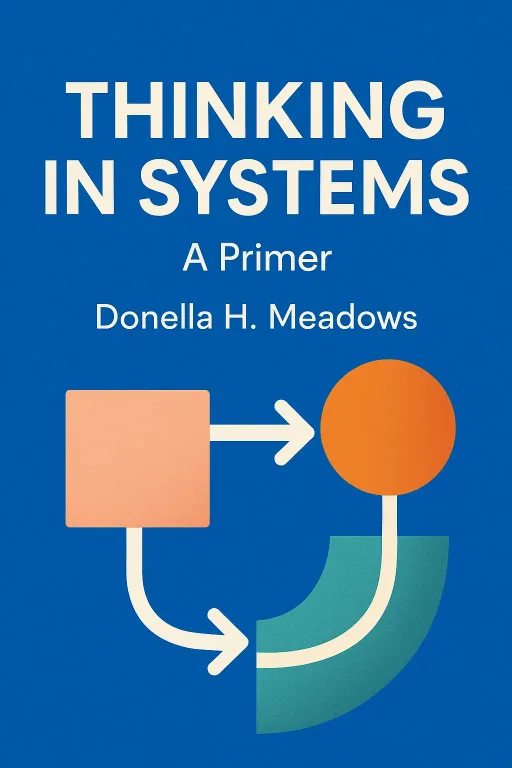
Nova: Precisely. Today, we're tearing down that myth. We’re diving into "Stop Guessing, Start Shaping: The Guide to Data-Driven Innovation," and we're drawing insights from two absolute titans. First, Donella H. Meadows, a pioneering environmental scientist whose groundbreaking work quite literally shaped our understanding of complex systems, from ecosystems to economies. She taught us how to see the invisible forces at play.
Atlas: Oh, I like that. The invisible forces. Very intriguing.
Nova: And then there's Eric Ries, the Silicon Valley entrepreneur who, after experiencing his own high-profile startup failures and then massive successes, fundamentally changed how we think about building products. He turned the chaos of innovation into a repeatable, scientific method. Together, their work shows us how to move beyond merely observing outcomes to actively designing and influencing them.
Atlas: So, it's about going from being a passenger to the architect of our own innovation destiny. I'm in.
Deep Dive into Core Topic 1: The Power of Systems Thinking: Seeing the Whole Picture
SECTION
Nova: So, let's start with Donella Meadows and the profound power of "Thinking in Systems." Imagine your business, your product, or even a specific team challenge not as a collection of isolated parts, but as a living, breathing system. Everything is connected.
Atlas: That makes sense conceptually, but for a strategic architect staring down a complex product roadmap, everything connected, which can often feel more overwhelming than empowering. How do you even begin to a system when everything feels chaotic?
Nova: That’s the magic. Meadows showed us how to identify two crucial elements: feedback loops and leverage points. Think about customer churn, a classic business challenge. Most companies react by throwing incentives at departing customers or revamping marketing. That’s like treating a symptom.
Atlas: Right, it’s a quick fix, a band-aid. But it often doesn't solve the root cause, and then the problem just pops up again later.
Nova: Exactly. If you look at churn as a system, you might identify a where poor customer service leads to negative reviews, which deters new customers, which then strains resources further, leading to even worse service. It's a downward spiral. Or, you might find a where, say, customer complaints lead to product improvements, which then reduces complaints and balances the system.
Atlas: Okay, so seeing the spirals and the balances. But where’s the power in that? How do I, as a leader, actually it?
Nova: That’s where leverage points come in. Meadows identified them as places within a system where a small shift can produce big changes. It’s not about pushing harder; it’s about pushing in the right place. For that churn example, the leverage point might not be the marketing campaign or the incentive. It could be something as subtle as empowering frontline customer service reps with better decision-making authority, or a specific feature in your product that consistently causes frustration.
Atlas: So, instead of just reacting to the numbers, you're pinpointing the actual control panel. That’s actually really inspiring. It means you don't have to overhaul everything. You just need to find that one precise spot.
Nova: Think of it like a thermostat in a house. You don't try to cool the house by opening all the windows in winter. You adjust the thermostat – that's your leverage point. A company that failed to see the system might keep adding more sales staff to combat declining revenue, when the real leverage point was an outdated product that their sales team couldn't genuinely advocate for. They were pushing harder in the wrong place.
Atlas: That makes me wonder, how many times have I seen teams push harder, longer hours, more budget, when the actual solution was a tiny, intelligent tweak in a completely different part of the system? It's like trying to fix a leaky faucet by mopping the floor faster.
Deep Dive into Core Topic 2: The Lean Startup's Build-Measure-Learn Loop: Iterating Towards Innovation
SECTION
Nova: That's a perfect analogy, Atlas. And once you start seeing those systems and leverage points, the next question is: how do you them effectively and intelligently? How do you test your assumptions about those leverage points without betting the entire farm? That’s where Eric Ries and "The Lean Startup" come in with the brilliant Build-Measure-Learn feedback loop.
Atlas: Ah, the Lean Startup. I’ve heard the term thrown around a lot, often in a way that implies cutting corners. But for leaders who need to deliver impactful, future-forward solutions, doesn't "lean" sometimes feel like it might compromise quality or vision?
Nova: That’s a common misconception, and a great question. Ries isn't advocating for shoddy work. He's advocating for in entrepreneurship. It’s about turning uncertainty into actionable data, not just guessing what customers want. The loop is simple: Build, Measure, Learn.
Atlas: So, "Build" means… just make the product?
Nova: Not quite. "Build" means creating a Minimal Viable Product – an MVP. It’s the smallest possible thing you can create to test your core hypothesis. It's not about perfection; it's about learning. Think of it like Dropbox's early days. Instead of building a full-fledged sync product, they tested the core idea with a simple video demonstrating the concept. That was their MVP.
Atlas: Wow, that’s a clever way to "build" without actually building a massive infrastructure. So, then you "Measure." What does that look like in practice for a leader trying to drive impact?
Nova: You measure with actionable metrics. Not vanity metrics like total downloads, but metrics that show. Are users actually using the feature you built? Is it solving the problem you hypothesized? For that Dropbox video, the measure was sign-ups and interest. It was overwhelming. If it had been lukewarm, they would have learned to pivot.
Atlas: Okay, so you build the bare minimum, you measure the real impact, and then you "Learn." How does that translate into shaping a bigger vision?
Nova: "Learn" is the pivot or persevere decision. Based on your measurements, do you continue down your current path, or do you change direction? This is where your vision, your strategic foresight, truly comes into play. The data doesn’t replace your vision; it it, making it stronger and more resilient. It’s how you build conviction, not just mitigate risk. A great example is Slack. It started as a gaming company building a game called Glitch. The game failed, but their internal communication tool was so good, they pivoted the entire company. That was a massive 'learn' moment.
Atlas: That’s incredible. So, they didn't abandon their vision for a great product; they just learned that the to that product was different than they initially thought. It's about being agile with your tactics, not your entire purpose. That’s going to resonate with anyone who has poured their heart and soul into a project only to realize they were solving the wrong problem. It's about making sure your sharp instincts are backed by hard evidence.
Synthesis & Takeaways
SECTION
Nova: Exactly, Atlas. When you combine Meadows' "Thinking in Systems" with Ries' "Build-Measure-Learn," you get an incredibly powerful framework. Systems thinking gives you the comprehensive map, helping you identify those critical leverage points where change will have the most impact. The Build-Measure-Learn loop then gives you the scientific, iterative navigation tools to test your assumptions about those leverage points, ensuring you're influencing the system in the most effective way possible, turning uncertainty into actionable data.
Atlas: So, it's about seeing the whole playing field, understanding its interconnected dynamics, and then having a repeatable, data-driven method to make precise, impactful moves. It moves us from hoping for innovation to actively engineering it. That's a game-changer for any leader who aims to build, master, and shape tomorrow.
Nova: It absolutely is. And the tiny step you can take right now, to start applying these powerful ideas, is to map a current product challenge as a system. Identify its key components, those reinforcing and balancing feedback loops we talked about, and then pinpoint just leverage point for change. Don’t try to fix everything at once. Find that single, most impactful place to push.
Atlas: That’s incredibly practical. It transforms an overwhelming challenge into a clear, actionable experiment. It’s about trusting your vision but validating it with intelligence.
Nova: Precisely. It’s about moving beyond intuition, beyond guessing, and truly starting to shape the future with data-driven conviction.
Atlas: That’s a powerful message.
Nova: This is Aibrary. Congratulations on your growth!