Stop Guessing, Start Scaling: The Playbook for Product-Market Fit.
Golden Hook & Introduction
SECTION
Nova: Forget the "build it and they will come" fairytale, and ditch the idea of a sudden "aha!" moment for your product. Because the truth about finding your first users is actually far more systematic, and frankly, a lot less magical.
Atlas: Oh, I like that! But come on, Nova, isn't there magic in a truly great idea? That spark of genius that just… explodes?
Nova: There’s magic in the idea, absolutely, Atlas. But the to getting that idea into the hands of the people who need it? That’s pure, hard-won science. Today, we're diving into the playbook for that science, a theme we’re calling "Stop Guessing, Start Scaling: The Playbook for Product-Market Fit." And two foundational texts illuminate this path like few others.
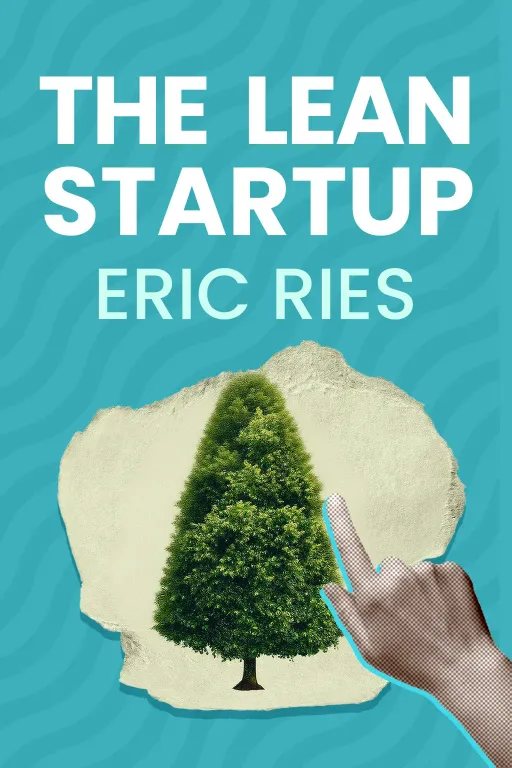
Atlas: Yes, because for anyone out there driven by creation, by building truly meaningful solutions, the biggest heartbreak is building something brilliant that never finds its audience. We're talking about "Traction" by Gabriel Weinberg and Justin Mares, and "The Lean Startup" by Eric Ries.
Nova: And what’s fascinating about "Traction" is that Gabriel Weinberg, as the founder of DuckDuckGo, had to fiercely differentiate and find unique acquisition paths against a behemoth like Google. His insights on diverse channels aren't just theoretical; they’re battle-tested and incredibly practical for anyone trying to carve out a space in a crowded market.
Atlas: Exactly. And Eric Ries, with "The Lean Startup," observed widespread failure in tech startups due to a lack of scientific rigor. He shifted the paradigm, arguing that building a new product isn't about grand plans, but rapid, iterative experimentation, fundamentally changing how founders approach product development and validation.
Nova: So, today we're going to explore how these two powerful frameworks combine to solve that fundamental challenge of unknown customer acquisition. It's about systematically acquiring your first users, and then continuously learning and adapting to ensure your product truly resonates with those users.
Systematic Customer Acquisition: The Traction Playbook
SECTION
Atlas: Okay, so let's tackle that first piece: how do you actually get those first users? Because I imagine a lot of our listeners, who are building innovative solutions, have poured their heart and soul into their product. They just assume if it’s good enough, people will find it.
Nova: That’s the classic trap, isn't it? The "build it and they will come" fallacy. "Traction" shatters that by revealing there are actually nineteen distinct customer acquisition channels. Not just social media, not just advertising, but things like community building, search engine optimization, public relations, even offline events.
Atlas: Nineteen? That sounds like a lot to manage. Isn't that just throwing spaghetti at the wall to see what sticks? How do you pick of the nineteen to even start with, especially for someone building a genuinely new solution, where do they even begin to acquire users?
Nova: That’s a great question, and it speaks to the "architect" in our listeners. The book isn't about trying all nineteen. It's about a disciplined, experimental approach. They introduce something called the "bullseye framework." You brainstorm every possible channel, then you rank the most promising few—the inner ring of the bullseye.
Atlas: So you're saying, don't just pick the 'obvious' one?
Nova: Precisely. For example, imagine a startup creating innovative, sustainable packaging for e-commerce. Their obvious thought might be digital ads. But what if they explored "community building" by partnering with eco-conscious influencer groups, or "business development" by directly approaching sustainable brands?
Atlas: That makes me wonder, what's a "small, measurable test" for a channel like "business development" that an innovator might overlook?
Nova: Oh, that’s a perfect example. For business development, a small test isn’t signing a huge contract. It might be identifying five target companies, crafting a personalized outreach email, and tracking the response rate. Or for community building, it could be hosting one small online workshop for a niche group and measuring attendance and engagement. The key is to design a test that’s quick, cheap, and gives you data.
Atlas: I can see how that would be pragmatic. So it's about moving beyond just product features and treating customer acquisition itself as a scientific endeavor, right?
Nova: Exactly. It’s about being proactive and systematic. It's understanding that even the most brilliant idea needs a well-trodden path to its first users. And once you find that path, you scale it. But that brings us to the next crucial piece of the puzzle. Getting users is one thing, but are they the users for the product?
Validated Learning & Iteration: The Lean Startup Loop
SECTION
Atlas: That makes sense for getting people in the door. But once they're there, how do you know if you've actually built something they? Because I imagine a lot of our listeners, who are driven by creating meaningful solutions, want to avoid building something perfectly, only to find it's for no one. That sounds rough, but it happens all the time.
Nova: It absolutely does, Atlas. And that’s where Eric Ries’s "The Lean Startup" comes in with its Build-Measure-Learn feedback loop. It’s a scientific approach to product development, turning your entire venture into a series of experiments.
Atlas: So you’re saying, don’t just build the whole thing in a vacuum?
Nova: Precisely. Think about a new AI-powered learning platform. An innovator might spend a year building a comprehensive curriculum, advanced analytics, and a dozen interactive features, all based on their initial assumptions about what students need. Ries would argue that’s incredibly risky.
Atlas: Okay, so what’s the alternative? How does the Build-Measure-Learn loop work there?
Nova: Instead, you start with a Minimum Viable Product, an MVP. For our AI learning platform, that might be just one core feature – say, an AI tutor for a single subject – and you build it quickly. That’s the "Build." Then you get it into the hands of real students as fast as possible, and you "Measure" how they use it, what features they gravitate to, what they ignore, what questions they ask.
Atlas: And the "Learn" part? Is that just looking at the data?
Nova: It’s more than just looking at data; it’s about "validated learning." It’s analyzing that feedback to either "pivot"—meaning you change a fundamental hypothesis about your product or strategy—or "persevere" if your initial assumptions are confirmed. Maybe your students loved the AI tutor but hated the gamification elements. Your learning is that gamification isn't a core need.
Atlas: But wait, for an innovator, 'pivoting' can feel like abandoning their core vision. How do you balance that drive for a meaningful solution with the cold hard data telling you to change direction?
Nova: That’s a powerful point, and it’s a common struggle. The key is to reframe "pivot" not as failure, but as a strategic course correction based on. It’s about having the courage to say, "My vision is to solve a problem, not to build." The Build-Measure-Learn loop makes that less painful because you're making smaller, faster changes, not abandoning years of work.
Atlas: Can you give an example of a 'small, measurable test' that helps validate a, not just an acquisition channel?
Nova: Absolutely. For our AI learning platform, it could be as simple as an A/B test on onboarding. Does a video tutorial or an interactive walkthrough lead to higher completion rates for the first lesson? Or even more basic: a landing page with a sign-up button for a feature that doesn't exist yet, to gauge genuine interest before you even build it. That's a test of desire for the solution itself.
Atlas: Wow, that’s actually really inspiring. It turns product development from a gamble into a series of informed decisions, which I imagine resonates deeply with anyone trying to build something truly impactful.
Synthesis & Takeaways
SECTION
Nova: Exactly. Because here's the profound insight: product-market fit isn't a single 'aha!' moment you stumble upon. It's the continuous, disciplined dance between acquiring users through systematic experimentation, and then building the right solution for them through validated learning.
Atlas: So, it's not about guessing what people want, it's about systematically finding them and then letting them tell you, through their actions, what they truly need. It's a feedback loop on steroids, applied to both getting customers and serving them.
Nova: That’s it. The true genius of these approaches lies in their discipline. It's the courage to launch imperfectly, to listen humbly, and to adapt relentlessly. It's how meaningful solutions finally reach the people they're designed to help, and then scale to make a real impact.
Atlas: That’s a powerful message. And for our listeners, the innovators, connectors, and architects out there, here's your tiny step for the week: pick one customer acquisition channel from “Traction” that you haven't explored yet, and design a small, measurable test for it this week. It could be anything from a targeted LinkedIn post to a local community event.
Nova: We'd love to hear what channels you're testing and what you're learning! Share your ideas with Aibrary; we're always excited to see how our community is putting these insights into action.
Atlas: This is Aibrary. Congratulations on your growth!