Stop Guessing, Start Designing: The Path to Sustainable Business Models
Golden Hook & Introduction
SECTION
Nova: Atlas, quick — what's the worst, most cliched business advice you've ever heard?
Atlas: Oh, easy. "Just build it, and they will come." Spoken by someone who clearly never had to pay rent, or, you know, understand basic market dynamics.
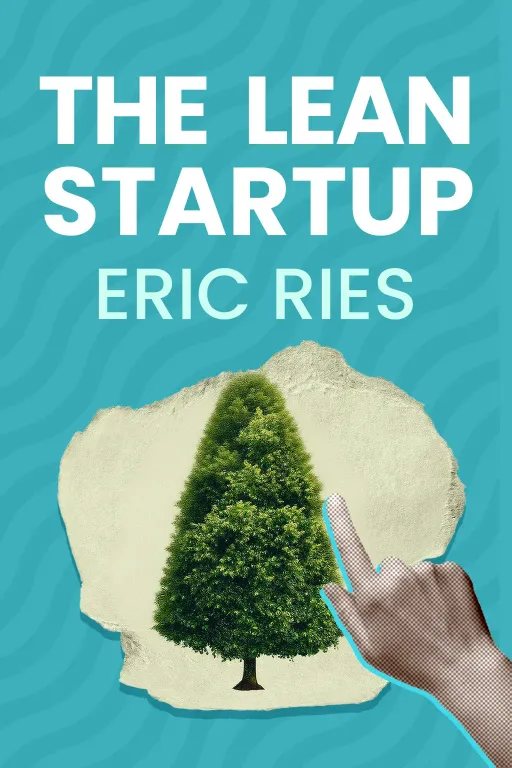
Nova: Exactly! That's the kind of simplistic thinking that sends brilliant innovations straight to the startup graveyard. And that's precisely what we're tackling today, with insights from two seminal works: by Eric Ries, which fundamentally shifted how we think about product development, and by Alexander Osterwalder and Yves Pigneur.
Atlas: A visual language for strategy. I love that description. So, it's not just another dense theory book that gathers dust on a shelf? Because as an architect of new ideas, I need tools that are immediately applicable, not just academic musings.
Nova: Not at all. Osterwalder and Pigneur’s work, in particular, gave us a powerful visual language for strategy that has since been adopted by countless startups and established enterprises alike, making complex ideas incredibly accessible. It’s about getting hands-on, not just head-in-the-clouds. And that really brings us to the core issue.
Atlas: Which is?
Nova: The cold, hard truth: many brilliant products fail not from lack of innovation, but from a poorly defined or untested business model.
The 'Why': Beyond Brilliant Products – The Imperative of Business Models
SECTION
Nova: Think about it, Atlas. We're surrounded by stories of incredibly innovative products that just… vanished. Remember those early smart home devices that were ahead of their time, but clunky to integrate? Or groundbreaking social media platforms that couldn't figure out how to make money without alienating their users?
Atlas: Oh, I remember. The tech graveyard is littered with "brilliant" ideas that just couldn't quite connect. But Nova, for someone who's driven by impact, by creating something truly new and disruptive, that sounds almost counter-intuitive. Are you saying innovation isn't enough? That the product itself is secondary?
Nova: Not secondary, but inseparable from its value ecosystem. Eric Ries, in, essentially says, "Stop guessing, start designing." He challenges the traditional approach where you spend years perfecting a product in stealth mode, only to launch it and hope for the best.
Atlas: That's the classic "build it and they will come" trap, isn't it? The belief that sheer technological superiority will conquer all.
Nova: Exactly. Ries introduced the concept of "validated learning," which is about continuously testing every aspect of your business idea, not just the product features, with real customers. Imagine a team spending years developing a revolutionary VR headset. The optics are stunning, the haptics are immersive, it’s a technological marvel. They pour millions into R&D, believing the product's brilliance will speak for itself.
Atlas: So, they launch with a massive fanfare, right? Big marketing budget, all the buzz.
Nova: Precisely. But they quickly discover their distribution model is flawed—it’s too expensive to get into enough retail stores. Their pricing strategy, based solely on development costs, is too high for the average consumer, and they didn't anticipate the need for a robust content ecosystem to keep users engaged.
Atlas: Uh oh. Sounds like a recipe for a very expensive flop, despite the incredible engineering.
Nova: It is. They had a brilliant, but a poorly conceptualized, and more importantly, business model. They didn't consider how value would be beyond the device itself, who their true was beyond "tech enthusiasts," or how they would that value sustainably. They assumed their product was the entire story.
Atlas: So, validated learning means you're almost running mini-experiments on your business model from day one? Not just on whether the buttons work, but on whether people will pay for it, how they'll get it, and why they'll stick with it?
Nova: Exactly. It's about building a sustainable business by adapting to customer feedback across all nine building blocks of your business, not just launching a product and hoping for the best. It's about designing for survival, not just for innovation. And that brings us perfectly to the "how."
The 'How': Blueprinting Success with the Business Model Canvas
SECTION
Nova: So, if "building it and they will come" is a myth, and validated learning is the mindset, how do we actually for arrival? That's where Osterwalder and Pigneur's Business Model Canvas becomes indispensable.
Atlas: Okay, a "canvas" sounds a bit like an art project. How does this help an "Architect" who loves structure and proven methods, but also needs to innovate? Isn't it just a static diagram for something incredibly dynamic?
Nova: That's the beauty of it, Atlas. It's a visual, dynamic tool. Imagine a single-page blueprint, divided into nine essential building blocks, that lets you see your entire business model at a glance. It's not static; it's a hypothesis generator that you constantly iterate on, much like an architect sketching and refining designs.
Atlas: So, instead of a hundred-page business plan nobody reads, it’s a living document?
Nova: Exactly. It forces you to consider all nine interconnected aspects: your Customer Segments, what Value Propositions you offer them, how you reach them through Channels, how you build Customer Relationships, what Revenue Streams you'll generate, what Key Resources you need, what Key Activities you'll perform, who your Key Partners are, and what your Cost Structure looks like.
Atlas: Wow, that's a lot to consider. It sounds comprehensive, but also like it could be overwhelming. What's the biggest benefit for someone trying to launch something new, who might be wearing all nine hats themselves?
Nova: It makes strategy tangible. It helps you identify your. Let’s take a contrasting example to our failed VR headset. Imagine a small team creating a highly customized subscription box for niche hobbyists—say, artisanal cheese makers who want rare ingredients sent to them monthly. Not revolutionary tech, right?
Atlas: Sounds extremely niche, actually. My immediate thought is, "Who would pay for that?"
Nova: Exactly! That's the riskiest assumption. But using the Canvas, they map it out. Customer Segments: "Serious home cheese makers." Value Proposition: "Access to rare, high-quality ingredients and unique recipes." Channels: "Direct-to-consumer website, specialized forums." Revenue Streams: "Monthly subscription." They realize their riskiest assumption isn't the product itself—they know how to source great cheese-making ingredients—it's whether there are serious home cheese makers willing to pay a premium for a monthly box.
Atlas: So, they don't just launch a full-scale operation, do they?
Nova: No! That's where principles blend with the Canvas. They design a tiny experiment: a landing page with a "pre-order" button, offering a limited number of boxes. They run targeted ads in cheese-making forums. They measure sign-ups. If they get a certain number of pre-orders, that validates their riskiest assumption about customer demand and willingness to pay. If they don't, they pivot or refine.
Atlas: That makes so much sense. It's about testing the of value, not just the product. It’s a blueprint that tells you where the structural weaknesses might be, and then gives you a way to test them before the whole building collapses. How do you even decide which assumption is the "riskiest" to test first?
Nova: Usually, it's the one that, if proven wrong, completely invalidates your entire idea. For the cheese box, it wasn't whether they could find ingredients, it was whether a market existed. For the VR headset, it might have been whether the target market could afford it, or if they valued a content ecosystem. The Canvas helps you visualize those dependencies.
Synthesis & Takeaways
SECTION
Nova: So, what we’re really talking about here is a profound shift. It’s moving from the romantic notion of the lone genius product inventor to the pragmatic, strategic designer of an entire value-creation machine. Innovation isn't just about the product itself; it's about meticulously designing how that product creates, delivers, and captures value in a sustainable way.
Atlas: Absolutely. It’s about understanding that a brilliant product is only brilliant if it can actually survive and thrive in the real world. For anyone out there who's an architect of new ideas, someone who values proven methods and is driven by creating lasting impact, this isn't just theory. It's the path to ensuring your vision doesn't just launch, but truly endures.
Nova: Exactly. It's about moving beyond guessing and truly starting to design.
Atlas: So, for our listeners, here's a tiny step you can take this week: take your current or next product idea, map it onto a Business Model Canvas—you can find templates online—and identify your single riskiest assumption. Then, design a small, quick experiment to test just that one assumption.
Nova: See if your cheese box has enough willing customers, or if your VR headset's content strategy resonates.
Atlas: It's about building a foundation that can actually hold the weight of your brilliant ideas.
Nova: This is Aibrary. Congratulations on your growth!