Stop Guessing, Start Defining: The Blueprint for Product-Market Fit
Golden Hook & Introduction
SECTION
Atlas: You know, Nova, if I had a dollar for every brilliant idea that crashed and burned because it was just... the wrong idea, I'd probably be retired on a yacht right now.
Nova: Oh, I know that feeling! It’s like, all that effort, all that passion, just building a magnificent ship that sails perfectly, but into a desert. It’s heart-wrenching to witness.
Atlas: Exactly! And for those of us who are driven by impact, who want to build lasting foundations, that kind of failure is just, well, it’s not an option. It’s not just about the money; it’s about the wasted potential, the unfulfilled promise.
Nova: You’ve hit on the core challenge, Atlas. Many brilliant ideas fail not due to a lack of effort, but from building the wrong thing entirely. And that's exactly what we're tackling today, here on Aibrary. We’re diving into how to stop guessing and start defining your path to product-market fit.
Atlas: That sounds like music to the ears of anyone who seeks clarity and wants to define their strategic path.
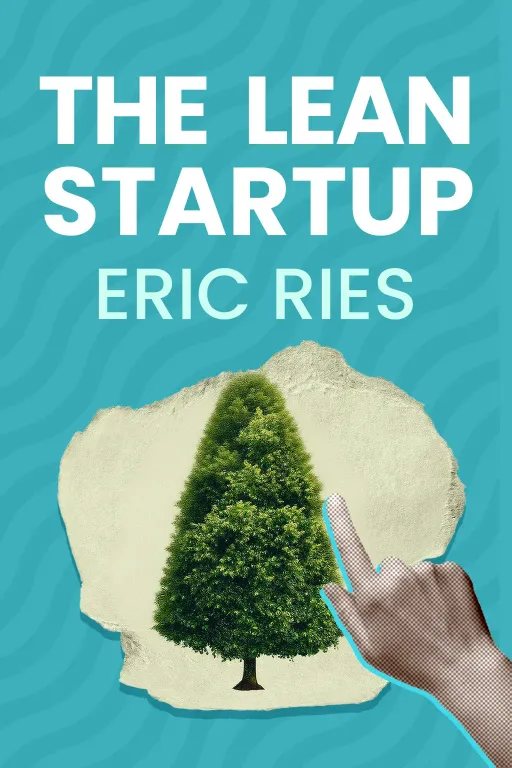
Nova: Absolutely. We’re drawing heavily from Eric Ries’s seminal work, "The Lean Startup," and Ash Maurya’s practical guide, "Running Lean." What’s particularly fascinating about Ries is how his background as a software engineer and entrepreneur, witnessing so many startups fail despite incredible talent and effort, led him to distill these principles. He really created a methodology that’s profoundly changed how businesses operate globally, moving them away from grand, unvalidated plans.
Atlas: That’s a powerful origin story. It makes me wonder, how exactly do these books help us avoid that desert-ship scenario? How do they help us actually define the thing to build?
Deep Dive into Core Topic 1: The Build-Measure-Learn Feedback Loop
SECTION
Nova: That’s where Ries’s genius comes in with "The Lean Startup." He introduces what he calls the Build-Measure-Learn feedback loop. The core idea is simple: instead of spending years perfecting a product in stealth mode, only to find out nobody wants it, you create a Minimum Viable Product, or MVP, to test your hypotheses with real customers.
Atlas: Hold on, 'Minimum Viable Product.' What does 'viable' truly mean in this context? It sounds like we're just rushing things out, cutting corners. For someone who believes in building lasting foundations, that word 'minimum' can be a bit… concerning.
Nova: That’s a crucial distinction. It’s not about rushing or cutting corners on quality. Think of it this way: if your ultimate goal is to build a magnificent, multi-lane bridge across a river, you don't start by building half a bridge and hoping people figure it out. That’s not viable.
Atlas: Right, that would be a disaster.
Nova: Instead, your MVP might be a simple, hand-pulled ferry. It’s minimal, but it’s because it solves the core problem: getting people across the river. It allows you to if there’s even a demand for crossing, how people use it, and then decide if you should invest in that grand bridge. The 'learn' part is the most critical component – it's about validated learning.
Atlas: I like that analogy. So, it's about structured discovery, then. It prevents us from pouring resources into a grand, unvalidated vision, which is a major concern for anyone trying to build a resilient team and sustainable growth.
Nova: Exactly. Take the example of Dropbox. Before they wrote a single line of code for their actual product, their founder, Drew Houston, created a simple video demonstrating how Dropbox would work. It was an MVP, a 'concierge MVP' if you will. He put it on the internet, and within days, tens of thousands of people signed up for a service that didn't even exist yet.
Atlas: Wow. So, a video was enough to test that core hypothesis: "Do people want seamless file synchronization across their devices?"
Nova: Precisely. That tiny, cheap experiment validated a massive assumption. Imagine if they had spent a year building out the entire infrastructure, only to find out people preferred emailing attachments. That video saved immense resources and validated their core value proposition.
Atlas: That’s actually really inspiring in its simplicity. It makes me wonder, though, how do high-stakes organizations, or even individuals with a grand vision, truly embrace such 'tiny steps' without feeling like they’re undermining their quality or long-term vision? It feels counter-intuitive to some.
Deep Dive into Core Topic 2: Identifying and Testing High-Risk Assumptions
SECTION
Nova: That’s a perfect segue, because while Ries gives us the overarching philosophy, Ash Maurya, with "Running Lean," provides the practical toolkit for to execute that Build-Measure-Learn cycle. He emphasizes identifying your 'high-risk assumptions.'
Atlas: High-risk assumptions. Sounds like something you’d want to avoid, not actively seek out. What do you mean by that, and why are they so crucial to pinpoint first?
Nova: A high-risk assumption is any belief about your product or market that, if proven wrong, would completely unravel your business model. It's the linchpin. Maurya suggests starting with a Lean Canvas, which is a one-page business plan, to map out all your key assumptions. Then, you identify the riskiest ones – often those related to your customers' problems, your proposed solution, or how you plan to reach them.
Atlas: Okay, so, what’s a common blind spot for founders? What's an example of a 'high-risk assumption' that might seem obvious but often goes completely untested, leading to those desert-ship scenarios?
Nova: A classic one is "customers care about feature X." Founders often fall in love with a particular solution, assuming their customers will share that enthusiasm. But often, through problem/solution interviews, they discover customers actually care about Y, or even Z, which they hadn't considered. Another one is "people will pay for convenience." Sometimes they will, but often they're far more price-sensitive than assumed.
Atlas: That’s a common trap. But wait, for someone driven by impact and sustainable growth, isn’t this constant testing a bit… slow? Doesn't it dilute the grand vision if you're constantly poking and prodding at tiny assumptions? It sounds like it could lead to endless tinkering.
Nova: Not at all. It’s the opposite. This isn't about diluting vision; it's about a vision that's grounded in reality. It’s about building a resilient team by actively listening to the market, not just to internal ideas or biases. When you test systematically, you're not just validating a feature; you're validating the of your vision. It's the ultimate empowerment strategy for a team, giving them real data to inform their strategic decisions. It’s about moving from a guess to a definition.
Atlas: That makes me wonder, how does one even begin to map out their riskiest assumption without getting lost in a sea of possibilities? What’s the tiny step someone could take this week to apply this, especially if they’re in a complex, high-pressure environment?
Synthesis & Takeaways
SECTION
Nova: That's the beauty of it, Atlas. Ries gives us the 'why' – the overarching philosophy of iterative, validated learning. Maurya gives us the 'how' – the practical tools and frameworks to identify and test those critical assumptions. The core message from both is about systematically reducing uncertainty through structured discovery and continuous validation.
Atlas: So, for the Architect, the Storyteller, the Cultivator, this isn't just about avoiding failure. It’s about building lasting foundations, grounded in reality, ensuring that the impact we seek is truly sustainable. It's about moving beyond mere guesses to solid definitions, which really resonates with the desire for clarity.
Nova: Precisely. It’s about practicing active listening, not just hearing your team, but truly hearing your customers and the market. The tiny step we want to leave everyone with today is this: for a current project, map out your single riskiest assumption. Then, design a tiny, cheap experiment to test it this week. It could be a simple survey, a landing page, or even just talking to five potential customers.
Atlas: That’s actionable. And it ties directly into the idea of embracing the messy middle, trusting your evolving vision, because that evolution is guided by real-world learning. So, I challenge our listeners: What’s one assumption you’re making right now that, if proven wrong, would unravel your entire project? Go test it. Don’t guess, define.
Nova: Don’t guess, define. It's a powerful shift.
Atlas: Absolutely. This is Aibrary. Congratulations on your growth!