Stop Guessing, Start Building: The Guide to Product-Market Fit.
Golden Hook & Introduction
SECTION
Nova: We often hear "build it and they will come," but what if that's the fastest way to build something nobody wants?
Atlas: Oh, I know that feeling. It's like pouring your heart into a project, only to find it sits on a shelf. Why do we keep falling for that trap?
Nova: Exactly! And today, we're tearing down that assumption, guided by a book that gets straight to the heart of the matter: "Stop Guessing, Start Building: The Guide to Product-Market Fit." It's a no-nonsense look at why so many brilliant ideas never truly resonate, and how we can completely flip that script.
Atlas: That sounds like a much-needed reality check for anyone deeply committed to building, whether it’s a product or a strong, connected team. So, where do we even begin to unravel this mystery of missed marks?
Nova: We start with what the book calls "The Cold Fact" – the uncomfortable truth that many teams struggle because they focus on features, not solutions. This leads us directly to our first core idea: the profound blind spot of building without deep, continuous user understanding.
The Blind Spot: Why Products Fail Without Deep User Understanding
SECTION
Nova: Think about it: you have a spark of genius, you assemble a brilliant team, you build something technically impressive. But if you haven't genuinely understood the problem you're solving from the user's perspective, you're essentially building in a vacuum. It’s like designing a magnificent bridge without knowing if there’s a river to cross, or if anyone even needs to get to the other side.
Atlas: That makes sense. But how does a team, especially one driven by a clear vision, accidentally end up in that vacuum? Isn't having a strong vision a good thing, a sign of leadership?
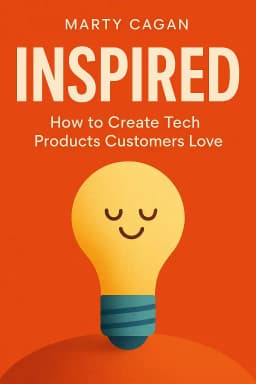
Nova: Absolutely, vision is crucial. But as product visionary Marty Cagan emphasizes, a strong product vision needs continuous discovery. His influential work, which has shaped product development for decades, illuminates countless stories of companies that built what they users wanted, only to discover they were solving the wrong problem. It's a pervasive issue.
Atlas: Can you give an example? I’m imagining a scenario where a team is so invested in their own idea, they miss the actual user need.
Nova: Picture a tech company, brimming with talent, that spent millions developing a super-advanced, feature-rich calendar app. It had AI-powered scheduling, integrated weather forecasts, even mood tracking based on your meetings. They were incredibly proud of the sheer technological prowess and the long list of features.
Atlas: That sounds impressive on paper. I can see how a collaborative architect might get excited about the sheer engineering challenge there, the complexity of it all.
Nova: Right? But here's the catch: when it launched, users found it overwhelming and, crucially, didn't use many of the advanced features. Their primary pain point wasn't a lack of features; it was a lack of clarity and simplicity in managing conflicting meeting times across different global time zones, especially for distributed teams. They built a magnificent, multi-functional skyscraper when users just needed a robust, incredibly easy-to-use bridge for a very specific, painful commute.
Atlas: Wow. That’s kind of heartbreaking. All that effort, all that innovation, completely misdirected. So, the book, and Nova's take, are really saying: stop building the skyscraper, and start by understanding the traffic flow first?
Nova: Precisely. Nova’s take, which resonates deeply with Cagan’s philosophy, is "Stop building in a vacuum; engage deeply with users and data to craft solutions that truly resonate." It’s about humility, about stepping outside your brilliant echo chamber and truly listening. It’s a shift from internal monologue to external dialogue.
Atlas: For leaders committed to effective human connection, that sounds like it extends beyond product to team dynamics too. Our growth recommendations even suggest embracing the discomfort of difficult conversations as pathways to deeper trust. So, the product itself is a conversation with the user?
Nova: It absolutely is. And a conversation you need to start early and keep having. It’s not about asking users what features they want, but understanding their struggles, their aspirations, their workflow, their emotional landscape around a problem. That's the continuous discovery Cagan talks about – a constant dialogue to ensure your vision aligns with actual, felt needs. Without that, you're just guessing.
The Iterative Leap: Validated Learning as the Path to Product-Market Fit
SECTION
Nova: And that naturally leads us to the second crucial idea, which often acts as the practical counterpoint to simply understanding the problem: how do you that solution without falling back into old habits of over-engineering or making grand assumptions? That's where Eric Ries and "The Lean Startup" come in, emphasizing validated learning.
Atlas: The Lean Startup—that's a highly rated book that's generated a lot of buzz over the years, though some reviews suggest it might be more challenging to implement in large, established organizations. Is it just for, well, startups, as the title implies?
Nova: That's a common misconception, and Ries actually addresses that in his work. While it gained prominence in the startup world, its principles are universal and applicable to any organization, big or small, that wants to innovate faster and smarter. Ries argues for "Build-Measure-Learn" loops. The core idea is simple: instead of massive, risky launches based on extensive planning, you build a Minimum Viable Product – the smallest thing that delivers core value – measure its impact with real users, and learn from that data to iterate. It’s about hypothesis testing in the real world.
Atlas: Okay, so you're saying instead of building the entire skyscraper based on assumptions, you build a single floor, see if people use the stairs, the elevator, if the view is right, and then decide how to build the next floor?
Nova: Exactly! It’s about testing your riskiest assumptions first, with the least amount of effort. Think of a famous example: Dropbox. When they started, they didn't build the whole complex file sync engine first. They knew that would be a huge technical undertaking. Instead, they released a simple video demo showing how it work. They measured interest – specifically, sign-ups for a beta – and learned there was massive pent-up demand for such a solution. That validated their core hypothesis before writing much code. It was a tiny step, a tiny build, and massive learning that saved them potentially years of wasted development.
Atlas: That’s a great example of immediate application. For a resilient innovator, that approach sounds far less daunting than betting the farm on one big, risky launch. It essentially transforms potential failure into valuable data, making the innovation process more sustainable.
Nova: It truly transforms failure into learning. Ries champions what he calls "innovation accounting," where progress isn't measured by features shipped, but by validated learning – proving that a change actually moved the needle for users. It's the antidote to vanity metrics and the pursuit of features for features' sake. It's about asking, 'Did this change actually solve a problem for a user, and can we prove it?'
Atlas: So, if the first core idea was about deeply understanding the "what problem are we solving," this is about refining the "how are we solving it" through continuous, small-scale validation. It’s a practical, sustainable way to ensure growth, which is something our audience, as empathetic leaders and collaborative architects, deeply cares about.
Nova: Precisely. It builds trust, both with your users and within your team, because you're constantly adapting based on real feedback, not just internal speculation. It embraces the discomfort of difficult conversations with your product's performance data, turning them into pathways to deeper trust in your strategy and fostering a culture of continuous improvement.
Synthesis & Takeaways
SECTION
Nova: So, what we've really explored today is a powerful one-two punch for product success. First, the profound insight that truly great products emerge from a deep, continuous understanding of user problems, not from isolated feature lists or internal guesses. And second, the practical wisdom that getting there requires relentless, validated experimentation, building just enough to learn, and iterating based on real-world feedback.
Atlas: It’s about moving from a mindset of "we know best" to "we learn best," which is a significant shift for any leader and any team. It essentially transforms disagreements with reality into strengths, using data and user feedback as your most honest collaborators.
Nova: Absolutely. And the tiny step the book recommends is incredibly powerful because it forces this shift immediately, without needing a huge budget or a complete organizational overhaul. It’s about starting small, right now. The recommendation is to identify one core user problem you are currently solving, then talk to just three users about their experience with it this week.
Atlas: That's actionable. It asks you to stop guessing and actually start building, not just code or features, but understanding and connection with your users. It’s a direct application of active listening, seeking to understand first. I imagine many of our listeners, the collaborative architects and empathetic leaders, want to know how that simple step can truly transform their approach.
Nova: It transforms everything. That direct conversation, that raw feedback, is where true product-market fit begins. It's the difference between hoping your product will land and knowing it will soar because it's built on a foundation of genuine human need and validated solutions.
Atlas: A profound insight to carry into the rest of our week, and into every product decision.
Nova: Indeed. And we'd love to hear about your experiences with this tiny step. Share your insights and how talking to your users shifted your perspective. What did you learn from those three conversations?
Atlas: Join the conversation. Your input helps us all grow and refine our understanding.
Nova: This is Aibrary. Congratulations on your growth!