Stop Guessing, Start Building: The Guide to Market-Driven Innovation
Golden Hook & Introduction
SECTION
Nova: Here's a radical idea, Atlas: most brilliant business ideas are actually, deep down, ideas. Not because of their potential, but because of they're built.
Atlas: Whoa, Nova. That's a bold claim. As someone who's always got a new idea simmering, I’m feeling personally attacked. Are you saying my brilliant concepts might be… inherently flawed?
Nova: Not flawed in their essence, but flawed in their execution if they're built in a vacuum. Think of it like this: you could have the most beautifully engineered, technologically advanced spaceship, but if nobody wants to go to Mars, or if it can't land on Mars, it's a very expensive paperweight.
Atlas: Right, like building the perfect solution to a problem nobody has. I’ve seen that happen. It’s brutal to watch, and I imagine even more brutal to experience. So, how do we avoid that kind of catastrophic brilliant-idea failure?
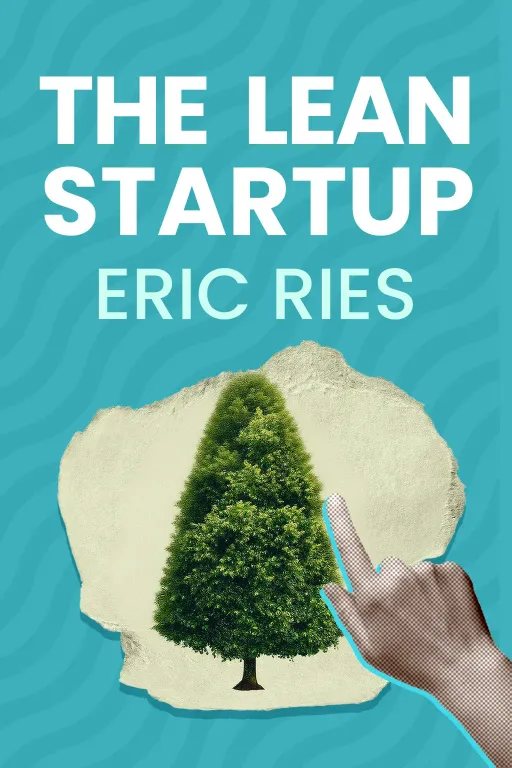
Nova: Exactly. And that's where the wisdom from game-changing methodologies, particularly those popularized by Eric Ries in "The Lean Startup" and Ash Maurya in "Running Lean," comes in. Ries, an entrepreneur himself, distilled lessons from lean manufacturing to transform how startups innovate, and Maurya then provided the step-by-step handbook for applying those principles. They fundamentally shifted the conversation from "build it and they will come" to "test it, learn from it, then build it."
The Fatal Flaw of Innovation: Building in a Vacuum
SECTION
Nova: The cold, hard truth is that many brilliant ideas fail not because they're inherently bad, but because they're built in isolation. Innovators, often driven by passion and a strong vision, create solutions based on what they people want or need, without ever truly validating those assumptions with real customers.
Atlas: I totally know that feeling. You get so deep into the creation process, the vision becomes so clear in your head, that it’s hard to imagine anyone wanting what you're making. But wait, what if your gut feeling is strong, Nova? As a builder, you often have to trust your vision, right? Isn't that part of the entrepreneurial spirit?
Nova: Absolutely, vision is crucial. But there's a fine line between vision and unvalidated assumption. Our gut feelings are powerful, but they're also prone to bias. The danger of building in a vacuum is that you're essentially gambling with all your resources—time, money, emotional energy—on a series of untested hypotheses. You spend months, maybe even years, perfecting a product, only to launch it and find that the market just isn't interested, or that your 'perfect customer' doesn't exist, or doesn't care about the problem you thought you were solving.
Atlas: That sounds like a nightmare. All that effort, all that passion, just… poof. So, the core message here is that passion isn't enough, and even brilliance can be wasted if it's not directed properly.
Nova: Precisely. It’s like trying to navigate a dense fog with only a compass, but no map and no way to see what's directly in front of you. You might know your general direction, but you'll hit a lot of obstacles, or worse, end up somewhere completely irrelevant. The cost isn't just financial; it's the crushing weight of dashed hopes and wasted potential. This happened to countless startups in the dot-com boom, where amazing tech was built, but without a clear, validated market need. They were brilliant solutions looking for a problem.
Atlas: I see. So, the problem isn't the idea itself, but the of bringing it to life without constant reality checks. How do we get those reality checks without spending a fortune or halting our building process entirely? Because as a builder, I want to deliver quality, not just a half-baked idea.
From Assumption to Validation: The Build-Measure-Learn Loop
SECTION
Nova: That's the million-dollar question, and it brings us directly to the solution: the Build-Measure-Learn feedback loop, the cornerstone of market-driven innovation. It's about systemizing the process of testing your assumptions quickly and learning from real customer feedback.
Atlas: Okay, so if guessing is the enemy, what's the blueprint for building right? Tell me more about this loop.
Nova: The Build-Measure-Learn loop is deceptively simple. First, you a Minimum Viable Product, or MVP. This isn't a shoddy product; it's the smallest possible thing you can create to test your riskiest assumption. It could be a simple landing page describing a service, a hand-drawn prototype, or even just a detailed survey. The goal isn't perfection, it's learning.
Atlas: Okay, so how "minimum" is "minimum viable"? As someone who builds, I want to deliver quality, not just a half-baked idea. Is an MVP just a fancy word for cutting corners?
Nova: Not at all! That's a common misconception. An MVP is about. It's not about being incomplete, but about being. For example, if you're building a new social network, your MVP might just be a private messaging feature for a small group, not the full suite of profiles, feeds, and analytics. You're testing if people even want to connect in that specific way before you build out everything else.
Atlas: That makes sense. It's about isolating the core hypothesis you want to test. So, once you've built this MVP, what's next in the loop?
Nova: Then you. You put that MVP in front of actual potential customers, not your friends or family, and you observe their behavior, gather data, and listen to their feedback. Are they using it as you expected? What problems are they encountering? What are they saying they need? This is where Ash Maurya's "Running Lean" shines, providing practical steps for interviewing customers and getting actionable insights. He emphasizes focusing on "problem-solution fit" first. Are you solving a real pain point that people genuinely care about?
Atlas: So basically you’re saying, don't just ask them if they like it, watch what they with it. And focusing on the problem first… that's crucial. I've definitely been guilty of falling in love with my solution before I've truly understood the problem.
Nova: Exactly! And that leads to the final, and arguably most important, step:. Based on the data and feedback, you decide whether to "pivot" or "persevere". This entire cycle is about empirical validation, making your building efforts strategic and customer-centric. It’s about getting data, not just building features you people want.
Atlas: That makes me wonder, how do you test an assumption with just five customers this week without feeling like you're bothering them? For someone like me, who wants to build and sell, that seems like a tiny sample size, and a bit daunting to just approach people.
Nova: That's where Maurya's practical guidance really comes in. The "five customers" isn't about statistical significance, it's about gaining qualitative insights quickly. You're not selling, you're. You might offer a free, short consultation, or a demo of a very basic prototype, and then conduct structured interviews, asking open-ended questions about their problems, not your solution. You'd be surprised how much you can learn from just a handful of focused conversations. It shifts the dynamic from "sales pitch" to "collaborative problem-solving." The goal is to identify a "problem-solution fit" before you even think about "product-market fit."
Atlas: That’s a great way to put it: "collaborative problem-solving." It demystifies the process and makes it feel less like a high-stakes sales pitch and more like genuine engagement.
Synthesis & Takeaways
SECTION
Nova: So, what we've really been talking about today is this profound shift from the romanticized, often isolated, inventor to the pragmatic, market-driven innovator. It's the difference between guessing your way through the dark and illuminating your path with continuous customer feedback.
Atlas: And it sounds like this isn't just for tech startups, right? This build-measure-learn loop applies to anyone who wants to create something new, whether it's a physical product, a service, or even a new way of doing business. It’s about minimizing risk and maximizing impact.
Nova: Absolutely. It's a universal framework for anyone who wants to build something meaningful and successful. The core insight is that innovation isn't about having the 'right' idea from the start, but about building a system for rapid learning and adaptation. This approach minimizes risk and maximizes your chances of finding that perfect customer. It's a continuous conversation with the market, rather than a monologue.
Atlas: That’s really inspiring. For our listeners who are builders, creators, and strategists, like me, what's the single most important, tiniest step they can take this week to start applying this?
Nova: The tiny step is powerful: identify just core assumption about your ideal customer or their problem. Then, design a simple, low-cost way to test it with five potential customers this week. It could be a conversation, a quick survey, even a mock-up sketch. Just start building that feedback loop. Don't guess, start building.
Atlas: That's actionable, practical, and exactly what our listeners need. It’s about taking that first small, validated step towards a bigger vision.
Nova: This is Aibrary. Congratulations on your growth!