Stop Guessing, Start Building: The Cold Facts of Product-Market Fit.
Golden Hook & Introduction
SECTION
Nova: What if I told you the single biggest threat to building something truly great isn't a lack of brilliant ideas, but an abundance of unvalidated assumptions?
Atlas: Hold on, Nova. That's a pretty bold claim. For a lot of our listeners, especially those striving for mastery in their own fields, that might sound like it takes the magic out of creation. We're taught to trust our gut, to have a vision. Are you saying that vision is actually the problem?
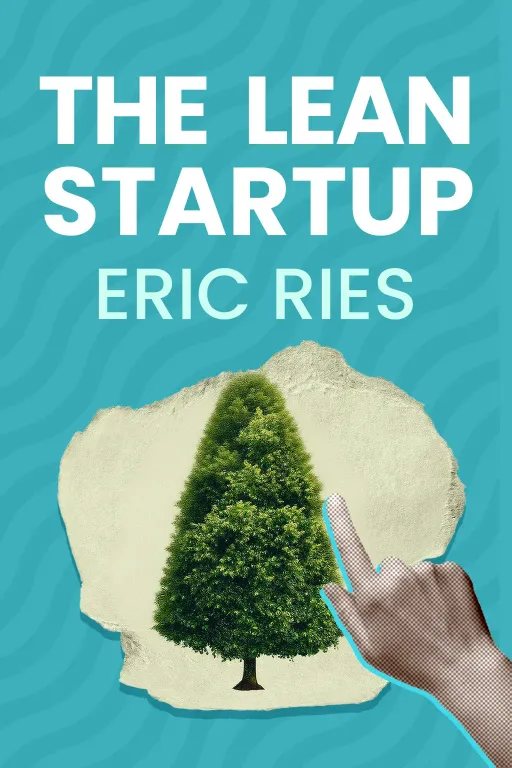
Nova: Not the vision itself, Atlas, but the that your initial vision is the perfect, unchangeable blueprint. Today, we're diving into a concept that's reshaped how countless innovators approach their work: Product-Market Fit. And we're drawing heavily from the cold facts laid out by pioneers like Eric Ries in "The Lean Startup" and Rob Fitzpatrick in "The Mom Test." Ries, a serial entrepreneur and academic, didn't just theorize; he distilled these principles from his own startup experiences, effectively turning entrepreneurship into a science.
Atlas: Turning entrepreneurship into a science? That sounds like replacing grand purpose with... spreadsheets. For our "Aspiring Architects" and "Purposeful Achievers" out there, who really care about aligning their path with their passions, that might feel a bit sterile.
Nova: Quite the opposite, Atlas. It injects a different kind of magic – the magic of you're building something people genuinely need, something that genuinely fulfills a purpose. It's about making your purposeful efforts. And that's where we kick off our first deep dive: the philosophy of validated learning.
The Philosophy of Validated Learning: Beyond Perfect Plans
SECTION
Nova: The core of "The Lean Startup" is this idea of "validated learning." It’s a fundamental shift from the traditional model where you spend years perfecting a plan in secret, only to launch it and hope for the best. Instead, Ries advocates for a continuous "build-measure-learn" loop.
Atlas: So you're saying it's not about having a perfect plan from day one? I imagine a lot of our listeners, the strategic scholars among them, spend a lot of time optimizing their strategies before they even start. Isn't that smart?
Nova: It’s smart to plan, absolutely. But it’s smarter to plan for. Think of it like this: A meticulous chef could spend months perfecting a recipe in their head, buying all the ingredients, and then present it on opening night. If no one likes it, all that effort is wasted. A lean chef, however, might whip up a tiny sample, get immediate feedback, tweak it, and iterate until they know they have a winner.
Atlas: That makes sense. So it’s about mini-experiments rather than one grand unveiling?
Nova: Exactly. It's scientific experimentation applied to creation. You build a Minimum Viable Product, or MVP, which is the smallest thing you can create to test a core hypothesis about your users. Then you measure how users interact with it, and you learn from that data, using it to decide whether to persevere with your current direction or pivot to a new one. It's about treating every idea as a hypothesis to be tested, not a truth to be defended.
Atlas: That sounds rough, but… what if your initial vision is truly revolutionary? What if you have this incredible, unique idea that no one's ever thought of? Don't you risk diluting it by constantly asking for feedback and changing it? I can see how an "Aspiring Architect" might feel their unique vision is being compromised.
Nova: That's a critical point. It's not about blindly following every piece of feedback. It's about. If your revolutionary idea hinges on people wanting a purple, self-tying shoelace, the MVP isn't the entire automated factory, it’s a quick way to see if anyone actually purple self-tying shoelaces. Validated learning helps you discover your revolution is actually desired, and to best deliver it, without wasting years building something in a vacuum. It reduces the risk of building something nobody truly needs, which for a "Purposeful Achiever" is the ultimate waste of intentional effort.
Mastering User Understanding: Asking the Right Questions
SECTION
Nova: But validated learning is only as good as the feedback you get, and that's where we need to talk about asking the right questions. This brings us to Rob Fitzpatrick and his brilliant book, "The Mom Test."
Atlas: The Mom Test? Is that like, "If your mom doesn't like it, it's bad?" Because my mom loves everything I do, so that seems like a tough metric.
Nova: That’s actually the precise problem Fitzpatrick highlights! Your mom, your friends, your early adopters – they all want to be supportive. So when you ask, "Do you think my idea for a super-fast, AI-powered toaster is good?" they’ll likely say, "Oh, that sounds amazing!" But that’s polite affirmation, not actual demand.
Atlas: Oh, I see. So it's about getting past the politeness to the cold, hard truth? This resonates with anyone who's ever tried to get honest feedback on a passion project. We want validation, not necessarily the truth.
Nova: Exactly. Fitzpatrick's core insight is that everyone lies to you, even when they don't mean to. They lie because they're being polite, or they don't want to hurt your feelings, or they don't want to admit they don't understand your brilliant idea. So, "The Mom Test" provides a framework for asking questions that be answered with polite affirmation. You're looking for facts about their past behavior, not opinions about your future product.
Atlas: So you're saying, instead of asking, "Would you use an AI-powered toaster?" I should ask, "Tell me about the last time you were frustrated making toast?"
Nova: Precisely! Or, "How much time do you spend making breakfast on a typical weekday?" or "What's the longest you've ever waited for toast?" These questions reveal actual problems, existing behaviors, and pain points. You're not selling them anything; you're just trying to understand their world. If nobody has a problem with toast, then an AI-powered toaster, no matter how brilliant, is solving a non-existent problem.
Atlas: That's such a simple, yet profound shift. It’s like, instead of trying to predict the future, you’re trying to accurately understand the past to inform your present actions. For our strategic scholars, that’s about optimizing their information gathering. For the purposeful achievers, it’s about making sure their efforts are truly directed at solving actual problems.
Nova: And that's why these two books are so powerful together. "The Lean Startup" gives you the framework for iterative development and validated learning, and "The Mom Test" gives you the precise tools to gather the kind of data for that learning. It's about relentless learning from real people, not just guessing what they want.
Synthesis & Takeaways
SECTION
Nova: So, what we’re really talking about today is a complete reorientation of how we approach building anything – whether it's a new product, a career path, or even a personal habit. It's about shifting from internal assumptions to external validation, and doing it with scientific rigor and genuine curiosity.
Atlas: And for those of us who are driven by genuine fulfillment and seeking mastery, it’s about making sure our ambition is a gift, not a trap. We want our efforts to align with real demand, not just our own brilliant ideas. What's the one thing you want our listeners to take away from this, Nova?
Nova: I want them to understand that true success isn't about having the perfect plan from the outset, but about cultivating a relentless learning mindset. It's about designing your work, your projects, your life, as a series of tiny, validated experiments. It's about observing, listening deeply, and adapting. This iterative process isn't a sign of weakness; it's the ultimate path to mastery and building something truly great that serves a real need.
Atlas: And for our listeners, the "Tiny Step" from today's content is so perfectly aligned with that: Identify one core assumption about your current project. Design a tiny experiment to test it with a real person this week. It could be for a client, a colleague, or even a personal goal. Just one assumption, one real person, one tiny experiment.
Nova: That's it. Trust your process, but validate your assumptions. Your ambition is a gift; allow it to be guided by real insights.
Atlas: This is Aibrary. Congratulations on your growth!