Stop Chasing, Start Building: The Guide to Sustainable Business Growth.
Golden Hook & Introduction
SECTION
Nova: Alright, Atlas, quick game for you. Rapid-fire word association. I say a word, you give me the first thing that comes to mind, business context. Ready?
Atlas: Oh, I live for these. Let's do it. Hit me.
Nova: "Trend."
Atlas: "Shiny object syndrome." And probably "FOMO." Fear of Missing Out, for those playing along at home.
Nova: Perfect. Next: "Burnout."
Atlas: Ugh. That's a feeling. It's that moment when you've chased so many shiny objects you're just... empty. Like a battery that’s been overcharged and then completely drained.
Nova: Nailed it. Last one: "Growth."
Atlas: Now that's the tricky one, isn't it? Because after "shiny object syndrome" and "burnout," "growth" often feels like a desperate sprint, not a sustainable journey. Like you’re constantly trying to catch a moving train.
Nova: Exactly, Atlas! And that perfectly encapsulates why we're diving into a book today that offers such a potent counter-narrative: "Stop Chasing, Start Building: The Guide to Sustainable Business Growth." This isn't just another business book; it's a profound call to re-evaluate how we approach success. It's for anyone who's felt that relentless pressure to always be on the cutting edge, only to feel exhausted and unfulfilled.
Atlas: But Nova, for so many entrepreneurs and leaders, chasing the next big thing, the latest trend, it feels like survival. It’s what you to do to stay competitive in a fast-moving market. Are you suggesting that chasing is inherently a dead end? Because that's a pretty bold claim in today's world.
The Peril of Chasing Trends vs. Building Value
SECTION
Nova: It’s a bold claim, but the book argues it’s an undeniable truth. The core insight here is that many businesses fall into this trap of chasing fleeting trends, and it almost always leads to burnout and wasted effort. Think about it: every time a new technology or a new social media platform emerges, there's this immediate scramble to be the first, to adapt, sometimes without truly understanding if it aligns with their core value proposition.
Atlas: So, it's like building a house on quicksand. You keep adding new floors, but the foundation isn't stable. I can imagine that being incredibly frustrating.
Nova: Precisely. Let me paint you a picture. Imagine a fictional startup, we'll call them "FlashFad." They started strong, great idea, but then the VR fitness craze hit. So they pivoted, spent months developing an immersive VR workout. Before it even launched, blockchain social media became the buzz. So, another frantic pivot, burning through capital and employee morale to build a decentralized platform. And then, AI-powered pet food became the next big thing, and they were off again, chasing that.
Atlas: Oh man, I can feel the whiplash just listening to that. So they're constantly reinventing themselves, but not in a strategic way. It’s a reactive churn.
Nova: Exactly. Their cause was a reactive, fear-driven pursuit of what was "hot," not a deep understanding of what their customers valued. The process was a series of unvalidated, expensive pivots. The outcome? Burnout, wasted resources, and ultimately, a business that never built any lasting value or loyal customer base because it never stood for anything consistent. They were always chasing the market, never leading it.
Atlas: That's such a vivid picture. But how do you you're chasing a trend versus genuinely innovating? Isn't true innovation often about identifying and leveraging new trends before others do? Where's that line?
Nova: That's the critical distinction. The book suggests that true growth comes from a systematic approach to understanding what customers truly value and building iteratively to meet those needs. It’s a subtle but profound shift. It's not about ignoring trends entirely, but about filtering them through the lens of genuine customer value. Is this trend an to better serve our core customers, or is it just a distraction, a shiny object pulling us off course?
Atlas: It sounds like a hamster wheel, that FlashFad example. What's the fundamental difference between that constant, exhausting chase and what the book calls "building"? Because for many, building hard work, too. It can feel like a chase, just a slower one.
Disciplined Iteration: The Lean-Good-to-Great Synthesis
SECTION
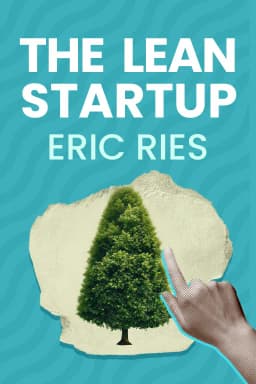
Nova: That's the million-dollar question, Atlas. And it brings us directly to the heart of what "Stop Chasing, Start Building" advocates: a systematic, disciplined approach, drawing from giants like Eric Ries and Jim Collins. It synthesizes their wisdom to create a roadmap for genuine growth.
Atlas: Okay, so we're talking about combining "The Lean Startup" with "Good to Great." That's an interesting mix. Ries is all about rapid experimentation, and Collins is about disciplined execution and enduring companies. How do those two seemingly different ideas—rapid iteration and disciplined focus—actually work together without contradicting each other?
Nova: They don't contradict; they complement each other beautifully. Think of "The Lean Startup" by Eric Ries as your agile, experimental engine. It's all about the "build, measure, learn" loop. You build a minimum viable product, you put it out there, you measure what customers actually do with it, and then you learn and adapt. It's like a chef testing tiny new recipes in the kitchen, getting feedback, and refining, rather than cooking a huge banquet for hundreds of people only to find out they hate the main dish.
Atlas: I love that analogy. So, instead of making a huge, unvalidated bet, you make a series of small, validated bets. That makes so much sense. It reduces risk and waste.
Nova: Exactly. But then you bring in Jim Collins' "Good to Great," which emphasizes disciplined people, disciplined thought, and disciplined action. Collins researched how companies achieve sustained superior performance. It wasn't about flashy innovations or being in the hottest market. It was about focusing on core strengths, having the right people in the right seats, and consistently executing their core mission with unwavering discipline.
Atlas: So it's not just about being lean and agile, but about having that "Good to Great" discipline to stick with it, to really understand your core purpose and not get swayed. How do these "disciplined people, disciplined thought, and disciplined action" manifest in a real-world company? Can you give me an example?
Nova: Absolutely. Let's look at another fictional company, "Evergreen Innovations." They started by identifying a genuine, overlooked customer pain point: small businesses struggling with affordable, truly sustainable packaging. They didn't jump on the latest tech trend. Instead, they embraced the Lean Startup model. They built simple prototypes, tested them with local businesses, measured how easy they were to use, how much waste they reduced, and learned from every interaction.
Atlas: So, their "build, measure, learn" loop was deeply rooted in a real customer need, not just a market hype.
Nova: Precisely. And here’s where Collins comes in. Evergreen Innovations cultivated a team of "disciplined people" – individuals passionate about sustainability and problem-solving, who weren't afraid to challenge assumptions. Their "disciplined thought" meant they constantly refined their understanding of sustainable materials and logistics, always seeking better, more efficient ways. And their "disciplined action" meant that even when a new, flashy packaging material hit the market, they rigorously evaluated it against their core values and customer needs, rather than blindly adopting it. They stuck to their knitting, so to speak.
Atlas: Wow. So, the Lean Startup gives you the agility to find product-market fit efficiently, and "Good to Great" gives you the foundational strength and focus to scale that fit sustainably. It’s about building a robust, purpose-driven engine, not just a quick, flimsy race car.
Nova: That's a perfect way to put it, Atlas. Evergreen Innovations didn't chase; they built. They adapted, yes, but always within a disciplined framework of understanding and serving their customer's true value, leading to resilient, sustainable growth that outlasted many of their trend-chasing competitors.
Synthesis & Takeaways
SECTION
Nova: Ultimately, "Stop Chasing, Start Building" isn't just a business strategy; it’s a philosophy for reducing anxiety and fostering genuine impact. It frees founders and leaders from that exhausting, reactive cycle of chasing every new thing, allowing them to instead focus on creating something truly meaningful and resilient. It's about shifting from the external pressure of "what's next?" to the internal clarity of "what truly matters to our customers, and how can we consistently deliver that value?"
Atlas: That's actually really inspiring. It sounds like it’s less about market tactics and more about a fundamental mindset shift – from a scarcity mentality of needing to grab every opportunity, to an abundance mentality of creating deep value. For anyone out there who feels like they're constantly running on a treadmill, trying to keep up, this book offers a profound sense of calm and direction.
Nova: It absolutely does. It’s about understanding that true growth isn't about being first to every party, but about being the most reliable, the most customer-centric, and the most disciplined in your pursuit of value. The book’s tiny step, a brilliant actionable insight, is this: identify one core assumption about your customer, then design a tiny experiment to test it this week. It could be a five-minute survey, a quick chat, or a small A/B test. Just one assumption, one tiny experiment.
Atlas: That’s a powerful call to action. It takes the overwhelming feeling of "I need to overhaul everything" and turns it into a manageable, insightful step. I imagine a lot of our listeners are now thinking about their own businesses, their own projects, and what assumption they could test this week. Share your tiny experiments with us on social media! What’s one core assumption you’re going to validate or invalidate? We'd love to hear your insights.
Nova: That's a fantastic idea, Atlas. Because at its heart, this book is about moving from speculation to validated learning, from reactive panic to proactive, disciplined construction. It’s about building a legacy, not just a fleeting trend.
Atlas: This is Aibrary. Congratulations on your growth!