Mastering Product-Market Fit: The Path to Inevitable Growth
Golden Hook & Introduction
SECTION
Nova: Atlas, I was today years old when I realized that the biggest killer of brilliant ideas isn't a lack of funding or even bad marketing. It's actually something far more fundamental.
Atlas: Oh, I'm curious, Nova. What fatal flaw have you uncovered that's secretly sabotaging all those visionary dreams out there? Is it… PowerPoint presentations? Because, honestly, those can be pretty lethal.
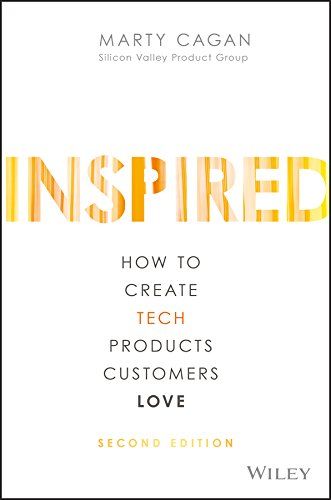
Nova: Funnily enough, sometimes they are! But no, it's the quiet assumption that we already know what people want. It’s the belief that our initial spark of genius is enough. That's what we’re tackling today, diving deep into the path to inevitable growth, inspired by two foundational texts: Marty Cagan's "Inspired: How to Create Tech Products Customers Love" and Eric Ries's "The Lean Startup."
Atlas: Ah, Cagan and Ries. Two titans in the product world. I've always seen them as the yin and yang of building what actually matters. What I find fascinating is how both authors, coming from different angles—Cagan from a deep dive into product management best practices at companies like eBay and Netscape, and Ries from his entrepreneurial journey in Silicon Valley—converge on this idea that 'knowing' is an active, ongoing process, not a static state.
Nova: Exactly. Cagan, for instance, is known for his incredibly practical, no-nonsense approach, almost like a veteran coach telling you exactly how to run the play. His experience is rooted in the trenches of some of the most iconic tech companies, giving his advice a grounded realism that resonates with product leaders.
Atlas: And Ries, with "The Lean Startup," created a whole new lexicon, giving us 'MVPs' and 'pivot or persevere.' It’s a methodology that’s become almost gospel for founders looking to navigate the treacherous waters of innovation. It's intriguing how both books, despite their different origins, echo this core truth.
The Continuous Discovery Loop: Beyond Guesswork
SECTION
Nova: And that core truth brings us directly to our first big idea: the continuous discovery loop. Many visionary builders, those driven by impact and disruption, often fall into the trap of building in a vacuum. They have a fantastic idea, they assemble a team, and they build it, only to find it doesn't quite land. Cagan's work in "Inspired" really hammers home that this isn't just inefficient; it's fundamentally flawed.
Atlas: That makes me wonder, Nova, for someone who's already got a strong vision, perhaps aiming for a values-driven organization, how do you balance that conviction with this idea of 'continuous discovery'? Doesn't constantly asking for feedback dilute the original vision?
Nova: That's a brilliant question, and it's where the nuance lies. Cagan isn't advocating for building by committee, or letting users design your product. Instead, he champions what he calls "continuous discovery." Think of it less as asking users what they want, and more as a constant, iterative process of understanding their deep-seated problems, their unmet needs, and their true behaviors. You're not just building; you're perpetually learning.
Atlas: Okay, so you’re saying it's about understanding the 'why' behind the 'what.' Can you give an example of how a team, perhaps one with that innovative spirit, might actually apply this without losing their way?
Nova: Absolutely. Consider a team building a new health app, convinced that users need more features for tracking every single metric. They could spend months building a comprehensive dashboard. A continuous discovery approach, however, might start with observing how people manage their health today, what frustrates them, what they try to avoid. They might discover through quick interviews or even just shadowing users for an hour that the real pain point isn't a lack of tracking features, but the overwhelming complexity of existing apps, or the emotional resistance to self-monitoring.
Atlas: That's a great example. It's like instead of just assuming everyone wants a gourmet kitchen, you first watch how people cook. Do they even to cook? Or do they just want healthy, convenient food delivered?
Nova: Exactly! Cagan talks about "product teams that truly understand their users." This isn't about surveys alone; it’s about deep empathy. It's about getting out of the building, observing, interviewing, and prototyping committing to a massive build. He emphasizes that the job of a product manager isn't just to ship features, but to discover valuable, usable, and feasible products. It's a fundamental shift from 'order-taker' to 'problem-solver.'
Atlas: Oh, I love that distinction. 'Order-taker' versus 'problem-solver.' For our listeners who are aiming to disrupt, who are strategizing for sustainable growth, that's going to resonate. It implies a much deeper, more impactful role. It's about being the architect of solutions, not just the builder of specifications.
Nova: And this continuous loop ensures you're building the thing, which is far more valuable than building the thing right. You're constantly validating that your product isn't just a good idea, but a desired and essential one.
Validated Learning & Rapid Experimentation: The Lean Path to Inevitable Growth
SECTION
Nova: And that naturally leads us to the second key idea we need to talk about, which often acts as a counterpoint or, rather, a complementary force to continuous discovery: validated learning and rapid experimentation from "The Lean Startup." If Cagan tells us to discover, Ries gives us the to test those discoveries efficiently.
Atlas: I’ve been thinking about this a lot. For someone driven by impact, constantly iterating can feel like you're not making big, decisive moves. It can feel like you're just dabbling. How do you reconcile that urge for disruption with the 'tiny steps' approach of validated learning?
Nova: That’s a common misconception. Ries's "Build-Measure-Learn" feedback loop isn't about being indecisive; it's about being incredibly strategic with your resources and learning. It's about making sure every 'build' is an experiment designed to 'measure' a specific assumption, and then using that data to 'learn' and adapt. It's about achieving clarity to navigate uncertainty, which I know is crucial for our visionary listeners.
Atlas: So, it's not about building a grand cathedral right away, but building a small chapel, seeing if people actually come to worship, and then using that feedback to decide if you should add stained glass or maybe a bell tower.
Nova: That's a perfect analogy, Atlas. And what Ries highlights is that the goal of an early-stage product isn't just to build features; it's to learn what customers truly value. He famously introduced the concept of the Minimum Viable Product, or MVP, not as a stripped-down version of your final vision, but as the smallest possible experiment to test a core hypothesis about your product's value.
Atlas: I've heard the term MVP thrown around a lot, and honestly, sometimes it feels like an excuse to ship something unfinished. What do you mean by 'smallest possible experiment'? Can you give a contrast that clarifies it?
Nova: That's a very fair point, and it's often misunderstood. A true MVP isn't just 'minimum'; it's 'viable' as a learning tool. For instance, a common mistake for a startup building a new online marketplace might be to spend a year developing a perfect matching algorithm, complete with secure payment processing and user profiles. A lean approach, however, might start with just a landing page describing the service, asking people to sign up for updates, and manually connecting the first few buyers and sellers via email.
Atlas: Wow, so the MVP isn't even a fully functional piece of software in that case. It's just enough to validate if there's interest, if that core value proposition resonates. That’s a huge shift in mindset. It aligns with prioritizing one key metric, focusing, and iterating, as you often recommend.
Nova: Precisely. The manual workaround, the landing page, the concierge service—these are all 'builds' that allow you to 'measure' real user interest and engagement, and then 'learn' whether your fundamental idea has traction before you invest heavily. Ries's insights are particularly powerful because they offer a systematic way to adapt products to market needs efficiently, reducing waste and increasing the odds of finding true product-market fit. It's about making growth inevitable by making learning central.
Atlas: It’s interesting how both Cagan and Ries, though different in their focus, ultimately push us towards a state of constant, humble inquiry. It’s a powerful message for anyone who seeks to build and disrupt, but also cares about sustainable, values-driven impact.
Synthesis & Takeaways
SECTION
Nova: What truly connects Cagan's continuous discovery and Ries's validated learning is this profound understanding that product-market fit isn't a destination you arrive at, but a state you continuously cultivate. It's about moving from guesswork to evidence, from assumptions to validated insights. The inevitable growth we talk about isn't just about scaling; it's about building something so desired, so essential, that it almost pulls itself into the market. It's a testament to the power of listening, learning, and adapting.
Atlas: That's actually really inspiring, Nova. For those of us who are driven by impact, who want to create meaningful change, it means that our vision isn't static. It's a living, breathing thing that evolves with the market and the people we serve. It’s about building a foundation that’s solid because it’s deeply connected to reality.
Nova: Exactly. So, for our listeners, your tiny step this week is simple: pick one core assumption about your product's value proposition, and design a low-cost experiment to validate or invalidate it. Don't build it out fully; just find the quickest, cheapest way to learn.
Atlas: I love that. It’s a practical action for strategic decision-making, helping to navigate uncertainty with clarity. And if you've tried a lean experiment or have a story about a surprising discovery that changed your product, we'd love to hear about it. Share your insights and join the conversation.
Nova: This is Aibrary. Congratulations on your growth!