Iterate to Innovate: The Agile Leader's Playbook
Golden Hook & Introduction
SECTION
Nova: Your biggest mistakes, your most spectacular failures, are actually your most valuable assets. We're not talking about just "learning from mistakes," but actively seeking them out as a path to mastery and innovation.
Atlas: Whoa, that's a bold claim, Nova. Most of us spend our lives trying to failure. Are you suggesting we should embrace it, perhaps even invite it to dinner? Because that sounds… counterintuitive, to say the least, especially for anyone striving for strategic impact.
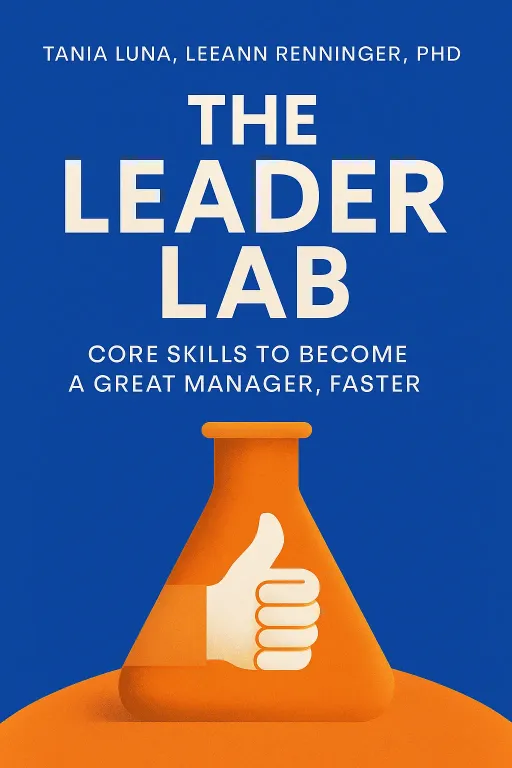
Nova: Absolutely, Atlas! And it’s not just a feel-good mantra. It's a deeply researched, profoundly effective methodology for both personal leadership development and organizational growth. Today, we’re diving into the "Agile Leader's Playbook," drawing insights from two foundational texts that have reshaped modern thinking on this: Tania Luna and LeeAnn Renninger's "The Leader Lab," and Eric Ries's seminal work, "The Lean Startup." These aren't just business books; they're manifestos for intelligent, iterative progress.
Atlas: I’m curious. "The Lean Startup" is widely acclaimed for revolutionizing how entrepreneurs approach product development, challenging the old 'build it and they will come' mentality. But "The Leader Lab" focusing on through failure... that feels like a more personal, perhaps even vulnerable, application. How do these seemingly distinct areas converge on this idea of "iterating to innovate"?
Nova: That's the beautiful synergy, Atlas! While Ries gave us the blueprint for organizational agility, Luna and Renninger brought that same scientific rigor to the often-fuzzy realm of leadership. They argue that leadership isn't some inherent trait you either have or you don't; it's a skill, a muscle you develop through deliberate practice and, crucially, through feedback—especially the kind that comes from things not going perfectly.
Atlas: So, it's like a scientist in a lab, but the experiment is your own management style, and the feedback might be a slightly bewildered team member? That’s a fascinating reframe. For leaders who process information deeply and seek underlying principles, this could be a game-changer.
The Leader Lab: Failing Fast to Master Leadership
SECTION
Nova: Exactly! "The Leader Lab" emphasizes what they call "deliberate practice." Think of a concert pianist. They don't just play perfect pieces; they isolate difficult sections, practice them slowly, make mistakes, get feedback from a teacher, and then integrate those learnings. Leadership, they suggest, should be no different. You identify a specific leadership behavior you want to improve—say, giving more effective feedback, or delegating more strategically.
Atlas: Okay, so you pick a "leadership muscle" to flex. But how do you something as nuanced as, say, inspiring a team, without it feeling forced or inauthentic? It sounds like you're suggesting we intentionally make mistakes in front of our team. That's a brave, perhaps even terrifying, proposition for someone driven by meaningful impact.
Nova: That’s where the "fail fast, learn faster" part comes in, but with a crucial caveat: it’s about, not reckless abandonment. Imagine a leader, let's call her Sarah, who struggles with micromanagement. Instead of trying to suddenly become a completely hands-off leader overnight, which would likely fail spectacularly and erode trust, Sarah decides on a tiny experiment.
Atlas: Tell me about Sarah. What's her tiny experiment?
Nova: Sarah identifies one small, low-stakes project. Instead of giving detailed instructions, she tells her team member, Mark, "Mark, I need you to lead this small client report. I trust your judgment on the approach. Check in with me only if you hit a major roadblock or need a sounding board." She then consciously bites her tongue when she sees him doing things differently than she would.
Atlas: That's tough. The urge to jump in, to "fix" it, must be immense for many leaders.
Nova: Absolutely. And here's the "fail fast" part: Mark delivers the report. It's good, but not perfect. Maybe some data is presented differently than Sarah prefers, or the executive summary could be punchier. Instead of criticizing or taking over, Sarah's learning moment is in the feedback. She asks Mark, "How did you feel empowered on this project? What support did you wish you had? What did you learn?" And she reflects on her own discomfort during the process.
Atlas: So, the "failure" isn't the report itself, but perhaps Sarah's internal struggle with letting go, or Mark's initial approach not perfectly aligning with her vision. The learning comes from that dynamic and then reflecting on it.
Nova: Precisely! Sarah learns that Mark deliver, even if his style differs. She learns her own triggers for micromanaging. She gets feedback on how her delegation felt to Mark. The next week, she tries a slightly different approach with another team member, or with Mark on a slightly larger project, incorporating what she learned. It's a continuous loop of hypothesis, experiment, feedback, and adaptation. It builds momentum, as our user profile emphasizes.
Atlas: I see. It's about creating a safe-to-fail environment, not just for the team, but for the leader themselves. It requires a resilient mindset, a willingness to be vulnerable and acknowledge that leadership is a journey, not a destination. It challenges the traditional image of the infallible leader.
Nova: It absolutely does. It’s about shifting from a mindset of "I must be perfect" to "I must be learning." And that subtle reframe unlocks immense potential for growth.
The Lean Startup: Validated Learning & the MVP
SECTION
Nova: Now, this same philosophy of "fail fast, learn faster" isn't limited to individual leaders. Eric Ries, in "The Lean Startup," famously scaled this idea to entire organizations, particularly in the tech and startup world. He introduced the concept of the Minimum Viable Product, or MVP, and "validated learning."
Atlas: Ah, the MVP. For a "Growth Architect" aiming for tangible impact, the word "minimum" can sometimes feel like a compromise, almost like releasing something unfinished. How does Ries redefine "minimum" to actually drive learning and growth?
Nova: That's a brilliant distinction, Atlas. Ries would argue that an MVP isn't about shipping a shoddy product. It's the smallest possible version of a new product or feature that allows you to collect the maximum amount of validated learning about customers with the least amount of effort. It’s about testing your riskiest assumptions.
Atlas: Okay, so it’s not about cutting corners, it’s about identifying the core hypothesis you need to test. Give me an example. How does a company use an MVP to avoid a massive, costly failure?
Nova: Think about a company that wants to launch a revolutionary new social media platform. The traditional approach would be to spend years in stealth mode, building out every single feature—profiles, messaging, feeds, groups, events—pouring millions into development, only to launch and find out users don't actually want social media platform, or they dislike a core feature.
Atlas: That's the "rigid plan" approach you mentioned earlier. High risk, high potential for spectacular failure.
Nova: Exactly. Ries's approach is different. An MVP for this social media company might be as simple as a landing page with a compelling video explaining the of the platform, and a sign-up button for early access. They measure interest. Do people click? Do they sign up? Do they share it? This tells them if there's even a for such a product.
Atlas: So, the MVP isn't the product itself, but the to validate a core assumption. The assumption here being: "People want this new social media platform."
Nova: Precisely. If the landing page gets no traction, they've "failed fast." But that failure is incredibly valuable data. It means their initial hypothesis was wrong, or their messaging was off. They haven't wasted millions building a ghost town. They can pivot, refine their idea, or even scrap it and move on, having learned something crucial.
Atlas: That's powerful. It connects to the "strategic thinking" aspect from our user profile – navigating complex challenges by breaking them down into testable hypotheses rather than betting the farm on a single, grand vision. But what if the MVP get traction?
Nova: Then they proceed to the next riskiest assumption. Maybe the next MVP is a bare-bones messaging app—just enough to see if people actually the core communication feature. They gather data, talk to early users, and iterate. Each step is a small experiment, reducing risk and building knowledge incrementally. This "validated learning" is the core. It’s not just getting feedback; it’s systematically proving or disproving assumptions about your business model.
Atlas: I can see how this would appeal to someone who seeks underlying principles and aims for tangible impact. It's about making data-driven decisions at every turn, rather than relying on gut feelings or outdated market research. It’s a powerful antidote to analysis paralysis, pushing for focused exploration through action.
Synthesis & Takeaways
SECTION
Nova: So, whether you're Sarah learning to be a better leader, or a startup building the next big thing, the core principle is identical: replace rigid plans and the pursuit of perfection with rapid experimentation and validated learning. The goal isn't to failure, but to make your failures small, fast, and incredibly informative.
Atlas: It's about designing your growth—personally and professionally—as a series of controlled scientific inquiries. This resonates deeply with the idea of being a resilient philosopher, understanding that true wisdom comes from testing your beliefs against reality. The "Tiny Step" recommendation from our playbook this week feels incredibly relevant here: identify one small project where you can apply a "test and learn" mindset, gathering quick feedback rather than aiming for perfection.
Nova: Exactly. It could be as simple as trying a new way to run a team meeting, or sending out a draft proposal for early feedback instead of polishing it for weeks. The biggest hurdle, often, is our ego—the fear of being seen as "less than" if we don't present a perfect, finished product or a flawless leadership persona. But the true strength, the real wisdom, lies in the humility to experiment and adapt.
Atlas: And that's where the growth truly happens. It's about shifting our perception of mistakes from roadblocks to signposts. It empowers us to be more intentional, more effective, and ultimately, to make a more meaningful impact. Embracing this iterative mindset, whether for leadership or innovation, is how we truly sustain our well-being and navigate complex challenges.
Nova: What a journey! From refining our personal leadership to revolutionizing how organizations innovate, the message is clear: iterate to elevate.
Atlas: Absolutely. It's a powerful reminder that the path to mastery is paved with thoughtful, deliberate experimentation.
Nova: This is Aibrary. Congratulations on your growth!