How to Build Products People Love Without Burning Out
Golden Hook & Introduction
SECTION
Nova: You know, Atlas, I've seen countless brilliant minds pour their heart and soul into building something, only to watch it… just sit there. Like a beautifully crafted key, but without a lock to open.
Atlas: Oh man, I totally know that feeling. It's like crafting a masterpiece of engineering, a marvel of user interface, only to find out nobody actually wants to use it. The digital graveyard is full of those.
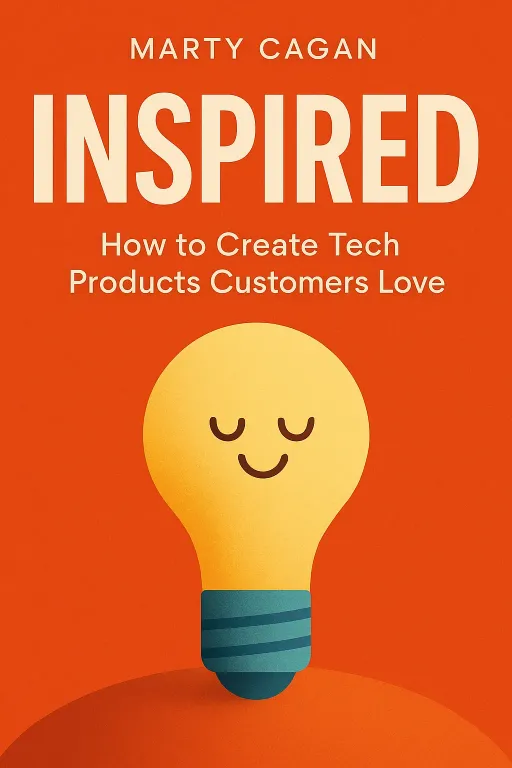
Nova: Exactly! And today, we're unlocking the secrets behind that phenomenon, and more, by diving into some foundational thinking that underpins the book "How to Build Products People Love Without Burning Out." While not a single book in itself, it synthesizes the wisdom of giants. We’re talking about the profound insights of people like Marty Cagan, whose work has shaped product management for decades, and Eric Ries, who famously brought us the Lean Startup movement, fundamentally changing how entrepreneurs approach innovation.
Atlas: That’s a great way to put it, Nova. These aren't just academic theories; these are the playbooks for avoiding that soul-crushing experience of building something nobody needs or wants. And honestly, for a lot of our listeners who are passionate about creating, that’s a constant fear.
Nova: Absolutely. And the core of our podcast today is really an exploration of how to bridge the chasm between having a great product idea and actually building something people genuinely love, all while safeguarding your creative energy. Today we'll dive deep into this from two perspectives. First, we'll explore why simply building something functional isn't enough, then we'll discuss the power of continuous iteration and feedback to truly connect with users.
The 'Wanted' Factor: Beyond Functional Features
SECTION
Nova: So, let's start with that initial cold fact: many brilliant technology ideas never find their audience. It's not enough to build something functional; you need to build something people truly want and need. And that often requires a radically different approach than simply executing on a list of features.
Atlas: But wait, isn't a detailed feature list the whole point of product development? Like, you meticulously plan what it's going to do, and then you build it? That's how we're taught to do things, right?
Nova: That's the traditional mindset, and it's precisely what Marty Cagan challenges in his work. He emphasizes what he calls "product discovery." This isn't about sitting in a room, brainstorming features, and then handing them off to engineers. It's about teams actively working to understand user problems and validate solutions committing to building.
Atlas: So you're saying it's more like detective work than construction? Can you give us an example? Because for someone managing a team, it sounds like more overhead, not less.
Nova: Think about a fictional startup we’ll call QuantumFlow. They set out to build the "ultimate internal communication tool." Their engineers were brilliant, building features like real-time sentiment analysis, AI-powered meeting summaries, and a super-slick UI. On paper, it was functionally superior to anything on the market.
Atlas: Sounds impressive. I’d probably download that.
Nova: Right? But here's the catch: they built it all in isolation. They assumed their target users – say, mid-sized marketing agencies – all those bells and whistles. What they failed to discover was the core problem wasn't a lack of features; it was a deep-seated issue with information overload and a lack of trust in existing tools. The teams weren't using the old tools because they felt spied on or overwhelmed.
Atlas: Oh, I see. So QuantumFlow built a faster, shinier car for people who actually needed a bicycle because the roads were too narrow. The solution was functionally amazing, but it didn't address the problem.
Nova: Precisely. Cagan advocates for "empowered product teams." These aren't teams just churning out "output" – that is, features. They're focused on "outcomes" – solving real user problems and achieving business results. The QuantumFlow team was tasked with "build these features," not "solve internal communication issues for marketing agencies." That subtle shift in focus changes everything.
Atlas: That’s going to resonate with anyone who struggles with endless feature requests. It’s like, instead of asking "What should we build next?", the question becomes "What problem do we need to solve, and for whom?" That sounds like it could dramatically reduce developer burnout too, honestly. Building something you know won't land has to be demoralizing.
The Build-Measure-Learn Loop: Iteration as Innovation
SECTION
Nova: It absolutely is, Atlas. And that naturally leads us to the second key idea we need to talk about, which often acts as a counterpoint to what we just discussed, but truly complements it. Once you're focused on the right problem, how do you ensure you're building the right solution efficiently and without burning out? That’s where Eric Ries and "The Lean Startup" come in with his brilliant Build-Measure-Learn feedback loop.
Atlas: Build-Measure-Learn. I've heard that phrase thrown around a lot, but what does it really mean in practice? Is it just about launching something quickly and seeing what happens? That sounds a bit risky, almost like building something shoddy.
Nova: Far from it! It’s about rapid experimentation and validated learning. Think of it as scientific method applied to product development. Instead of a grand, year-long plan, you build a Minimum Viable Product, or MVP, which is the smallest thing you can create to test your riskiest assumption.
Atlas: Okay, so a "minimum viable product." That's not just a half-baked idea, then?
Nova: Not at all. It's the impactful thing you can build with the effort to get. Let's imagine another fictional startup, EcoCycle, which wants to create a smart recycling app. Their initial idea was to gamify recycling, with points, leaderboards, and badges. A lot of features they could build.
Atlas: Ah, the classic gamification approach. Sounds fun on paper.
Nova: It does! But instead of building the whole gamified platform, their MVP was a simple app that just let users scan items to see if they were recyclable and find the nearest drop-off point. No points, no leaderboards. They then launched this bare-bones version to a small group of users.
Atlas: And what did they measure?
Nova: They measured usage patterns, what features people actually clicked on, and, crucially, they to those users. What they learned was surprising: people didn't care about the gamification. Their core frustration was simply knowing to recycle and. The gamified features they had planned were irrelevant to the actual problem.
Atlas: Wow. So they that their initial assumption was wrong, sinking months or years into building a complex, unwanted system. EcoCycle didn't burn out trying to make people care about points if they just wanted to recycle correctly.
Nova: Exactly! That's the "Learn" part of the loop. Based on that feedback, they adapted. They doubled down on the "what to recycle" and "where to drop off" features, and later added a simple reminder system. They continuously iterated based on what users truly valued, minimizing waste and maximizing their impact. It’s a stark contrast to QuantumFlow, who built everything they thought was right and then learned it was wrong.
Atlas: I’m curious, though. For our listeners who are involved in managing projects, this sounds like a constant state of flux. How do you prevent that from translating into burnout for the team? Isn't it exhausting to constantly be changing direction?
Nova: That's a great question, and it speaks directly to the "without burning out" part of our theme. The key is that the iteration isn't random. It's learning. You're not just pivoting for the sake of it; you're pivoting because you have concrete data and user feedback telling you where to go. That clarity, even in change, is far less draining than building something in the dark and hoping it lands. It gives teams a sense of purpose and direction, even when the path shifts. It’s about being agile, not just fast.
Synthesis & Takeaways
SECTION
Nova: So, what we've really explored today is how product discovery, championed by thinkers like Marty Cagan, helps you find the right problem to solve, and then Eric Ries's Build-Measure-Learn loop gives you the framework to build the right solution efficiently. Together, they form a powerful virtuous cycle.
Atlas: It’s about humility in creation, isn't it? It’s acknowledging that we're not omniscient builders, but continuous learners alongside our users. And that, I think, is a profoundly liberating idea for anyone passionate about building. It shifts the focus from being "right" to being "adaptive and insightful."
Nova: Absolutely. It means your effort is directed towards creating valuable and desired solutions, not just executing on assumptions. And the best part? It directly combats that feeling of burnout, because you're always connected to real value and real impact.
Atlas: So, for our listeners, here’s a tiny step you can take today. For your next idea, before you build, talk to five potential users. Don't sell them your idea; just listen. Understand their core problem. What are their biggest frustrations? You might be surprised at what you discover.
Nova: That simple act of listening can save you months of wasted effort and prevent that devastating feeling of building a key without a lock.
Atlas: This is Aibrary. Congratulations on your growth!