How to Build a Business That Serves: Impact Without Burnout
Golden Hook & Introduction
SECTION
Nova: Many compassionate innovators believe making a real impact means relentless hustle, even burnout. What if the most effective way to serve is actually through sustainable joy and smart strategy?
Atlas: Sounds like a dream, Nova. Impact burnout? For those of us who pour our hearts into helping, that often feels like a myth, a unicorn of the entrepreneurial world.
Nova: Absolutely, Atlas. And that's exactly why we're diving into the profound insights from the book "How to Build a Business That Serves: Impact Without Burnout." This isn't just another business guide; it's a vital blueprint for anyone deeply driven to make a difference, showing how to merge your heart-driven purpose with practical, sustainable business models. Today, we're going to unpack two fundamental pillars of this approach: first, the foundational power of unearthing your 'why' — the very soul of a service-driven business. Then, we'll discuss how to apply 'lean for good' principles, using agile innovation to maximize impact while fiercely preventing burnout.
Unearthing Your 'Why': The Soul of Service-Driven Business
SECTION
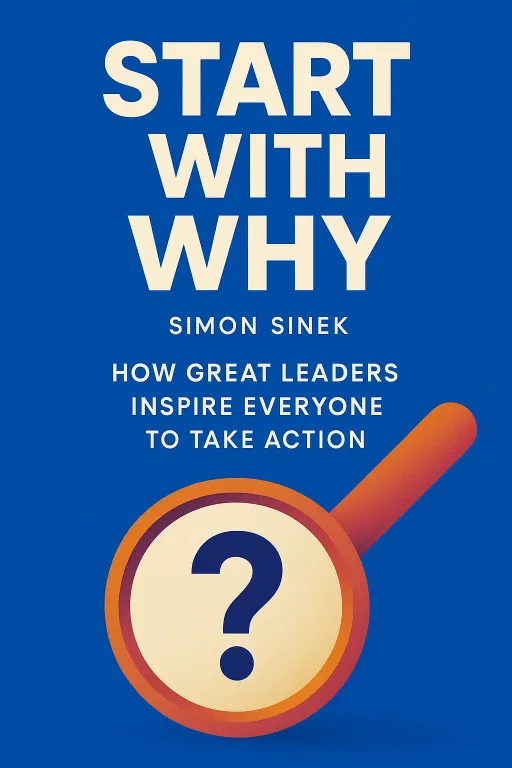
Nova: So, let's start with the soul. The core of this whole philosophy circles back to a concept popularized by Simon Sinek: 'Start with Why.' Now, for our listeners who are compassionate innovators, particularly those dedicated to helping individuals with learning disabilities, your 'why' isn't just a marketing slogan. It's the profound, empathetic understanding of the specific challenges and incredible potential of the people you serve. That deep-seated empathy your 'why.'
Atlas: I get the emotional appeal of a 'why,' Nova. It feels good to have a purpose. But how does that translate into tangible results? For someone building a program for kids with ADHD, trying to navigate funding, hiring, or even just keeping the lights on, how does a 'why' actually help with those very real, practical business challenges? Does it really move the needle beyond a nice mission statement?
Nova: It absolutely does, Atlas, and in deeply practical ways. A clearly articulated 'why' acts as a powerful magnet. It attracts aligned team members who share your vision, clients who resonate deeply with your mission beyond just the service, and even funders who see the authentic passion. It creates a brand resilience that pure profit motives simply can't replicate. Think of a hypothetical non-profit, let's call them "Bright Minds Collective." Initially, they offered general tutoring for various learning disabilities. They struggled with volunteer retention; people would come and go. Donor engagement was lukewarm because their 'what' was clear, but their 'why' was generic – 'helping kids learn.'
Atlas: So they were doing good work, but it wasn't... sticky?
Nova: Exactly. It wasn't sticky. After a deep dive into their core beliefs, they articulated their 'why' as: "unlocking the unique genius within every neurodiverse child, celebrating their perspective, and empowering them to thrive on their own terms." This wasn't just words on a wall; it became their guiding star. This shift transformed their messaging. They started attracting passionate educators who felt that specific calling. They saw a surge in funding from donors who felt a profound connection to that unique vision, not just 'helping kids,' but truly neurodiversity. Their 'why' gave them an identity, a purpose that permeated every decision.
Atlas: That's a powerful story. It shifted from being a service provider to a movement. But how does one get to that level of clarity? It feels like something you're either born with, or you're not, especially when you're already stretched thin by the daily demands of a business.
Nova: It’s a process, not an epiphany, Atlas. Practical steps involve deep self-reflection: asking yourself, 'What truly breaks my heart about this problem?' or 'What kind of transformation do I want to see?' Another powerful technique is to interview your early clients or beneficiaries, asking them not just what you for them, but how you made them, or what fundamental shift happened in their lives. It's about focusing on the and the delivered, beyond the specific service. Your 'why' is the core belief that drives your work, the underlying conviction.
Atlas: So for our listeners who are deeply empathetic but also need to be pragmatic and build a sustainable business, this isn't just about a warm fuzzy feeling or a marketing slogan. It’s about building a foundational clarity, a bedrock, that makes every subsequent business decision stronger, more aligned, and ultimately, more impactful. It's your compass.
Lean for Good: Agile Innovation to Prevent Burnout and Maximize Impact
SECTION
Nova: That foundational clarity of 'why' then needs a smart 'how,' Atlas. This brings us to the tactical side of sustainable impact, which often gets derailed by the desire for perfection. Many compassionate innovators feel immense pressure to get everything absolutely perfect before launching, especially when dealing with sensitive issues like learning disabilities. This is where Eric Ries's 'Lean Startup' principles come in, but with a crucial, compassionate twist for those who serve.
Atlas: The 'Lean Startup' for service? That sounds like an oxymoron, Nova. My immediate thought goes to 'lean' as in ruthless efficiency, sometimes even cutting corners. How does that align with serving vulnerable communities, like those with learning disabilities, where 'failing fast' could have serious, negative consequences for people's well-being and trust? It feels inherently risky.
Nova: That's a vital distinction, Atlas. It’s absolutely not about cutting corners or being ruthless. It’s about. It's about designing to ensure you're building the thing, the thing, not just building something perfectly that ultimately doesn't meet the real need. Think of "AccessEd Tech," a hypothetical startup dedicated to creating an AI-powered tutor for students with dyslexia. Their initial instinct, driven by a desire for perfection, was to spend two years and a huge budget perfecting a full-featured app before showing it to anyone.
Atlas: Which, for a startup, is a recipe for running out of money and steam before you even know if it works.
Nova: Precisely. Instead, they adopted a 'lean for good' approach. They built a simple, single-feature prototype – just a text-to-speech reader with customizable fonts – in two months. They then gave it to a small group of five families for free, gathering intensive, honest feedback weekly. What they learned quickly was invaluable: while the reader was good, families desperately needed an integrated note-taking feature and a distraction-free mode that blocked other apps. By iterating weekly based on this real-world feedback, they avoided building a fantastic product that would have completely missed critical user needs. They pivoted, added the features, and saved themselves from a massive, potentially demoralizing, failed launch that would have led to burnout and a wasted effort.
Atlas: Okay, so it’s not about being 'cheap' with impact; it’s about being 'smart' with impact. It’s about not assuming you know best, even with the best intentions, and letting the community you serve guide your development. But what about the burnout part that we started with? How does 'lean' specifically prevent that constant feeling of being overwhelmed when you have so much heart invested in every step?
Nova: That's the beautiful synergy, Atlas. When you work in small, iterative cycles, you get quick wins and continuous feedback. This dramatically reduces the pressure of a single, make-or-break launch. You're constantly adapting, which means less time spent on efforts that aren't working, freeing up your precious energy. It essentially shifts the focus from Herculean, often exhausting, effort aimed at perfection, to smart, consistent, and validated progress. This way, you have more energy left to actually, rather than constantly recovering from the stress of a grand, unvalidated effort.
Atlas: So it's about managing your energy and resources, just as much as managing your product development. It’s a way to be impactful without sacrificing yourself on the altar of service, which I imagine resonates deeply with our listeners who are always giving 110%, often to their own detriment.
Synthesis & Takeaways
SECTION
Nova: Absolutely. Ultimately, the power lies in combining these two forces: the unwavering direction of your deeply articulated 'why' with the sustainable, adaptable execution of 'lean for good' principles. It’s a resilient model for true, enduring impact that protects your energy and ensures your efforts are truly landing where they're needed most.
Atlas: So for our compassionate innovators listening right now, who are probably nodding along, feeling that tension between heart and hustle, what's they can take this week to apply this wisdom, especially those who often feel overwhelmed by the sheer scope of what they want to achieve?
Nova: Here’s your mission, a tiny step with massive potential: First, carve out just 15 minutes this week to write down your core 'why' for helping people with learning disabilities. Don't censor yourself; dig deep into the emotion and conviction. Then, brainstorm just one small, testable service idea you could launch or even just next week. It could be as simple as a new worksheet, a 15-minute online workshop, or a new way to deliver feedback. The key is to start small, learn quickly, and let that learning guide your next move.
Atlas: It’s about making impact a sustainable, joyful journey, not a sprint to burnout. It's about building a business that genuinely serves, not just a business that survives, and doing it with your well-being intact.
Nova: Precisely. True service isn't about self-sacrifice; it's about self-awareness, smart strategy, and allowing your purpose to fuel a ripple effect of positive, enduring change in the world, starting with you.
Atlas: We'd love to hear your 'why' and those brilliant, testable ideas! Share them with us online.
Nova: This is Aibrary. Congratulations on your growth!