Driving Continuous Improvement and Innovation
Golden Hook & Introduction
SECTION
Nova: Okay, Atlas, I've got a challenge for you. Imagine you're building a new product, or maybe launching a new initiative at work. What's your first instinct? Go big or go home, right? You want to hit a home run.
Atlas: Oh, absolutely. The grand vision, the splashy launch, the standing ovation. Who doesn't dream of that? That's the narrative we're all fed, isn't it? The lone genius with the breakthrough idea.
Nova: Exactly! But what if I told you that chasing that 'home run' is actually the slowest, riskiest, and least effective way to innovate? What if the secret to driving continuous improvement and truly groundbreaking innovation lies in embracing something far smaller, far more iterative, and frankly, a bit less glamorous?
Atlas: Hold on, are you saying that all those big, bold moves we admire are actually… a trap? That sounds almost counterintuitive to everything we're taught about leadership and vision. I imagine a lot of our listeners who are trying to make a real impact in their roles might feel the same way.
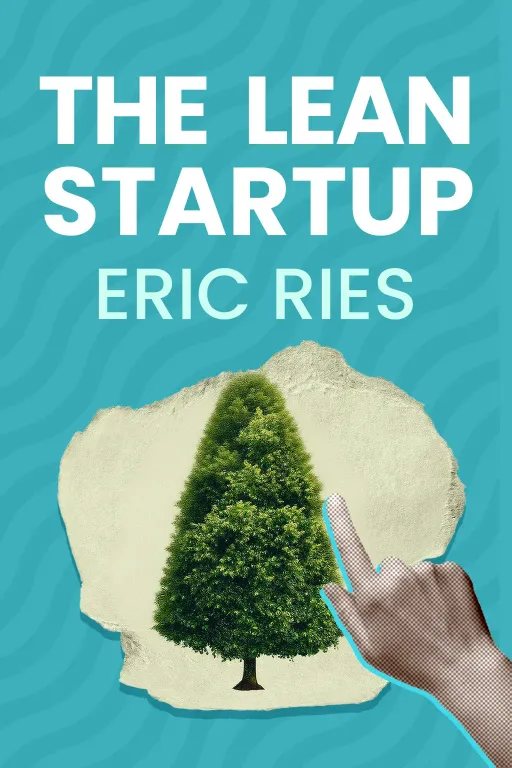
Nova: It’s a profound reframing, truly. And it's at the heart of what we’re exploring today, drawing on two incredibly influential thinkers. We're diving into the brilliant insights from Eric Ries's "The Lean Startup" and James Clear's "Atomic Habits." Together, these books offer a powerful one-two punch for understanding how real progress unfolds.
Atlas: That’s a great pairing. I mean, Ries's work, which came out of his own experiences in the tech startup world, really challenged the conventional wisdom of how you build a business. He famously argued for validated learning over grand plans. And Clear’s book, "Atomic Habits," has become a modern classic, showing us how tiny shifts in daily routines can lead to revolutionary outcomes. It's fascinating how one looks at organizational strategy and the other at individual behavior, but they both converge on the power of incremental change.
Nova: Absolutely. Ries, an entrepreneur and author, basically took the scientific method and applied it to business, after seeing so many startups fail despite brilliant ideas. He essentially codified a way to de-risk innovation. And Clear, who started writing about habits after a serious baseball injury forced him to rebuild his own life, showed us the compounding magic of small, consistent actions. Both are about systems, not just outcomes.
Atlas: So basically you’re saying we're going to unpack how to build better systems, not just chase bigger wins. I’m curious to see how these two seemingly different approaches—one for startups, one for personal habits—actually intertwine to create a holistic view of continuous improvement.
The Build-Measure-Learn Loop: The Scientific Method for Business
SECTION
Nova: Well, let's start with Ries and "The Lean Startup." The core concept that revolutionized how many think about product development and innovation is his 'Build-Measure-Learn' feedback loop. It’s pretty simple on the surface, but incredibly powerful in practice.
Atlas: Okay, so 'Build-Measure-Learn.' It sounds like a scientific experiment, almost. Like you're in a lab, but instead of beakers, you have… a new feature for an app?
Nova: Exactly! That’s the genius of it. Ries argues that every new idea, every new product, every new feature, should be treated as a hypothesis. You don't know if it's going to work until you test it. So, you start with 'Build' – but not a fully fleshed-out, perfect product. You build what he calls a Minimum Viable Product, or MVP.
Atlas: Ah, the MVP. That’s a term that’s definitely entered the lexicon. But I imagine for our listeners in more traditional management roles, the idea of launching something that isn't 'perfect' might feel a bit… incomplete, or even risky. It's like putting out a half-baked cake.
Nova: That’s the precise mental shift required. The MVP isn't about being shoddy; it's about being. It's the smallest possible thing you can build to. For instance, a famous example is Dropbox. Before they built any complex software, the founder, Drew Houston, created a simple three-minute video demonstrating how Dropbox would work. That video was their MVP.
Atlas: A video? That was their product? That’s wild. But it makes sense. It's low-cost, low-effort, and tests the fundamental question: "Do people even this solution?"
Nova: Precisely. And the response to that video was overwhelming. Tens of thousands of people signed up for a service that didn't even exist yet. That's the 'Measure' part of the loop. You launch your MVP, and then you 'Measure' how customers interact with it, how they respond, what they say, what they. It's not about vanity metrics; it's about validated learning. What did you learn that proves or disproves your initial hypothesis?
Atlas: So it's not just about getting feedback, it's about getting feedback that tells you if you're on the right track or if you need to pivot. I’ve been thinking about how this could apply to, say, a new training program in a company. Instead of building out a full, elaborate curriculum, you could pilot a small module with a test group.
Nova: Absolutely. You build a minimal version of the training, deliver it to a small group, collect data on engagement, comprehension, and perceived value. Then comes 'Learn.' Based on that data, you either 'persevere' – meaning your hypothesis was largely correct, and you continue building and iterating – or you 'pivot.' A pivot is a structured course correction designed to test a new fundamental hypothesis about the product, strategy, or engine of growth.
Atlas: A pivot. That's not failure, then, it’s… redirection. It sounds like it removes a lot of the ego and shame often associated with an initiative not working out as planned. It normalizes learning from what isn't working.
Nova: Exactly. Ries argues that true innovation comes from managing this loop effectively and rapidly. It’s about minimizing the total time through the loop. The faster you can build, measure, and learn, the faster you can find what customers truly want, and the less waste you generate. It's about bringing scientific rigor to the messy, unpredictable world of innovation. It emphasizes iteration, not perfection, and focuses on getting real data from real users as quickly as possible.
Atlas: That's powerful. It shifts the focus from being 'right' to being 'adaptive.' It really resonates with the idea that innovation is a journey, not a destination. But how do you sustain that level of iterative learning? It sounds like it requires a certain mindset, not just a process.
Atomic Habits: The Compounding Power of Tiny Improvements
SECTION
Nova: And that naturally leads us to the second key idea we need to talk about, which often acts as a counterpoint to what we just discussed: James Clear's "Atomic Habits." If Ries gives us the framework for organizational iteration, Clear gives us the blueprint for personal and systemic consistency that makes that iteration possible.
Atlas: Oh, I love "Atomic Habits." It’s one of those books that you read and think, 'Why didn't I realize this before?' The central idea, that 1% improvement every day leads to massive results over time, is so simple yet profound.
Nova: It's deceptively simple, isn't it? Clear's premise is that systems are more important than goals. You don't rise to the level of your goals; you fall to the level of your systems. And the building blocks of those systems are 'atomic habits' – tiny, fundamental routines that, like atoms, are the small units that make up larger compounds.
Atlas: That makes sense. It’s like the 'Build' part of Ries's loop. You're not trying to build the whole product at once; you're building the smallest, most impactful habit first. I imagine a lot of our leaders are thinking, 'How do I get my team to consistently embrace that build-measure-learn loop?' And Clear's principles could be the answer.
Nova: Precisely. Clear provides a four-step framework for building good habits and breaking bad ones: Make it Obvious, Make it Attractive, Make it Easy, and Make it Satisfying. Let's say you want your team to consistently document their learnings from each MVP iteration. Instead of just telling them to do it, you make it obvious – a clear, simple template available in their daily tools.
Atlas: So, you embed the desired behavior right into their existing workflow, rather than making it an extra chore. That's a great way to make it 'easy.' I can definitely see how that would reduce friction.
Nova: And you make it attractive – maybe by highlighting how documenting these learnings directly contributes to their professional growth or the team's success. Or make it satisfying – celebrate the small wins of completed documentation, or show how their insights directly informed the next pivot. It's about engineering the environment, both physical and psychological, to make the desired actions almost inevitable.
Atlas: That’s a great way to put it: engineering the environment. It's not about willpower; it's about making the right choice the path of least resistance. I’ve been thinking about this in terms of building a culture of feedback. Instead of just asking for feedback, you make it a habit by creating a dedicated, low-stakes weekly 'learning session' that's easy to join and where contributions are visibly valued.
Nova: Exactly! The power of atomic habits, much like the Build-Measure-Learn loop, is in its compounding effect. A 1% improvement every day for a year means you end up 37 times better. A 1% decline, and you almost vanish. It’s not about grand transformations overnight; it’s about the relentless, consistent aggregation of marginal gains.
Atlas: That’s actually really inspiring. It means that even when the big, flashy results aren't immediately visible, you're still making progress, building momentum, and setting yourself up for exponential growth down the line. It's about trusting the process, trusting the system. It connects so well to Ries’s idea of small, validated experiments. Your small experiment an atomic habit in action.
Synthesis & Takeaways
SECTION
Nova: So, when you put "The Lean Startup" and "Atomic Habits" together, you get a really compelling picture of how continuous improvement and innovation actually work. Ries gives us the strategic framework for rapid, data-driven experimentation, teaching us to test our assumptions quickly and pivot when necessary.
Atlas: And Clear gives us the tactical blueprint for embedding those iterative processes into our daily lives and organizational cultures. He shows us how to cultivate the habits – the 'atomic' actions – that make the Build-Measure-Learn loop a natural, consistent part of how we operate, rather than a heroic effort.
Nova: It’s a powerful combination. Innovation isn't about waiting for a sudden stroke of genius; it's about setting up a system that constantly generates small experiments, learns from them, and then refines the process through consistent, almost invisible, habits. It's the relentless pursuit of 1% better, applied to everything from product development to personal growth.
Atlas: That gives me chills. It means that every small step, every tiny adjustment, every piece of validated learning, isn't just a drop in the bucket. It's a building block for something truly monumental. It’s about cultivating a mindset where mistakes are just data points, and consistent effort, no matter how small, always compounds into significant progress. It’s a hopeful way to look at growth, for ourselves and for our teams.
Nova: Absolutely. The biggest innovations often look like overnight successes, but they are almost always the result of years of consistent, intelligent iteration and the cultivation of effective systems. The real power is in the process.
Atlas: Trust the process, build the habits, and keep learning. That's a profound takeaway.
Nova: This is Aibrary. Congratulations on your growth!