Beyond the Hype: Building a Product That Truly Connects
Golden Hook & Introduction
SECTION
Nova: You've got a brilliant idea, a spark, a vision that feels undeniably right. You pour your heart and soul into building it, meticulously crafting every detail. But here's the contrarian truth: having a brilliant idea and building a flawless product doesn't guarantee a single customer. In fact, it's often the fastest way to build something no one actually wants.
Atlas: Whoa, that sounds a bit out there, Nova. Isn't the whole point of being a builder to, well,? To take that brilliant idea and bring it to life? What do you mean it doesn't guarantee a customer? That sounds rough for anyone pouring their passion into a project.
Nova: Absolutely, Atlas. It's a tough pill to swallow, especially for those of us who are driven to create and see our visions manifest. But it’s a critical insight that forms the foundation of what we're exploring today from "Beyond the Hype: Building a Product That Truly Connects." This framework distills wisdom from some of the most influential minds in product development, offering a fresh, integrated perspective on what it truly means to build products that resonate deeply with users. It's about moving past the surface-level excitement of creation to the profound impact of genuine connection.
Atlas: Okay, so if the traditional "build it and they will come" approach isn't the golden ticket, then what exactly the problem we're overlooking? What's the blind spot that causes so many brilliant products to miss their mark?
The Blind Spot: Why Brilliant Products Fail to Connect
SECTION
Nova: That’s exactly where we need to start. The cold, hard fact is that true product success isn't about features; it's about deeply understanding customer needs and delivering value that actually resonates. The blind spot is building in a vacuum, without a clear process to discover and validate those needs. You end up with something technically impressive, perhaps even beautiful, but fundamentally disconnected from what people actually need or want.
Atlas: Hold on, so you're saying that even if I'm a builder who seeks clarity, who has foresight and a sharp strategic mind, my instincts alone might not be enough? Because I imagine a lot of our listeners, especially those who lead with conviction, trust their gut on what's needed.
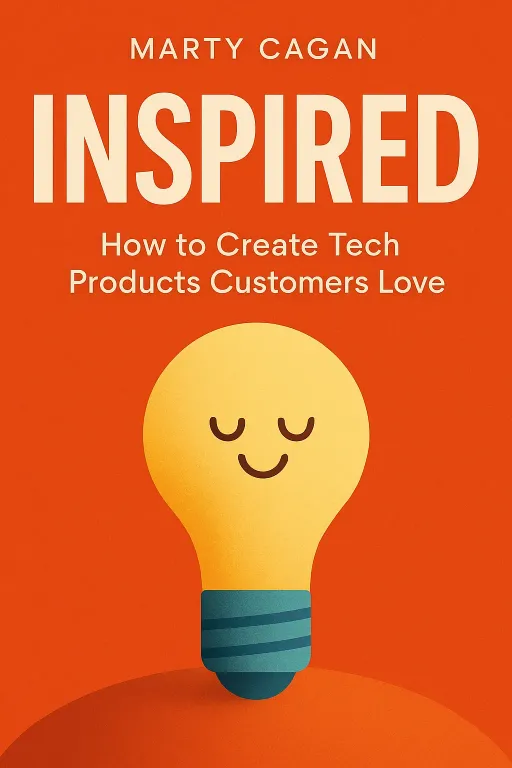
Nova: That's a great point, and it speaks to the very human desire to trust our vision. But as Marty Cagan, a giant in the product world, argues in his work, truly great products come from continuous discovery and validated learning, not just execution. He emphasizes that it's not enough to have a product manager just manage a backlog; they need to be deeply involved in understanding the problem space, the users, and the business viability anything gets built. It's about asking, "Are we building the thing?" before asking, "Are we building the thing?"
Atlas: So basically you're saying it's like an architect who designs a stunning building without ever asking the client who will live in it, or what they need it for. They might create a masterpiece, but if the client wanted a cozy family home and got a minimalist art gallery, it's a failure of connection. That makes sense, but for someone in a high-stakes environment, isn't that a huge leap of faith to immediately start building? To pause and question your own brilliant idea?
Nova: It feels counter-intuitive, doesn't it? Especially for those who thrive on action and application. But the risk of pausing is far greater. Imagine a team spending months, even years, developing an incredibly sophisticated AI tool, believing it will revolutionize an industry. They've poured in resources, talent, and countless hours. But when they launch, the target users find it overly complex, solving a problem they didn't prioritize, or simply not fitting into their existing workflows. All that brilliance, all that effort, essentially wasted because the foundational need wasn't truly understood or validated. That's the silent killer of innovation Cagan talks about. It's not about lacking talent; it's about misdirection of that talent.
Atlas: Wow, that's kind of heartbreaking when you think about the passion and effort involved. For our listeners who are driven by impact and want sustainable growth, that scenario is probably their worst nightmare. So, if the problem is building without true discovery, what's the strategic antidote? How do we ensure our efforts lead to real impact and not just impressive, but ultimately unused, features?
The Value Compass: Navigating Towards True Product-Market Fit
SECTION
Nova: The antidote, Atlas, lies in adopting a "value compass"—a systematic way to navigate towards genuine customer value and product-market fit. This is where Eric Ries’s "The Lean Startup" comes in, with its revolutionary Build-Measure-Learn feedback loop. It's a framework for rapidly iterating and validating product ideas with real customers. Instead of building that full AI tool in secret for two years, you build a tiny, stripped-down version – an MVP – to test your riskiest assumptions.
Atlas: Okay, so it’s like testing the water with your toe before you dive into the deep end. But doesn't that slow things down? For someone who wants to move fast and apply insights quickly, that "measure and learn" part might feel like extra steps. How does this minimize waste and ensure you're always heading towards product-market fit, not away from it, as Nova's Take suggests?
Nova: That's a common misconception. It actually learning and reduces waste. Think about it: if you build that full AI tool and it fails, you've wasted two years. With Build-Measure-Learn, you might spend two building a simple prototype, show it to five potential customers, and discover a fundamental flaw in your assumption. You "learn" quickly, "pivot" if necessary, and then "build" the next, more informed iteration. This cycle minimizes the risk of building the wrong thing, ensuring your efforts are always aligned with market needs. It’s about being faster, not just faster.
Atlas: That’s a great way to put it. It’s not about slowing down, it’s about speeding up validated learning. So, the "Tiny Step" that we often highlight – interviewing five potential customers to uncover their core problem before writing a single line of code or designing a single feature – that's exactly this in action, isn't it? It's the "Measure" before the "Build," the "Learn" before the full "Build."
Nova: Absolutely, Atlas! That tiny step is the embodiment of this strategic shift. It’s asking those critical questions, "What problem are you trying to solve? How do you currently solve it? What are the biggest frustrations?" before committing significant resources. It's about transforming your approach from simply shipping products to strategically discovering and delivering genuine customer value. This ensures your efforts lead to real impact, not just another brilliant idea gathering dust.
Atlas: I totally know that feeling of wanting to jump straight into building, but this framework makes it so clear why that initial pause for discovery is actually the most strategic move. It's about building with purpose, with conviction, knowing you're solving a real problem.
Synthesis & Takeaways
SECTION
Nova: Exactly. What truly connects all these insights is the understanding that unwavering focus on the customer's real needs, validated through continuous learning, is the only sustainable path to success. It's about a deep empathy that precedes innovation, ensuring every line of code, every design choice, every feature, is a direct answer to a real human problem.
Atlas: It’s about having the conviction to pause before you push, to truly listen, and to let that guide your vision. This is about sustainable growth, not just growth for growth's sake. It's trusting your strategic mind to seek clarity through discovery, not just through execution. That resonates with anyone who wants their work to have lasting impact.
Nova: And that's why that "Tiny Step" is so powerful. It's not just a suggestion; it's a foundational shift. For your next product idea, interview five potential customers to uncover their core problem before writing a single line of code or designing a single feature. It's a small action with monumental potential for clarity and impact.
Atlas: That's actually really inspiring. It's about leading with conviction, but a conviction informed by genuine understanding. This is about building a product that truly connects, because it was born out of connection.
Nova: Couldn't have said it better myself. This is Aibrary. Congratulations on your growth!