Blueprint for Startup Success: Validating Your Vision
Golden Hook & Introduction
SECTION
Nova: Atlas, five words. If you had to describe the core lesson of Steve Blank's groundbreaking work on startups, what would they be?
Atlas: Oh, that's a challenge. Hmm... "Stop building, start customer talking."
Nova: Ooh, that's good! Concise, to the point. Mine would be: "Your brilliant idea? Probably wrong."
Atlas: Ha! See, that's why we make a good team. You're the blunt truth, I'm the actionable advice. But both of us are essentially saying the same thing, aren't we? That traditional approach to business, the one where you lock yourself in a garage, perfect your widget, and then unveil it to the world expecting accolades… it’s a recipe for disaster.
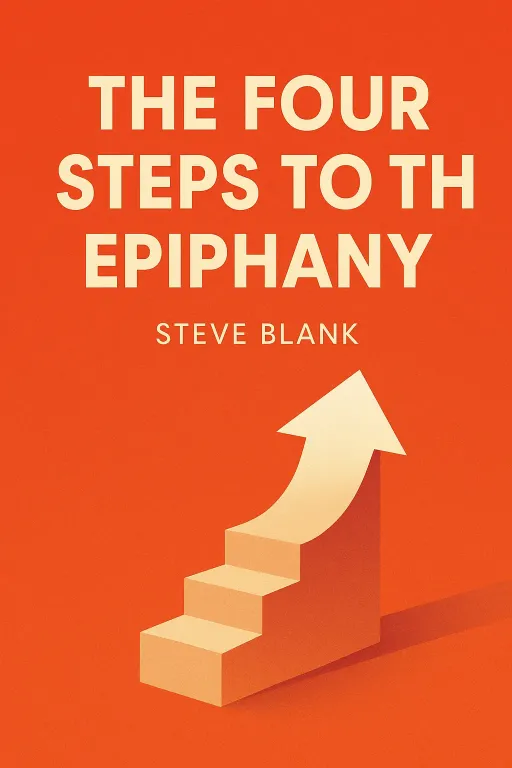
Nova: Absolutely. And that's precisely what we're dissecting today. We’re diving into the revolutionary insights of Steve Blank, particularly from his seminal works, "The Four Steps to the Epiphany" and "The Startup Owner’s Manual." Blank is no ivory tower academic; he's a Silicon Valley veteran, a serial entrepreneur who saw firsthand why so many promising ventures crashed and burned. He then went on to teach at Stanford and Berkeley, codifying his observations into a methodology that literally redefined how startups are built.
Atlas: And thank goodness for that! Because for so long, the prevailing wisdom felt like a shot in the dark. It’s like building a custom-designed spaceship without ever asking if anyone actually wants to go to the moon, or if they even need a spaceship at all. For anyone who's ever poured their heart and soul into a project, only to face lukewarm reception, this is the episode that offers a lifeline.
The 'Get Out of the Building' Imperative: Customer Discovery & Validation
SECTION
Nova: Precisely. Blank's core insight, the one that sparked the entire Lean Startup movement, is encapsulated in a deceptively simple phrase: "Get out of the building." Before Blank, the conventional wisdom for entrepreneurs was to write a detailed business plan, raise capital, develop the product in stealth mode, and then launch with a big bang.
Atlas: And then cross your fingers and hope the market agreed with your genius. It sounds so logical on paper, doesn't it? The visionary entrepreneur, toiling away in secret, delivering a perfectly polished solution.
Nova: It sounds romantic, but it's often a financial and emotional bloodbath. Blank realized that most startups fail not because they can't build a product, but because they build the product. They fail to find enough customers who want it, or they fail to build a sustainable business model around it. So, "getting out of the building" means replacing speculation with facts. It's about rigorously testing your hypotheses about your product, your customers, and your market you invest heavily.
Atlas: But wait, how does that actually look in practice? Because for someone, say, developing a new food product, the instinct is to perfect the recipe, find the right packaging, maybe even secure a distributor. You can't exactly "get out of the building" with half-baked cookies. Or can you?
Nova: You absolutely can, and you must! Let’s take that food product example. Imagine a passionate entrepreneur, let's call her Sarah. She dreams of launching a line of gourmet, organic, gluten-free energy bars. She spends six months in her kitchen, perfecting flavors, sourcing high-quality, sustainable ingredients, designing beautiful packaging. She invests thousands in initial inventory, a website, and marketing materials.
Atlas: Sounds like a dream. She’s got the vision, the drive, the product.
Nova: Exactly. But she's doing it all in isolation. Her core hypothesis is: "Health-conscious consumers will pay a premium for a delicious, organic, gluten-free energy bar with unique flavor profiles." She this. She this. But she hasn't it. She launches, and sales are sluggish. She discovers that while people appreciate the organic aspect, her target market, busy professionals, actually prioritize convenience and a lower price point over gourmet flavors. Or perhaps they're already loyal to another brand and don't see enough differentiation.
Atlas: Oh, man. That’s a gut punch. All that passion, all that hard work, all that capital… potentially wasted because the market just didn't align with her assumptions. So, how would Blank have advised Sarah to "get out of the building" differently?
Nova: Instead of perfecting the product first, Blank's approach would have Sarah engage in what he calls "Customer Discovery" and "Customer Validation." This means she would have started by forming clear hypotheses about who her customers are, what problems they have that her product could solve, and how they currently solve those problems.
Atlas: So, before even mixing a single batch of energy bars, she'd be... interviewing people?
Nova: Precisely! She'd be talking to potential customers. Not trying to sell them anything, but listening deeply. Asking questions like, "What do you typically eat for an afternoon snack?" "What challenges do you face finding healthy options?" "What's most important to you when choosing an energy bar – taste, price, ingredients, convenience?" She might even show them rough sketches of packaging or descriptions of flavor profiles to gauge initial interest and feedback, without actually making the product.
Atlas: That’s a radical shift. It’s moving from "I know what you need" to "Help me understand what you need." It sounds almost counter-intuitive for a visionary, who often feels their instinct is their greatest asset. But I can see how it forces you to confront reality early.
From Assumptions to Action: Hypotheses & Rapid Experimentation
SECTION
Nova: It’s a profound shift, and it’s about validating those instincts, not just blindly trusting them. So, if "getting out of the building" is the mandate, how do you do it effectively? That’s where hypotheses and rapid experimentation come in. It’s essentially applying the scientific method to your business idea.
Atlas: Okay, so we're talking about more than just casual chats. It's a structured approach. But what does a "hypothesis" look like in this context? And what constitutes a "simple experiment"? Because for someone trying to navigate, say, the complexities of regulatory compliance in the food industry, "simple" might feel like a distant dream.
Nova: A hypothesis is a testable assumption. It's a statement about your business that you believe to be true, but haven't yet proven. For Sarah, instead of her broad assumption, a more specific hypothesis might be: "Busy parents who shop at organic grocery stores are frustrated by the lack of healthy, nut-free, grab-and-go snack options for their children, and would be willing to pay $3.50 per bar for a solution."
Atlas: That's much more precise. It identifies the customer, their specific problem, and even a price point. It gives you something concrete to test.
Nova: Exactly. And a "simple experiment" doesn't require a fully-baked product. For Sarah, it could be creating a single-page website with a compelling description of her nut-free snack bar, maybe a few mock-up images, and a "Sign Up for Early Access" button. She could then run a small, targeted social media ad campaign to drive traffic to that page.
Atlas: So, she's measuring interest before spending a dime on production. She's not even making the bar yet. Just testing the of the bar.
Nova: That's the beauty of it! The experiment isn't about selling; it's about. If her click-through rates are low, or if people sign up but then don't engage with follow-up emails, she’s learned something critical: her initial hypothesis about that specific customer segment, their problem, or their willingness to pay, might be flawed.
Atlas: Okay, that makes a lot of sense. So, instead of building a thousand units of the wrong product, she builds a webpage. The cost difference is astronomical. And what if she learns that busy parents don't care about nut-free as much as they care about, say, a bar that also boosts focus?
Nova: Then she pivots! She refines her hypothesis based on that new data: "Busy parents are looking for healthy, grab-and-go snacks, and are willing to pay a premium for those benefits." Then she designs a, simple experiment to test hypothesis. It's a continuous loop of hypothesize, test, learn, and iterate. This process allows her to understand consumer psychology deeply, not through surveys alone, but through their actual behavior and stated needs, long before she worries about optimizing her supply chain for a product no one wants.
Atlas: This fundamentally changes how you approach challenges like regulatory compliance, too. Instead of building a product and then retrofitting it to meet regulations, you can factor in those constraints much earlier in your hypothesis testing. You might test: "Are consumers willing to accept a slightly different ingredient profile if it significantly simplifies regulatory hurdles and lowers cost?" It's about designing for the real world from day one.
Synthesis & Takeaways
SECTION
Nova: Precisely. What Blank's work illuminates is that entrepreneurship isn't about executing a perfect plan; it's about rapidly discovering a viable one. It's about understanding that your initial business plan is just a set of unproven hypotheses. The goal is to systematically turn those assumptions into facts through rigorous, customer-facing experimentation. This drastically reduces risk, saves immense amounts of time and capital, and dramatically increases your chances of building something people truly need and want.
Atlas: It's about humility, isn't it? The humility to admit you don't have all the answers, and the wisdom to go find them from the people who do: your potential customers. That "tiny step" from our introduction, mapping out core hypotheses and designing a simple experiment this week, feels incredibly powerful now. It’s not just a suggestion; it’s the most strategic move you can make.
Nova: Indeed. For anyone listening, whether you're dreaming of a new venture or trying to innovate within an existing business, the single most crucial first step you can take today is to identify your riskiest assumption – the one thing that, if proven wrong, would unravel your entire idea. Then, find one, just one, person outside your immediate circle who represents your ideal customer, and talk to them. Not to sell, but to listen, to learn, to truly understand their world.
Atlas: That's actionable, and it's transformative. It takes the big, scary leap of entrepreneurship and breaks it down into small, learnable, less risky steps. It's about building a learning organization, not just a product, and that impacts everything from consumer psychology to supply chain optimization.
Nova: It’s the blueprint for de-risking vision.
Atlas: This is Aibrary. Congratulations on your growth!