The Growth Plateau: Why Your Next Big Leap Requires a Mental Model Upgrade.
8 minGolden Hook & Introduction
SECTION
Nova: What if I told you the harder you work to fix your biggest startup problems, the more likely you are to make them worse? That's not just a cynical thought; it's a fundamental flaw in how most of us approach growth.
Atlas: Oh man, Nova, you're speaking my language. It feels like every time I solve one thing, two more pop up. Especially when you're trying to build a 0-1 growth strategy in a fast-paced AI native edtech startup, it's like a never-ending game of whack-a-mole.
Nova: Exactly, Atlas! And that whack-a-mole approach, that feeling of constant firefighting, is what we call "The Blind Spot." It often leads to what we're terming "The Growth Plateau." We tackle problems in isolation, missing the bigger picture, and that's precisely where we get stuck.
Atlas: So, we're essentially patching holes in a leaky boat without realizing there's a giant crack down the hull.
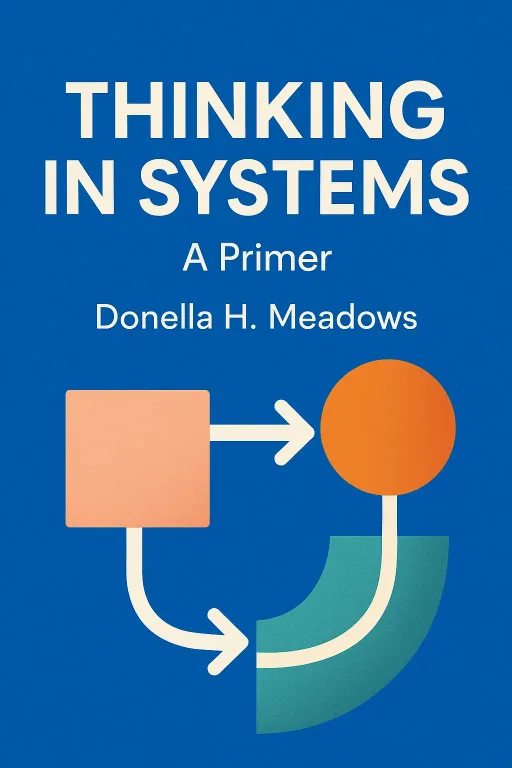
Nova: Precisely. And today, we're diving into how two pioneering thinkers, Donella H. Meadows with her seminal work "Thinking in Systems" and Peter Senge with "The Fifth Discipline," offer a radical shift in perspective to move beyond that blind spot. Meadows, for instance, was a brilliant environmental scientist who literally wrote the book on how systems work and where to find "leverage points" for change, making her insights incredibly potent for any complex organization.
Atlas: Okay, I'm already hooked. I need to know how to stop playing whack-a-mole.
The Blind Spot – Why Solving Symptoms Fails
SECTION
Nova: Let's start there then, with "The Blind Spot." It's the failure to see the interconnectedness of your startup's moving parts. Imagine you've got a customer churn problem. Your immediate reaction might be to throw more resources at customer support, or maybe implement a new onboarding flow. These are often isolated fixes for symptoms.
Atlas: Right, because that's what's directly in front of you. You see the numbers dipping, you react. But how do you even begin to the whole system when you're in the trenches, trying to hit those aggressive growth targets? It feels impossible to step back.
Nova: That's the challenge, and it's why this blind spot leads to unintended consequences and those frustrating growth plateaus. Meadows would say that every system is a complex web of relationships. When you push on one part without understanding the whole, another part often pushes back in an unexpected way. For example, a startup might invest heavily in marketing to acquire new users, seeing it as an isolated problem-solver for growth.
Atlas: More users, more growth, right? Simple math.
Nova: Not always. If the backend infrastructure isn't scalable, or the product experience for those new users is subpar, that surge in marketing could lead to system overload, frustrated customers, and even higher churn rates down the line. You've just created a new, bigger problem by "solving" an old one in isolation.
Atlas: So, it’s like trying to optimize a single engine part when the entire car chassis is misaligned. You might get a tiny bit more horsepower, but you're never going to win the race. What's the real cost of this blind spot, beyond just stalled growth? What's the impact on a team's energy and resources?
Nova: The cost is enormous, Atlas. It's burnout, wasted resources, and a perpetual feeling of being overwhelmed without true progress. Teams feel like they're running on a treadmill, constantly busy but not moving forward. It fosters a reactive culture instead of a proactive one. What these thinkers are really telling us is that it's not about working harder; it's about thinking fundamentally differently.
The Systemic Shift – Leverage Points and Shared Visions
SECTION
Nova: That frustration leads us perfectly to the shift these thinkers propose. Donella Meadows, who was a brilliant environmental scientist before 'systems thinking' was even a buzzword, argued the most effective way to change a system isn't brute force; it's understanding its underlying structure to find 'leverage points.'
Atlas: Leverage points? So you're saying there are small changes that can have massive impact? That sounds almost too good to be true, especially for someone trying to move the needle in a competitive edtech space. Give me an example of a leverage point in a startup.
Nova: Absolutely. Think about that customer churn problem again. Instead of just adding more customer support reps or tweaking onboarding, a leverage point might be to fundamentally change how product and engineering teams are incentivized. What if their success metrics included long-term customer satisfaction and retention, not just feature delivery? That small shift in incentives can ripple through the entire system, leading to more thoughtful product development, fewer bugs, and ultimately, happier, longer-term customers. It's like a tiny rudder changing the direction of a massive ship.
Atlas: Wow, that’s actually really inspiring. It’s about understanding the underlying dynamics.
Nova: Exactly. And Peter Senge builds on this by emphasizing "mental models" and "shared visions" as critical for organizational learning. Senge, who has influenced countless business leaders, shows us that changing the system also means changing how we about the system, and that collective intelligence is the real superpower.
Atlas: Okay, 'mental models' and 'shared visions.' As a growth officer, I'm constantly trying to align teams. Is Senge suggesting that if everyone just systemically, problems magically disappear? Or is there a practical way to actually build these 'shared visions' when everyone's got their own priorities and pressures?
Nova: It's not magic, but a discipline, Atlas. Shared visions come from genuine dialogue, challenging assumptions, and collectively asking "what is the outcome we want to create?" Imagine an edtech startup where individual teams optimize their own metrics – marketing gets more leads, product builds more features, sales closes more deals. But if the shared vision is to achieve "student mastery" and "measurable learning outcomes," it forces everyone to re-evaluate their actions through that lens.
Atlas: So, instead of each team having its own finish line, everyone's running towards the same ultimate goal. That would change everything.
Nova: It would. It forces a shift from reactive problem-solving to proactive system design. You're not just fixing the car; you're building a better car, together. This requires active learning, a willingness to question deeply held beliefs, and cultivating what Senge calls "personal mastery" among individuals.
Synthesis & Takeaways
SECTION
Nova: So, it boils down to this: are we playing whack-a-mole, or are we designing a better game? The core message from Meadows and Senge is that true, sustainable growth comes from understanding the invisible forces at play – the interconnectedness, the leverage points, and the shared mental models that either propel us forward or hold us back.
Atlas: That's a powerful reframing. It’s about moving from reacting to problems to proactively designing for success. For our listeners, especially those building something from scratch, what's one practical step they can take this week to start seeing their 'system' differently, rather than just their 'problems'?
Nova: Start by asking that deep question we mentioned earlier: "What recurring challenge in your startup might be a symptom of a larger system rather than an isolated problem?" Don't rush to fix it; just observe it through a systemic lens. Draw a simple diagram of the interconnected parts. You might be surprised by what patterns emerge.
Atlas: That's a fantastic, low-friction way to start. It’s like putting on a new pair of glasses and suddenly seeing the matrix. I love that. It shifts the entire perspective.
Nova: Exactly. It's an upgrade to your mental operating system.
Atlas: Well, Nova, this has been an incredible upgrade to my own thinking. Thank you for illuminating these powerful ideas.
Nova: Always a pleasure, Atlas.
Atlas: And thank you, our incredible listeners, for joining us on this journey of growth and insight. Keep asking those deep questions, and keep looking for the leverage points in your own systems.
Nova: This is Aibrary. Congratulations on your growth!