The 'God Complex' is a Trap: Why You Need Strategic Humility
8 minGolden Hook & Introduction
SECTION
Nova: Atlas, five words. The 'God Complex' is a Trap. Go.
Atlas: Visionary ambition, hidden costs, humble impact.
Nova: Ooh, I like that. "Humble impact." Because today, we're diving deep into why the 'God Complex' isn't just a psychological term, but a very real trap for anyone with a powerful vision. And why strategic humility is your most powerful tool.
Atlas: Strategic humility? That sounds like an oxymoron for someone trying to change the world. Most of the impactful people I know are anything humble. They’re usually quite certain of their path.
Nova: Exactly! That certainty, that unshakeable belief in your own answers, can be a massive blind spot. It's about seeing the whole board, not just your piece. And that's where the real challenge, and the real potential for impact, lies. We're talking about a fundamental shift in how we approach problem-solving and leadership, drawing insights from giants like Donella H. Meadows and Peter Senge.
The Blind Spot & Unforeseen Consequences
SECTION
Nova: So, let's start with this blind spot. When you're driven by a powerful vision – whether it's building a company, launching a new policy, or even raising a family – it's incredibly easy to believe you have all the answers. Your passion, your expertise, your sheer will, can convince you that you see the whole picture.
Atlas: I can definitely relate to that. When you’re pouring your heart and soul into something, it feels like you to believe in your own solutions. Otherwise, how do you even get started? How do you inspire others?
Nova: That's the paradox. That very drive, that conviction, can prevent you from seeing how interconnected everything truly is. You pull one thread, and you don't anticipate the entire tapestry unraveling in an unexpected way. Think about a city planner who builds a new highway to ease traffic congestion in one area. Great intention, right?
Atlas: Seems logical. Faster commutes, less frustration.
Nova: On the surface, yes. But what often happens? That new highway might cut through a low-income neighborhood, displacing residents and destroying local businesses. It might make driving more attractive, leading to cars on the road over time, eventually creating congestion points elsewhere. Or it might isolate communities, making access to essential services harder. The initial problem of traffic is 'solved' in one spot, but a whole host of social, economic, and environmental problems are created or exacerbated elsewhere.
Atlas: Wow. That's a perfect example. I imagine for someone trying to lead a big initiative, or even an empathic educator trying to implement a new curriculum, it feels like you're being asked to predict the future. How do you even spot these blind spots when you're so focused on the immediate goal?
Nova: It's not about predicting the future, Atlas. It's about understanding the underlying structures that create these outcomes. It's the difference between treating a symptom and understanding the disease. This is where strategic humility comes in – the recognition that your individual vision, however brilliant, operates within a much larger, living system.
The Shift: Embracing Systemic Thinking
SECTION
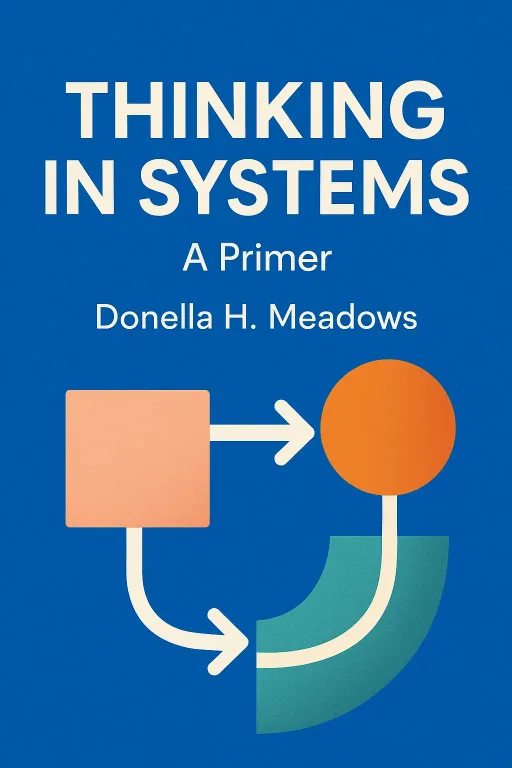
Nova: And that naturally leads us to "The Shift." This shift is fundamentally about moving from isolated problem-solving to "thinking in systems." Donella H. Meadows, in her seminal work, taught us that everything is part of a larger system. She argues that if you understand these connections – the feedback loops, the delays, the leverage points – you can predict outcomes and intervene effectively, rather than just reacting to symptoms.
Atlas: So, it's like moving from playing checkers to playing chess, where you're not just thinking about your next move, but anticipating your opponent's next five moves, and how they interact with each other.
Nova: Exactly! And Peter Senge, in "The Fifth Discipline," builds on this beautifully. He argues that true learning comes from seeing how our actions create our reality. He highlights the importance of mental models – the deeply ingrained assumptions we hold about how the world works – and the need for a shared vision to build resilient organizations.
Atlas: Mental models. That's a powerful concept. I can see how a leader with a strong vision might have a very specific mental model, and if that model doesn't account for the broader system, they’re essentially driving with blinders on, right?
Nova: Precisely. Nova's take on this is that these insights fundamentally shift your focus. You stop seeing a broken part, and you start looking at the entire machine, how its components interact, and what forces are shaping its behavior. It fosters more sustainable solutions because you're addressing the root causes, not just the surface-level issues. Think about a resilient visionary trying to tackle a complex societal problem like poverty. Just giving money away might alleviate immediate suffering, but it doesn't address the systemic issues of education, healthcare, infrastructure, or employment that perpetuate poverty.
Atlas: Right. So, for someone who wants to uplift humanity and create lasting impact, this isn't just theory. It's about building resilient organizations and communities. It's about not just solving a problem, but making sure you're not creating five new ones down the line. But how does this strategic humility manifest in daily leadership decisions? It sounds like it could lead to paralysis by analysis, especially for high-stakes leaders.
Nova: That's a common misconception. Strategic humility isn't about hesitation; it's about informed action. It's asking, "What are the unintended consequences of this decision?" "Who else will be impacted?" "How might this feedback loop into other parts of the system?" It requires actively seeking diverse perspectives, being open to challenging your own mental models, and fostering a culture where everyone feels empowered to point out potential ripple effects. It's the strength to say, "I might have a powerful vision, but I don't have all the answers, and I need to understand the system comprehensively to make this vision truly succeed." It’s about building a better, more interconnected reality.
Synthesis & Takeaways
SECTION
Nova: So, to bring it all together, the 'God Complex' is a trap because it isolates us from the very interconnectedness that defines our world. Strategic humility, fueled by systemic thinking, is the antidote. It allows us to step back, see the whole, and make interventions that create positive, lasting change, rather than just temporary fixes.
Atlas: That makes me wonder about the deep question you posed earlier. Where in current projects, or even in my daily life, might that small change I'm considering today ripple out into a much larger, unexpected effect tomorrow? What's one assumption I'm making that could be a blind spot? I think for many of our listeners, especially those acting as natural integrators, weaving together medicine, advocacy, and leadership, this question is absolutely critical.
Nova: It’s the difference between leaving a footprint and leaving a legacy, isn't it? True leaders don't just act; they act with an understanding of the entire ecosystem they inhabit. They embrace the journey of leadership as a marathon, constantly learning and adapting.
Atlas: And for those of us striving for big, meaningful change, this isn't about slowing down. It's about building smarter, more resilient, and ultimately, more impactful legacies. It means prioritizing that self-care, too, because your energy is what allows you to see the whole system clearly.
Nova: Absolutely. It’s about being a resilient visionary, not a reckless one. It's about asking the right questions, not just having the right answers.
Atlas: Powerful stuff, Nova. Really makes you rethink how you approach every decision.
Nova: Indeed. This is Aibrary. Congratulations on your growth!