Build for Tomorrow: Mastering Anticipation in an Unpredictable World
10 minGolden Hook & Introduction
SECTION
Nova: What if every 'solution' you've ever implemented actually made the problem in the long run? Sounds counterintuitive, right?
Atlas: Whoa, that's a bold claim, Nova. My initial gut reaction is, "No way!" Because if you're fixing something, you're making it better, right? But I know that feeling, that nagging suspicion that we're constantly just putting out fires, only for another one to spark up somewhere else. It's exhausting.
Nova: It absolutely is, Atlas. And that feeling of constant firefighting is exactly what Scott Belsky tackles in his insightful book, "Build for Tomorrow: Mastering Anticipation in an Unpredictable World." Belsky, known for founding Behance and his work at Adobe, wrote this not just from a business strategist's perspective, but from a deep personal conviction about cultivating proactive resilience. His background in fostering creative communities gives him a unique lens on how to build things that actually last.
Atlas: That's a great point. Anyone who's tried to build something robust, whether it's a product, a team, or a community, knows that the immediate fixes rarely lead to lasting value. You want to build systems, not just solve isolated incidents.
Nova: Exactly. And today, we're going to dive deep into this from two perspectives. First, we'll explore why we often get stuck in that reactive loop, constantly battling symptoms. Then, we'll discuss how embracing systems thinking can fundamentally shift our approach, allowing us to build for tomorrow with foresight and intentional design. It's about moving from being perpetually surprised to proactively shaping conditions.
The Reactive Blind Spot: Why We're Always Firefighting
SECTION
Atlas: So, let's start with that initial gut punch – why do our solutions sometimes make things worse? What's this "reactive blind spot" you mentioned?
Nova: It's the insidious trap we all fall into, Atlas. We tend to react to problems as they arise, focusing on the immediate symptom rather than the underlying cause. Think of it like a leaky faucet in your house. You might put a bucket under it, or even try to patch the leak with tape. That's fixing the symptom. But what if the real problem is crumbling pipes behind the wall, or an issue with the city's water pressure system?
Atlas: That makes sense. I guess that's why it feels like an endless game of whack-a-mole sometimes. For anyone trying to cultivate something foundational, whether it's a team or a project, you're constantly dealing with immediate challenges. You to fix the gushing faucet. How do you even begin to step back when everything's on fire?
Nova: That's the challenge, and it's precisely where the blind spot lies. When we only address the symptom, we often create new problems, or worse, we reinforce the very conditions that caused the original issue. We're so focused on the visible problem, we miss the deeper patterns, the unseen systems at play. It's a massive drain on resources, energy, and it leaves us perpetually feeling like we're just treading water, never truly getting ahead.
Atlas: Right? That perfectly encapsulates the feeling of trying to build robust systems, but constantly being pulled into urgent, surface-level issues. It's like you're trying to lay a strong foundation, but someone keeps throwing wrenches into the wet cement. Can you give a more concrete example of how this blind spot manifests, where a seemingly good solution actually backfired systemically?
Nova: Absolutely, and it's a classic example, often called the "cobra effect." This happened in colonial India. British authorities were concerned about the number of venomous cobras in Delhi. Their reactive solution was to offer a bounty for every dead cobra. Seems straightforward, right? Reduce the population.
Atlas: Logical! Kill cobras, get paid. What could go wrong?
Nova: Well, people started doing exactly that. They'd hunt cobras, collect their bounty. But then, some clever entrepreneurs realized something. They could cobras. They started setting up little cobra farms, raising them specifically to kill them and collect the bounty. So, the number of dead cobras went up, but so did the of cobras.
Atlas: Wow, that's incredible! So they weren't reducing the wild population, they were incentivizing a whole new cobra economy!
Nova: Precisely. And when the British authorities realized what was happening, they cancelled the bounty. What do you think those cobra farmers did with their now-worthless stock?
Atlas: Oh no. They couldn't just keep them. They released them, didn't they?
Nova: They did. And as a result, the wild cobra population in Delhi actually after the "solution" was implemented. The reactive fix, focusing only on the symptom of "too many cobras," completely ignored the underlying human economic system and incentives. It designed a new, worse problem without realizing it.
Atlas: That's a powerful illustration. It shows we're not just solving the wrong problem, we're actually new ones without realizing it, because we're not looking at the whole picture. It's like trying to cultivate a garden by only pulling weeds, without ever looking at the soil quality or the light conditions.
The Systems Shift: Building for Tomorrow with Foresight
SECTION
Nova: Exactly. And that brings us to the profound shift Belsky advocates for, drawing on giants like Donella Meadows and Peter Senge: moving from firefighting to truly building for tomorrow. It's about moving beyond that reactive blind spot.
Atlas: So, how do we make that shift? What does "systems thinking" actually look like in practice for someone who's trying to build robust, lasting value?
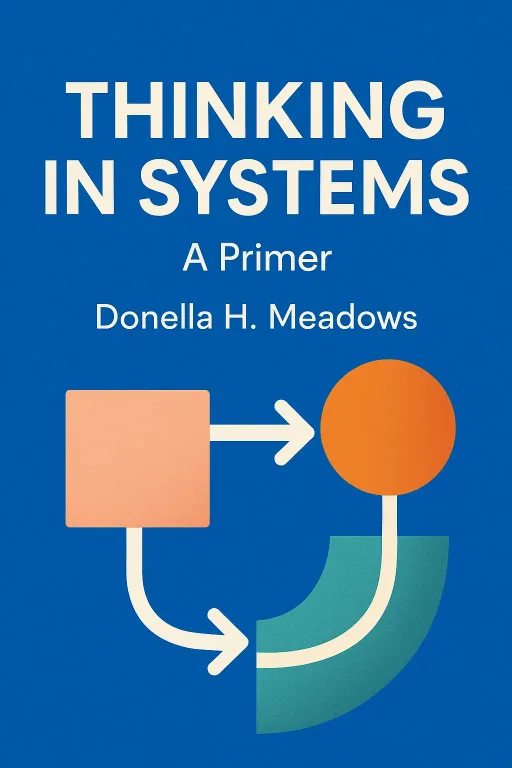
Nova: It starts with seeing the world as interconnected systems, not isolated events. Donella H. Meadows, in "Thinking in Systems," provides us with tools to do just that. She teaches us to identify feedback loops, understand delays, and most importantly, find "leverage points."
Atlas: Leverage points? For someone trying to cultivate a resilient community or architect a scalable solution, that sounds incredibly powerful, but also a bit abstract. How do you these leverage points, and what do they even look like in a real-world scenario?
Nova: A leverage point isn't about pushing harder on a problem; it's about finding the place in the system where a small shift can lead to massive, cascading changes. If a system is like a seesaw, a leverage point isn't pushing harder on one side, but finding the fulcrum. It's where you can apply minimal effort for maximum impact. And Peter Senge, with "The Fifth Discipline," builds on this by introducing the concept of a learning organization. He shows how systems thinking helps teams uncover hidden assumptions and work together more effectively to truly create the results they desire.
Atlas: So it's about seeing the forest the individual trees, and then understanding how they interact? For an architect building foundational systems, this sounds like the ultimate blueprint. Can you give us an example where this systems perspective made a tangible difference, moving beyond just treating symptoms?
Nova: Of course. Let's look at global development, for instance. For decades, the reactive approach to poverty in certain regions was often to provide emergency aid: food, medical supplies, immediate relief. This was essential for addressing acute symptoms, but it rarely solved the underlying, systemic issues causing the poverty in the first place.
Atlas: Right. It's like constantly giving someone a fish, instead of teaching them to fish. You're addressing the hunger, but not building their capacity for sustained nourishment.
Nova: Exactly. A systems thinking approach would look at the entire ecosystem of poverty. What are the feedback loops keeping people in this state? It might reveal that a lack of clean water leads to widespread illness, which prevents children from attending school, which limits economic opportunities, which perpetuates poverty. The "leverage point" isn't just more food aid. It could be investing in sustainable access to clean water, sanitation, and education.
Atlas: Ah, I see! So by investing in clean water, you're not just preventing illness, you're enabling kids to go to school, adults to work, and the community to thrive. It creates a positive feedback loop.
Nova: Precisely. Improving access to education, for example, isn't a quick fix, but it's a powerful leverage point. Educated communities are more resilient, innovative, and capable of solving their own problems. It's a proactive investment in the system itself, leading to self-sustaining growth and reducing the for constant emergency aid in the long term. This is Belsky's core message: you move from merely solving problems to proactively shaping conditions for long-term success and stability.
Atlas: That's a perfect example of what our listeners, the cultivators and architects, are striving for – not just putting out fires, but planting seeds for lasting value. It's about designing resilience into the system itself, rather than just reacting to its failures. It's the difference between patching a broken pipe and redesigning the entire plumbing system to be robust.
Synthesis & Takeaways
SECTION
Nova: And that's the profound power of this shift. True mastery of anticipation isn't about perfectly predicting every crisis. It's about understanding the intricate systems that our world, allowing us to identify those leverage points and influence them proactively. It's about designing conditions for success, rather than just reacting to failure.
Atlas: So that deep question from the book, 'What seemingly isolated problem in your work could be a symptom of a larger, unseen system at play?' suddenly feels incredibly urgent. It's about shifting that mindset, isn't it? Moving from just seeing the problem to seeing the underlying structure.
Nova: Absolutely. It empowers us to move from being victims of circumstance to deliberate designers of our destiny. It’s about trusting our intuition as much as our data, using that inner compass to guide our vision for what we want to cultivate and how we want to build.
Atlas: For our listeners who are Architects, Cultivators, and Resilient builders, maybe dedicate 15 minutes to reflective journaling, not just about the day's crises, but asking: 'What's the system behind this problem? Where's the leverage point I'm missing?' That simple shift in perspective can unlock so much.
Nova: It truly can. And by doing so, you're not just solving today's problems, you're building a more resilient, sustainable, and thriving tomorrow. That's where lasting value and real impact come from.
Atlas: This is Aibrary. Congratulations on your growth!