Personalized Podcast
Golden Hook & Introduction
SECTION
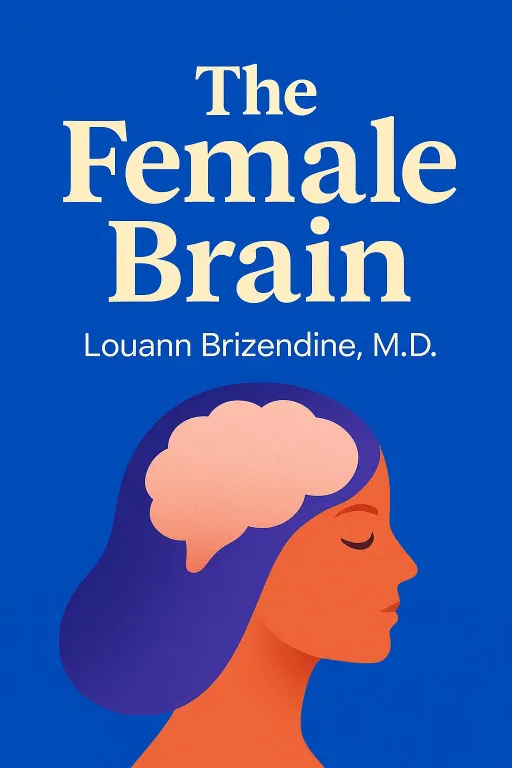
Prof. Eleanor Hart: Did you know that men and women share over ninety-nine percent of their genetic code? It is that tiny, less-than-one-percent difference that influences every single cell in our bodies, shaping our thoughts, our feelings, and our very perception of reality. Welcome to the show. I am Professor Eleanor Hart, and today we are joined by analytical thinker laiba to explore the fascinating neuroscience of gender differences through Louann Brizendine's landmark book,. Today, we are going to tackle this from two distinct angles. First, we will look at the innate developmental wiring that primes girls for connection from infancy. Then, we will dive into how the dramatic hormonal shifts of puberty, motherhood, and menopause continuously rewrite a woman's emotional and cognitive reality. Laiba, it is wonderful to have you here.
laiba: It is fantastic to be here, Eleanor. You know, as someone who loves looking at systems and finding the underlying patterns, that ninety-nine percent figure is incredibly striking. It shows that in biology, just like in computing or engineering, a tiny variation in the initial code can lead to radically different systemic outputs.
Prof. Eleanor Hart: Exactly. And historically, science completely missed this. Until the 1990s, clinical research often treated women as, well, essentially just smaller men. Dr. Brizendine actually shares a story from her time at Yale in the 1970s. She asked a professor why they did not include female subjects in their animal behavior studies. The professor literally dismissed her, saying that females were not used because their menstrual cycles would mess up the data.
laiba: That is a classic analytical blind spot, is it not? Instead of viewing the hormonal cycle as a critical variable to be studied and understood, they treated it as noise to be filtered out. By ignoring that noise, they missed the entire signal of how the female brain actually functions.
Prof. Eleanor Hart: It is a profound oversight. And it is why this book is so revolutionary. It takes that supposed noise and shows that it is actually the music of a woman's life.
Deep Dive into Core Topic 1
SECTION
Prof. Eleanor Hart: Let us start at the very beginning: childhood. There is a long-standing debate about whether gender differences in children are purely the result of social conditioning. But Dr. Brizendine argues that girls and boys arrive already wired as girls and boys. She tells this wonderful story of a mother who was determined to raise her daughter in a completely gender-neutral environment. She bought her daughter unisex toys, including a bright red fire truck.
laiba: Oh, I remember reading about this. The mother walked into the room expecting to see her daughter rolling the truck across the floor, making siren noises, right?
Prof. Eleanor Hart: Yes. Instead, she found her daughter wrapping the fire truck in a soft pink baby blanket, rocking it back and forth, and whispering, do not worry, little truckie, everything will be all right.
laiba: That is such a vivid illustration. It suggests that even when you change the external inputs, the internal biological processing unit—the brain—is still searching for a way to express its innate programming. In this case, the drive to nurture.
Prof. Eleanor Hart: Precisely. And the data backs this up. Consider the Stanford University study with twelve-month-old infants. Researchers brought baby girls and boys into a room with their mothers and a toy cow they were instructed not to touch. The mothers stood off to the side, and the researchers recorded every single movement.
laiba: What did the data show?
Prof. Eleanor Hart: The differences were stark. The baby girls looked back at their mothers' faces significantly more often, checking for signs of approval or disapproval. Very few of them actually touched the forbidden toy. The boys, on the other hand, frequently touched the cow, even when their mothers were actively shouting, no. Their brains were simply more compelled to investigate the physical environment than to seek social approval.
laiba: That is fascinating from an evolutionary perspective. If you think about early human survival, males needed to be driven to explore, hunt, and take risks, even in the face of danger. But for females, survival was deeply tied to social cohesion. A baby girl who is highly attuned to her mother's facial expressions is learning how to navigate the social hierarchy of the tribe.
Prof. Eleanor Hart: Yes, and that attunement starts almost immediately. Dr. Brizendine notes that baby girls are born with an innate preference for mutual gazing. She observed this in her own practice with a baby named Leila. From a very young age, Leila would study every face that came near her, making intense eye contact and mirroring smiles. Eleanor's own son, by contrast, was far more interested in looking at moving objects, like the mobile hanging over his crib.
laiba: It is like their attentional filters are set to different channels from birth. The female brain is tuned to the social and emotional channel, while the male brain is tuned to the spatial and mechanical channel. And this has massive implications for how they develop communication skills. We know that young girls, on average, speak earlier and have much larger vocabularies than boys by the age of twenty months.
Prof. Eleanor Hart: They do. In fact, studies show that girls and women speak significantly more words per day than men. This verbal agility is a direct product of the female brain's wiring, which devotes more real estate to communication and emotional processing centers.
laiba: And that communication is the primary tool for building social harmony. Girls are programmed to avoid direct conflict because, in our evolutionary past, being cast out of the social group was a death sentence. So, they use language to negotiate, build consensus, and maintain relationships.
Prof. Eleanor Hart: We see this in how girls play. Dr. Brizendine describes twin three-year-old girls who wanted to swap their outfits—one had a pink top, the other a green one. Instead of fighting or grabbing, they climbed up, negotiated, and switched the tops peacefully. They used language to preserve the relationship while still getting what they wanted.
laiba: But we should be careful not to paint a picture of girls as purely docile. The book also talks about what the author calls aggression in pink. Girls can be incredibly assertive and even manipulative, but their aggression is social rather than physical. They use their highly developed verbal and social skills to control situations.
Prof. Eleanor Hart: Oh, absolutely. Leila, as she grew older, would direct her father exactly how to play dolls with her. If he put the doll in the wrong outfit, she would scream and correct him, demanding he say exactly what she told him to say. Her aggression was focused on protecting the integrity of the relationship and the social scenario she had created.
laiba: It is a different kind of power dynamic. It is about controlling the social space rather than dominating the physical space. It is incredibly sophisticated, even at three years old.
Deep Dive into Core Topic 2
SECTION
Prof. Eleanor Hart: It really is. But as these children grow, they hit the massive biological disruptor that is puberty. This is where the hormonal tides truly begin to construct a woman's reality. During puberty, a girl's estrogen levels increase ten to twenty times, while a boy's testosterone surges twenty-five-fold.
laiba: That is a massive chemical shift. It is like a complete system upgrade, but one that happens overnight and without a manual. How does this affect the teen girl's brain?
Prof. Eleanor Hart: It completely reorganizes her neural circuits. Estrogen and progesterone act like fertilizer on the brain, but they also make the teen girl highly sensitive to stress and emotional nuances. The Pittsburg Psychobiologic Studies Center found that during puberty, girls show a much more intense response to stress, while boys' stress responsiveness actually drops.
laiba: And what is the primary source of that stress for a teen girl? It is relationship conflict, right?
Prof. Eleanor Hart: Exactly. A teen girl's stress system is driven wild by the threat of social exclusion. The surge of estrogen activates oxytocin, the bonding hormone, which makes social connection feel like a physical necessity. When a teen girl is talking on the phone or texting for hours, she is not just wasting time; she is actually getting a dopamine and oxytocin rush that reduces her stress.
laiba: It is a biological coping mechanism. But when those relationships fracture, the drop in those feel-good chemicals can be devastating. This is when we see the dramatic rise in depression and anxiety. The female-to-male ratio for depression actually doubles after puberty.
Prof. Eleanor Hart: It is a heartbreaking reality. Dr. Brizendine shares the case of Shana, a fifteen-year-old girl who went from being a happy, high-achieving student to experiencing severe mood swings, cutting, and deep depression. Her mother was at her wits' end, trying to manage what looked like extreme teenage rebellion. But when they looked closer, they realized Shana's outbursts were tied directly to her menstrual cycle. She was suffering from severe premenstrual dysphoric disorder, or PMDD.
laiba: This is where the analytical mind has to look at the chemistry. During the first two weeks of the menstrual cycle, high estrogen levels promote cognitive function and social relaxation. But in the last two weeks, progesterone rises and then plummets, which can cause irritability, focus issues, and intense emotional reactivity in sensitive brains. For Shana, her brain was literally interpreting this chemical drop as a state of existential threat.
Prof. Eleanor Hart: Yes. And once they stabilized her hormones using continuous birth control pills and a low-dose antidepressant, her brain was able to find its equilibrium again. She stopped cutting, her concentration returned, and she was able to focus on her life rather than being held hostage by her hormonal fluctuations.
laiba: It shows that biology powerfully affects, but does not lock in, our reality. If we understand the chemistry, we can intervene and change the outcome.
Prof. Eleanor Hart: That is the empowering message of this book. And we see this hormonal influence continue throughout a woman's life, perhaps most dramatically during the transition to motherhood. The mommy brain is not just a colloquial term for being forgetful; it is a literal structural remodeling of the brain.
laiba: I find the data on pregnant women's brains absolutely mind-blowing. fMRI scans show that a pregnant woman's brain actually shrinks slightly in size during late pregnancy, as some areas get larger and others get smaller. It is a targeted reallocation of resources.
Prof. Eleanor Hart: It is. The brain is pruning away circuits that are not immediately useful and beefing up the areas responsible for empathy, vigilance, and nurturing. When a mother gives birth, the massive surge of oxytocin acts like a super-glue, bonding her to her newborn. This is why mothers experience that intense, almost fierce protectiveness.
laiba: We see this in the story of Ellie, a first-time mother who started having what she called postpartum freak-outs. She became blazingly angry and anxious about her husband's financial security and health benefits, even though their financial situation had not changed at all.
Prof. Eleanor Hart: Her maternal brain was hyper-focused on the safety of the nest. Her amygdala, the fear center, was on high alert, scanning the environment for any potential threat to her baby's survival. To her husband, it looked like irrational anxiety, but biologically, it was a perfectly logical response to protect her offspring.
laiba: And what about the famous fuzzy brain that breastfeeding mothers complain about? Kathy, a thirty-two-year-old mother, was terrified she was developing early-onset Alzheimer's because she was so forgetful. She even forgot to pick up her older son from school.
Prof. Eleanor Hart: That is the high level of prolactin and oxytocin at work. Those hormones induce a state of calm, social relaxation, and intense focus on the infant, but they temporarily suppress the cognitive circuits used for abstract planning and short-term memory. Once she weaned her daughter, her cognitive focus returned to normal. It is a temporary, functional trade-off.
laiba: It is a beautiful design, really. The system is optimizing for the survival of the most vulnerable member. But then, fast forward a few decades, and the system undergoes another massive shift: menopause.
Prof. Eleanor Hart: Ah, yes. The transition that anthropologist Margaret Mead called postmenopausal zest. As estrogen and oxytocin levels decline, the brain circuits that were previously dedicated to nurturing and pleasing others begin to quiet down.
laiba: This is a fascinating phase from a systems perspective. For decades, the female brain has been bathed in hormones that prioritize connection, harmony, and caretaking. When those hormones recede, the brain is essentially freed to focus on its own goals. It is a shift from outward-facing caretaking to inward-facing self-actualization.
Prof. Eleanor Hart: We see this so clearly in the story of Sylvia. She was a stay-at-home mother who had spent twenty-eight years prioritizing her husband and three children. But in her late forties, as she entered perimenopause, she experienced a profound awakening. She told her husband, you are a grown-up, and I am finished raising the kids. Now it is my turn to have a life. She went back to grad school, got her master's in social work, and started a whole new career.
laiba: Her husband's reaction was classic: what have you done with my wife? He did not understand that the woman who had happily catered to his needs for nearly three decades was biologically changing. Her brain was no longer wired to seek his approval above all else.
Prof. Eleanor Hart: And more than sixty-five percent of divorces after the age of fifty are initiated by women. It is not necessarily because they are unhappy, but because their brains are pushing them to seek independence and personal fulfillment. They are ready to rewrite the social contract of their lives.
laiba: It is a powerful transition. But perimenopause itself can be incredibly rocky. The fluctuating hormone levels can cause severe insomnia, hot flashes, and mood drops. The author herself experienced this in her mid-forties. Even as a psychiatrist specializing in women's hormones, she initially resisted taking estrogen, attributing her symptoms to stress. But when she finally started hormone therapy, she felt like her old self again within two weeks.
Prof. Eleanor Hart: It highlights the importance of early intervention. The research by Barbara Sherwin in Canada showed that there is a critical window for hormone therapy. If initiated early, estrogen can protect verbal memory and cognitive function, and even increase the efficiency of mitochondria in brain blood vessels, reducing the risk of stroke. It is about using science to smooth out the transition so women can fully enjoy that postmenopausal zest.
Synthesis & Takeaways
SECTION
laiba: This has been such an eye-opening discussion, Eleanor. If we look at the entire arc of the female brain, from the baby girl studying faces to the mature woman reclaiming her independence, the common thread is that biology is a powerful choreographer. But it is not a dictator.
Prof. Eleanor Hart: That is a beautiful way to put it, laiba. Understanding the biological blueprint does not limit us; it empowers us. When a woman understands why she feels anxious during her cycle, or why she feels a sudden urge to change her career in her fifties, she can navigate those transitions with self-compassion and strategic planning.
laiba: Exactly. It shifts the narrative from what is wrong with me? to oh, this is my brain chemistry at work. And it also calls for a broader societal shift. We need a new social contract that recognizes and supports these natural biological phases, whether that means better postpartum support, flexible career paths for mothers, or a healthier dialogue around menopause.
Prof. Eleanor Hart: I couldn't agree more. Our future, and our children's future, truly depends on it.
laiba: So, to leave our listeners with a final thought: the next time you experience a sudden shift in your mood, your priorities, or your desires, do not fight it. Step back, analyze the chemistry, and ask yourself: what is my brain trying to tell me?
Prof. Eleanor Hart: A perfect note to end on. Laiba, thank you so much for sharing your analytical insights with us today.
laiba: Thank you, Eleanor. It was an absolute pleasure.
Prof. Eleanor Hart: And thank you to our listeners. Until next time, keep exploring, keep questioning, and stay curious.