The Embodied Interface: Why Your UI Needs More Than Just Visual Logic
Golden Hook & Introduction
SECTION
Nova: Here's a thought that might make every UI designer's screen flicker: You're probably designing for only half of the human mind. The other half? It's not in their head.
Atlas: Whoa. Not in their head? Nova, where else would it be? Are we talking about, like, psychic powers now? Because my figma files could use some of that.
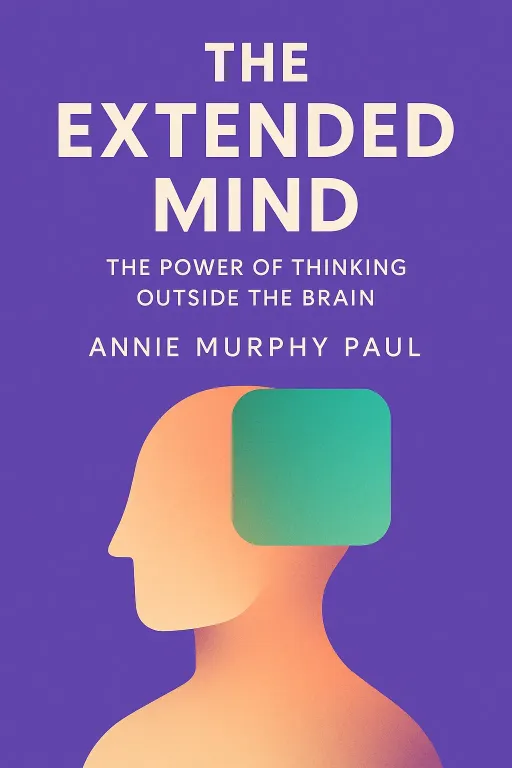
Nova: Not psychic powers, Atlas, but something just as profound. We're talking about the revolutionary idea from Annie Murphy Paul's incredible book, "The Extended Mind." Paul, a renowned science writer, has this unique way of taking complex cognitive science and making it incredibly relevant to how we live and, crucially for us, how we design. She argues that our minds reach far beyond our brains.
Atlas: So, if our minds aren't just confined to our skulls, and we, as designers, are only focused on what's happening the screen, we're essentially designing for a disembodied brain? That's a pretty big blind spot.
Nova: Exactly! It's a huge blind spot that many of us, myself included, have had. We often forget that human thinking isn't just an internal monologue. Our bodies, our physical actions, and even our surrounding environment play a truly massive role in how we perceive, process, and interact with the world.
The Extended Mind and Embodied Cognition
SECTION
Nova: And this is where Paul's work becomes so illuminating. She shows how we use our bodies, our spaces, and our relationships to think better. Take, for instance, a master chef in a busy kitchen. When they're orchestrating a complex meal, they're not just mentally recalling recipes. They're moving instinctively, reaching for specific tools without looking, feeling the texture of ingredients, smelling aromas to gauge doneness. The entire kitchen, the layout, the heat, the sounds – it's all an extension of their cognitive process. Their hands, their nose, their spatial awareness are all actively 'thinking,' not just their brain.
Atlas: That makes perfect sense for a chef or, say, a musician who feels their instrument as an extension of themselves. But in UI, aren't we still just clicking, swiping, typing? How does a user's or actually 'think' with our digital interface? I mean, I'm not exactly doing tai chi while I'm filling out a form.
Nova: That's a great question, and it's where the nuance lies. It's not always about grand physical gestures. Think about something as simple as scrolling. Your finger's movement isn't just input; it's a physical act that creates a sense of spatial navigation through content. Or consider haptic feedback – that little vibration when you type or confirm an action. It's your body experiencing a digital event, grounding the interaction in a physical sensation. Our brains are wired to interpret the world through our physical presence, through sensory cues, and through spatial reasoning.
Atlas: So it's not just about what's the screen, but how the user the space the screen, how their senses are engaged, even subtly? It's like the interface isn't just a window, but something we're physically interacting as part of our thinking process.
Nova: Precisely. It's about recognizing that our cognition is deeply intertwined with our physical being and our surroundings. Ignoring this misses a powerful design opportunity to make interfaces truly intuitive and fluid.
Designing for the Embodied Interface - Practical Applications for UI
SECTION
Nova: Exactly, Atlas, and that leads us to the practical revolution this idea brings to UI. This isn't just philosophy; it's a design toolkit. We can proactively leverage physical actions and the surrounding environment to create more natural digital experiences. Think about the 'Deep Question' that often plagues designers when they're tackling a complex task: how can we make this feel less like a chore and more like a natural extension of thought?
Atlas: Okay, let's get specific then. For a complex task in a UI – say, managing a multi-layered project dashboard with lots of dependencies and timelines – how could we design it to leverage a user's physical actions or their surrounding environment? How does that make it more than just visual logic? Because right now, most dashboards feel like a spreadsheet exploded on a screen.
Nova: That's a perfect example. Instead of just endless scrolling and clicking, imagine a dashboard that understands context. For physical actions, perhaps certain high-priority tasks could be "flicked" into a ready state with a more pronounced, specific gesture, not just a tap. Or maybe haptic feedback could create a sense of "weight" for critical items, making them feel more substantial. For the environment, consider a designer who often works in a specific physical layout. Could the digital dashboard mirror that physical organization, allowing them to intuitively "reach" for project components as if they were physical objects on their desk?
Atlas: So, instead of just abstract visual groupings, we could have spatial metaphors that align with how someone physically organizes their workspace? Like, if I always put the urgent stuff on the left of my physical desk, the UI could allow me to spatially arrange high-priority digital tasks there too, making it feel instantly familiar. That's about anticipating how the user might or their space, and building that into the digital experience, rather than forcing them to adapt to a purely abstract visual system.
Nova: Exactly! Or imagine an ambient display. If a project is nearing a critical deadline, instead of a pop-up notification, perhaps the color temperature of the room's smart lighting subtly shifts, or a low-frequency hum plays in the background, cueing the user without demanding immediate visual attention. The environment itself becomes part of the interface, a gentle nudge from the "extended mind."
Atlas: That's fascinating. It's about designing for the whole human, not just their eyes and their clicking finger. It's about integrating the digital with our inherent, physical way of interacting with the world. It’s a complete paradigm shift from just thinking about pixels.
Synthesis & Takeaways
SECTION
Nova: And that's the profound insight Annie Murphy Paul brings to the table. Embracing the embodied interface isn't just about adding new features; it's about fundamentally rethinking how we connect with technology. It's about creating interfaces that feel more intuitive, more human, and ultimately, more beautiful because they align with our natural cognitive processes.
Atlas: It feels like we're finally designing for the whole human, not just the eyes and the clicking finger. There’s a certain logic and elegance to that, a harmony between our digital tools and our biological selves. It’s like the interface finally breathes with us.
Nova: It absolutely does. It transforms the UI from just a visual display into a true extension of the user's thinking, making interactions incredibly fluid and intuitive. It’s a powerful design opportunity to create experiences that don't just work, but truly resonate.
Atlas: So the next time we're staring at a screen, wrestling with a complex design problem, we should be asking: where's the body in this? Where's the room? How can I invite the physical world into this digital interaction?
Nova: Exactly. It's about remembering that the most powerful interface is often the one that disappears into the background, becoming one with how we naturally think and act. We hope this has sparked some new ideas for how you approach your next design challenge.
Atlas: Absolutely. This has been a truly eye-opening discussion.
Nova: This is Aibrary. Congratulations on your growth!