The Autonomy Prescription: Redefining Security, Systems, and Startups in the Modern Economy
Golden Hook & Introduction
SECTION
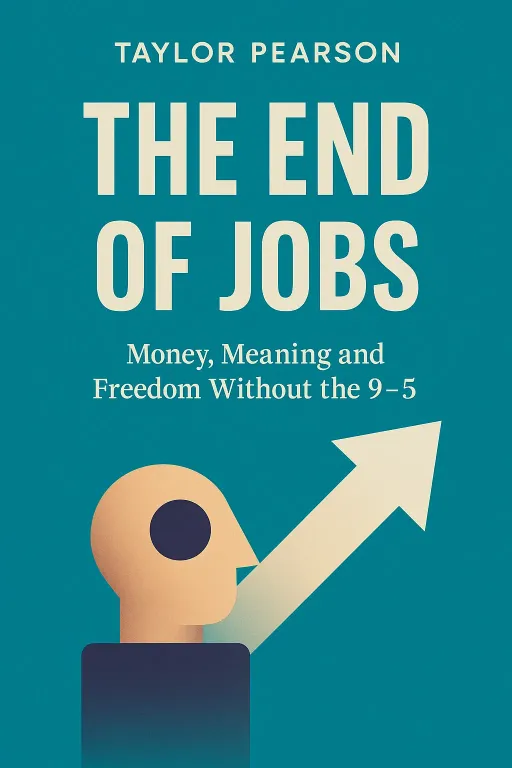
Nova: Imagine a turkey fed by a butcher for a thousand days. Every single day, the turkey's data-driven analysts confirm with absolute statistical confidence: "The butcher loves us!" Life is quiet, soothing, and perfectly predictable. Until the day before Thanksgiving. That sudden, catastrophic shift is what Nassim Taleb calls the "Turkey Problem"—and it's the exact silent risk hiding in our seemingly stable 9-to-5 jobs. Welcome to the show! I'm Nova, and today we are diving into Taylor Pearson's eye-opening book,. Joining me is Anastase, a healthcare professional with a brilliant analytical mind and a deep curiosity about how we design our lives. Anastase, so wonderful to have you here!
Anastase: Thanks, Nova! It's great to be here. You know, that turkey metaphor really hits home, especially for those of us in highly structured fields like healthcare. We are conditioned to believe that if we follow the rules, get the credentials, and put in the hours, our security is guaranteed. But Pearson's book completely challenges that assumption, doesn't it?
Nova: It really does! We're going to tackle this from three fascinating angles today. First, we'll look at the shifting economic bottleneck and why traditional credentials aren't the shield they used to be. Second, we'll break down the "Stair Step Method"—a practical, low-risk blueprint for starting a business. And finally, we'll focus on the psychology of work—how the "Tom Sawyer Effect" can help us align our deepest values with profitable systems. Ready to jump in?
Anastase: Absolutely. Let's unpack this.
Deep Dive into Core Topic 1
SECTION
Nova: Let's start with a concept from Eli Goldratt called the Theory of Constraints. Imagine you're running a physical mail campaign in an office. You have a team of five people who can stuff one hundred envelopes per hour. But you only have one person who can write the addresses on those envelopes, and they can only do fifty per hour. Anastase, what happens if we hire three more envelope stuffers?
Anastase: Well, mathematically, absolutely nothing improves! You just end up with a massive, stressful pile of stuffed, unaddressed envelopes cluttering the office. The bottleneck is the addressing process. Any investment outside of that bottleneck is a complete waste of resources.
Nova: Exactly! And Pearson argues that the entire global economy has a bottleneck, and that bottleneck has shifted throughout history. Back in the Agricultural Economy, from 1300 to 1700, the bottleneck was land. If you had land, you had power. That's why King Henry VIII famously broke with the Catholic Church, dissolved the monasteries, and redistributed their land to the gentry. He was seizing the economic bottleneck!
Anastase: Right, and then during the Industrial Revolution, the bottleneck shifted to capital. You had bankers like Nathan Rothschild dictating terms to King Friedrich Wilhelm III of Prussia because the king needed capital to re-arm his country, and capital was the scarce resource. But in the 20th century, we entered the Knowledge Economy. Suddenly, capital was abundant, but —knowing how to run a massive corporation like IBM—was the scarce resource.
Nova: Yes! IBM's famous slogan was literally just "THINK." But here is the catch: what happens when a scarce resource becomes abundant? It gets commoditized. And that brings us to the story of Megan Parker and Landon Crider at an Atlanta law firm. Megan had a college degree and a hundred thousand dollars in student debt, yet she was working as a receptionist earning thirty-seven thousand dollars a year. Landon was a twenty-four-year-old college graduate working as a file clerk. The law firm required all staff, even file clerks, to have college degrees simply because they.
Anastase: It's a classic oversupply problem. We've experienced a massive boom in global education. Between 2000 and 2010, the number of college graduates globally jumped from ninety million to one hundred and thirty million! When everyone has a credential, the credential itself loses its leverage. In healthcare, we see this constant push for more specialization, more certifications, more administrative hoops. But at some point, you realize you're just operating a system someone else built, and your individual leverage is shrinking.
Nova: Oof, "operating a system someone else built." That is the exact definition Pearson gives for a job! He says a job is following someone else's operating system, whereas entrepreneurship is the act of connecting, creating, and inventing systems.
Anastase: That distinction is so powerful. It shifts entrepreneurship from this vague, terrifying concept of "starting a business" to a very logical process of systems design. If the economic bottleneck has shifted from knowledge to entrepreneurship, it means the most valuable skill today isn't just knowing to do a task, but knowing how to that does the task.
Nova: Yes! And because of technology and globalization, the tools to build those systems are cheaper and more accessible than ever. We aren't limited by geography anymore.
Deep Dive into Core Topic 2
SECTION
Anastase: But Nova, this is where most people freeze. The thought of leaving a stable job to start a business feels incredibly risky. Our brains are practically screaming at us to stay put.
Nova: Oh, absolutely! And there's a fascinating evolutionary reason for that. Let's travel back to the prehistoric African savannah. You're walking along, and you hear a bush rustling. Now, there's a ninety percent chance that rustling is a delicious, plump bird you can catch for dinner. But there's a ten percent chance it's a hungry lion. What do you do?
Anastase: If you're smart, you run away! Because if you're wrong about the bird, you miss a meal. If you're wrong about the lion, you're dead. Your genes get wiped out of the gene pool.
Nova: Exactly! Evolution favored the humans who overweighted the negative outcome. Behavioral economists call this "loss aversion." Studies show that the pain of losing is psychologically twice as powerful as the pleasure of gaining. We typically want a one hundred and fifty to two hundred and fifty percent expected return before we'll take a fifty-fifty bet. We are wired to fear the unknown, even when the actual risk is incredibly low.
Anastase: And that's why we stay in jobs that drain us. We perceive them as safe because they are familiar. But this brings us back to Nassim Taleb's concept of Mediocristan versus Extremistan. Traditional jobs belong to Mediocristan—or at least, we pretend they do. In Mediocristan, physical laws limit the extremes. If you gather a thousand people in a room, and the heaviest person on Earth walks in, the average weight of the room barely changes. But in Extremistan, which is where our modern economy lives, a single outlier can change everything. If you have a thousand people in a room, and Bill Gates walks in, the average net worth of the room instantly skyrockets by tens of millions of dollars!
Nova: Yes! And the danger is that we treat our careers like they are in Mediocristan—stable, linear, predictable—while the economic reality is firmly in Extremistan. Let's look at the story of Max and Rand, two accountants working at the same firm. Max is risk-averse. He stays at his desk, does his work, and enjoys his steady paycheck. Rand is restless. He decides to leave the firm and start a meal-replacement bar company. Now, on paper, who is taking the riskier path?
Anastase: Most people would say Rand is the wild risk-taker, and Max is the safe one. But let's look at what actually happens. Max has zero volatility in his income. He gets the same paycheck every two weeks. But he also has zero feedback from the market. He isn't learning how to adapt. Then, one day, he gets a letter from HR. His entire department is being outsourced to a highly qualified team in the Philippines for a fraction of the cost. His income instantly drops to zero. He has accumulated "silent risk."
Nova: Right! He was the turkey! He thought the butcher loved him because he got fed every day, but his risk was just hidden. Meanwhile, Rand faced constant, visible volatility. His product failed initially, his marketing didn't work, and he had to constantly adjust based on customer feedback. But because of that daily pressure, Rand developed a highly adaptable skillset. He learned how to build systems, how to market, how to pivot. When a crisis hits, Rand is robust. He has "antifragility."
Anastase: It's like the difference between a tree grown in a greenhouse versus one grown in the wild. The greenhouse tree has no wind, so its roots stay shallow. The moment the glass breaks, it falls over. The wild tree is constantly buffeted by the wind, so it grows deep, strong roots. But how do we build those roots without completely uprooting our lives? That's where Pearson introduces the "Stair Step Method" by Rob Walling.
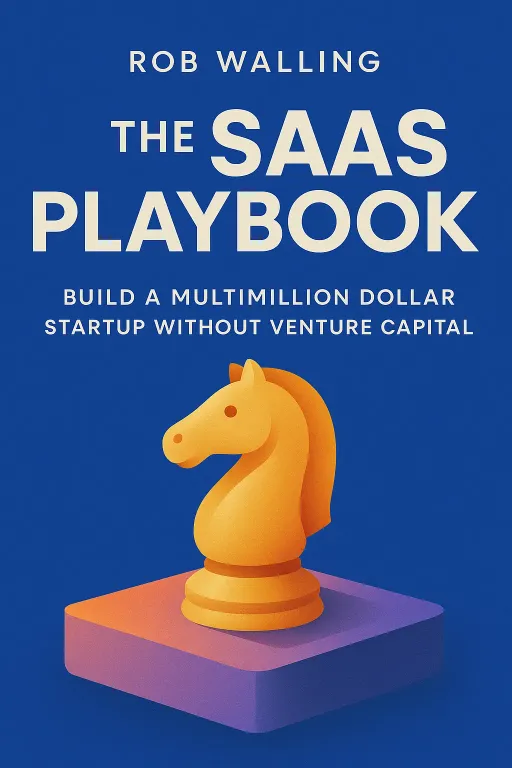
Nova: Oh, I love the Stair Step Method! It is such a brilliant, practical framework for startups. Rob Walling didn't start by building a massive software-as-a-service company like Drip. He started small. In 2005, he acquired a simple invoicing software that was making just a few hundred dollars a month from a handful of unhappy customers. He used his programming skills and search engine optimization to fix the bugs and improve its visibility. Once that was stable and generating cash, he bought an e-commerce website selling bath towels, then a niche job board for electricians, and then a wedding website app.
Anastase: He was stepping up! Each step was a manageable project that taught him a specific skill—SEO, copywriting, customer support, outsourcing. He wasn't risking his life savings. He was building his entrepreneurial muscle. And eventually, he used all that accumulated capital and experience to launch Drip, which became a massive success.
Nova: Yes! And Ramit Sethi does something similar with his "$1,000 Side Hustle" course. He teaches people in traditional jobs how to earn just one thousand dollars a month freelancing on the side. Why? Because once you prove to yourself that you can create a system that generates a thousand dollars outside of your job, your brain undergoes a massive shift. You realize, "Wait, if I can do this, I can double it to two thousand. And if I can do that, I can replace my salary."
Anastase: It bypasses our evolutionary loss aversion! Instead of a terrifying leap into the unknown, it becomes a series of small, calculated steps with positive expected value. You're testing the waters, building relationships, and creating assets. Like Richard Chen, who built a simple niche product called PHP Grid Control to help web developers. He didn't need a multi-million dollar venture capital investment. He just solved a specific, painful problem for a niche market, and it generated enough income to move his family from LA to Singapore!
Deep Dive into Core Topic 3
SECTION
Nova: It's all about finding those niche markets in the "Long Tail." And that brings us to our third core topic: the psychology of work, and what Pearson calls the "Tom Sawyer Effect." Anastase, do you remember how Tom Sawyer got his friends to paint Aunt Polly's fence for him?
Anastase: Oh, it's a classic! Tom is punished and forced to whitewash this massive fence. He hates the work. But when his friend Ben Rogers walks by and teases him, Tom pretends he is absolutely engrossed in the artistry of it. He says, "Does a boy get a chance to whitewash a fence every day?" Suddenly, painting the fence isn't an obligation; it's an exclusive privilege! Ben begs to try, and Tom only agrees after Ben trades him a juicy apple. By the end of the day, the fence has three coats of paint, and Tom is rich in boyish treasures.
Nova: Mark Twain wrote that "Work consists of whatever a body is to do, and Play consists of whatever a body is not obliged to do." When we feel obligated, our creativity and motivation dry up. This was beautifully proven by Dan Ariely's famous incentive experiment in Madurai, India. Researchers offered participants different levels of financial rewards to complete tasks. Some tasks were algorithmic—simple, repetitive, mechanical. Others were heuristic—complex, creative, requiring problem-solving. What did they find?
Anastase: For the simple, algorithmic tasks, higher pay led to better performance. Money was a great motivator. But for the creative, heuristic tasks, the group offered the reward—equivalent to five months' wages—actually performed the! The intense pressure of the external reward created anxiety and choked their creativity.
Nova: Isn't that wild? Suppressing our fundamental human drives for autonomy and meaning was actually a necessary anomaly of the Industrial Revolution. We needed people to act like reliable machines on assembly lines. But today, machines are taking over those algorithmic tasks. The only work left for humans is complex, heuristic work—the kind of work that requires "flow" and intrinsic motivation.
Anastase: This is exactly what Viktor Frankl discovered in the most extreme conditions imaginable—the Nazi concentration camps. In his masterpiece,, Frankl observed that the prisoners who were most likely to survive weren't necessarily the physically strongest, but those who had a concrete meaning to live for, a task they felt personally called to complete. For Frankl, it was rewriting his lost manuscript on logotherapy. Meaning isn't a luxury we pursue after we get rich; it is the fundamental fuel of human resilience and great work.
Nova: Yes! And when you align that search for meaning with systems-creation, it becomes incredibly profitable. Look at Mark Zuckerberg rejecting Yahoo's one-billion-dollar acquisition offer for Facebook in 2006. His investors, Peter Thiel and Jim Breyer, thought he was crazy! But Zuckerberg genuinely found the work of connecting people meaningful. He knew that if he took the money, he would just use it to start another social network. So why stop? Today, Facebook is worth hundreds of billions. Intrinsic motivation won.
Anastase: It's about designing your reality rather than just choosing from a pre-packaged menu of options. Pearson talks about how the average middle-class worker today actually has more freedom of choice, travel, and information than John D. Rockefeller did a hundred years ago. But we often use that freedom just to select from a list of pre-defined jobs. True power—and true wealth—comes when you stop asking, "How do I get a job doing that?" and start asking, "How do I a job doing that?"
Synthesis & Takeaways
SECTION
Nova: That is the ultimate shift in mindset. Anastase, we've covered so much ground today. From the Theory of Constraints and the shifting economic bottleneck, to the Turkey Problem and the safety of the Stair Step Method, all the way to the Tom Sawyer Effect and the power of intrinsic meaning. If you had to distill this into a practical next step for our listeners, where should they start?
Anastase: I think the best place to start is with Pearson's 90-day planning template. It's based on Verne Harnish's work in. Long-term career planning is often futile because the world changes too fast. But ninety days? That is the sweet spot. It's long enough to achieve a significant milestone—like launching a side hustle, learning a new skill, or building a simple system—but short enough to keep you focused and agile.
Nova: I love that. It's what Gary Vaynerchuk calls "the Clouds and the Dirt." The clouds are your high-level, visionary goals—your search for freedom and meaning. The dirt is the daily, tactical execution—the specific tasks you do today. You want to avoid the "middle way" of vague, medium-term planning and focus entirely on the clouds and the dirt.
Anastase: Exactly. Define your "Perfect Day." What does your ideal life look like in terms of freedom, relationships, and work? Then, break that down into a single, actionable goal for the next ninety days. Write down your weekly and daily objectives, start each day with gratitude, and focus on building assets, not just trading your time for a paycheck.
Nova: Beautifully said, Anastase. The traditional job paradigm is shifting, but that isn't something to fear. It is an invitation. It's an invitation to step out of the greenhouse, grow deep roots, and design a life of true security, wealth, and purpose. Thank you so much for sharing your insights with us today!
Anastase: Thank you, Nova. It's been an absolute pleasure.
Nova: And to our listeners, we leave you with this question to ponder: If you couldn't fail, what is the first small system you would build today to start designing your own reality? Let us know, and we'll see you next time!