The 'How-To' Twist: How to Speak with Impact Without Jargon
Golden Hook & Introduction
SECTION
Nova: Alright, Atlas, quick fire: what's the first thing that springs to mind when I say "speaking with impact without jargon"? Don't overthink it, just hit me with your gut reaction.
Atlas: Oh, man. My gut reaction is usually: "Impossible." It's like trying to explain quantum physics to a golden retriever. You know the words, but the impact... not so much. Or, worse, trying to sound smart and just ending up sounding like a thesaurus swallowed a dictionary.
Nova: Exactly! That's the universal struggle, isn't it? We all want to connect, to be understood, but often, the more complex our thoughts, the more convoluted our language becomes. Today, we're diving into the profound simplicity of impactful communication, guided by two absolute titans in the field.
Atlas: And I'm guessing they're not advocating for more jargon? Because my inbox is already full.
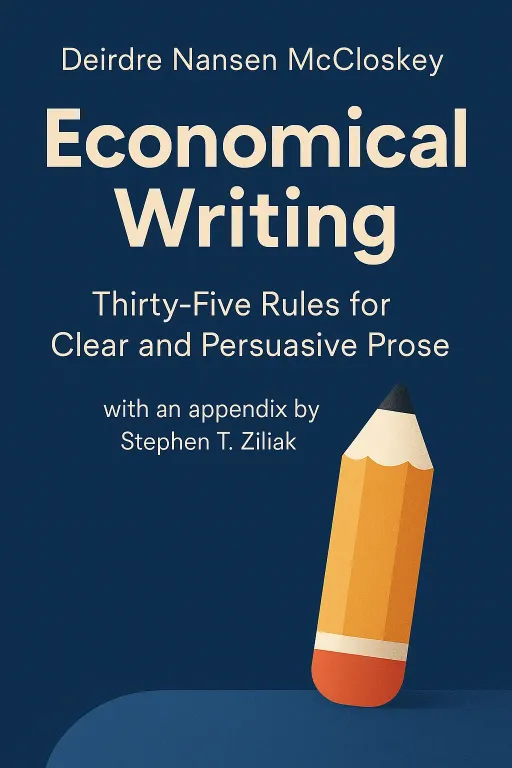
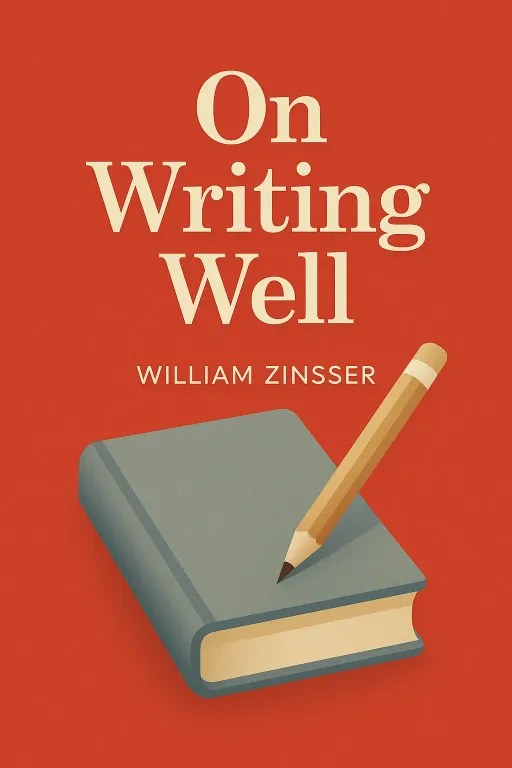
Nova: Far from it! We're talking about the foundational wisdom found in and the timeless principles of. Zinsser, a legendary writing teacher, approached writing as a craft, almost a philosophy, arguing that clear writing is simply clear thinking made visible. And Strunk and White? Their slim, powerful guide has been the go-to manual for generations of writers, practically a rite of passage for anyone serious about clarity and conciseness.
Atlas: So, we're talking about the OGs of not sounding like you're trying too hard? The ones who said, "Just get to the point, people!"
Nova: Precisely. And in a world drowning in information, their insights are more crucial than ever. Today, we're going to unpack how their seemingly simple advice can profoundly transform how we articulate our ideas, making complex concepts not just understandable, but truly compelling.
The Zen of Simplicity: Stripping Away the Unnecessary
SECTION
Nova: Let's start with Zinsser's core philosophy. He basically says that good writing, impactful writing, comes from clear thinking. And the way to achieve that isn't by adding more, but by stripping away. It's the Zen of simplicity.
Atlas: Stripping away? That sounds almost counter-intuitive for a lot of people. I mean, we're often taught to elaborate, to add detail, to prove our point with layers of explanation. Isn't there a risk of oversimplifying or losing the nuance of a complex idea if you just start chopping things out?
Nova: That's a brilliant question, and it gets to the heart of what Zinsser was really advocating. It's not about dumbing down. Think of it like a sculptor. The raw material is a block of marble. The masterpiece isn't created by adding more marble; it's revealed by chipping away everything that the statue. Or a chef reducing a sauce – they're not adding ingredients, they're intensifying the flavor by removing the excess water.
Atlas: So, it’s about revealing the essence, not just making it smaller. I can see that. But for someone who values precision and building understanding step-by-step, the idea of "just cut it" feels a bit... brutal. Where do you even begin? What if you cut something vital?
Nova: That's where the "clear thinking" part comes in. Zinsser believed that if your thoughts are muddled, your writing will be too. The act of cutting forces you to clarify your own thoughts. He’d say, "Examine every word, every sentence, every paragraph, and ask: Is there a simpler way to say this? Is this word necessary? Does this sentence contribute to the meaning?" He was challenging the academic tendency to hide behind verbose language, pushing for a more humane, direct connection with the reader. He wanted writers to have the courage to be direct.
Atlas: That makes me wonder, though. We’re often in environments where we feel the pressure to use a certain kind of language to signal intelligence or expertise. How do you convince someone in a high-stakes professional setting that elegant simplicity isn’t just a nice-to-have, but a strategic advantage?
Nova: Because simple, clear language is the ultimate power move. When you communicate simply, you're not just understood; you're. You're seen as confident, as someone who truly grasps the subject, rather than someone trying to obscure a shaky understanding with big words. It removes friction. Imagine explaining a complex project to a busy executive versus someone who uses jargon. Which one gets the green light faster?
Atlas: The one who doesn't make me feel like I need a Rosetta Stone. That's a great point. So, the stripping away isn’t just for aesthetics, it’s for strategic clarity.
The Architecture of Precision: Building Impactful Language
SECTION
Nova: And that naturally leads us to the second key idea we need to talk about, which often acts as the perfect complement to Zinsser's philosophy: the architectural precision championed by Strunk and White. If Zinsser teaches us to clear the clutter, Strunk and White give us the blueprints for building strong, elegant structures with what remains.
Atlas: Rules. Grammar rules, usage rules, composition rules. That sounds like the kind of thing that makes some people's eyes glaze over. Doesn't that stifle originality? I mean, for those of us who seek richer expression, isn't there a tension between strict rules and creative freedom?
Nova: It’s a common misconception that rules stifle creativity. Think of it like a musician. They spend years mastering scales, chords, and music theory – all "rules." But it's precisely this mastery that gives them the freedom to improvise beautifully, to create something truly original and impactful. Strunk and White provide those fundamental scales and chords for language. They teach you to "omit needless words," to "use the active voice," to "place the emphatic words at the end of the sentence."
Atlas: So, they're not saying "don't be creative," they're saying "know your tools so your creativity can shine through clearly." I can see how that would appeal to someone who values structure and builds understanding step by step. It's like ensuring the foundations of your house are solid before you start decorating.
Nova: Exactly! Their emphasis on conciseness and precision ensures that every single word you choose serves a purpose. It's about making your language efficient, like a well-engineered machine. For example, instead of saying, "It is generally believed by many people that the economy will experience a downturn," you say, "Many believe the economy will slow." The meaning is identical, but one is a strong, precise beam, the other is wobbly and verbose.
Atlas: That makes a huge difference. I mean, the first one just sounds like you’re trying to fill a word count. The second one is direct and confident. It’s not just about cutting words, it’s about choosing the words and putting them in the order. It’s like the difference between throwing a pile of bricks at someone and handing them a perfectly constructed wall.
Nova: That’s a perfect analogy! Strunk and White arm you with the knowledge to build that perfectly constructed wall. They offer the fundamental rules that, once internalized, allow you to communicate with undeniable authority and clarity. It’s about building understanding with architectural integrity, making sure every component is essential and contributes to the overall strength and impact.
Synthesis & Takeaways
SECTION
Nova: So, bringing Zinsser and Strunk & White together, we have this incredible roadmap. Zinsser gives us the philosophy of clearing the mental clutter, seeing writing as a direct reflection of thought. And Strunk and White give us the nuts and bolts, the structural integrity to build our ideas with precision, ensuring every word earns its place.
Atlas: It’s fascinating how both approaches, one more philosophical and the other more prescriptive, ultimately lead to the same goal: profound clarity. It’s not about showing off how smart you are, but making your audience smart because they genuinely understand your message. That's the real impact.
Nova: Absolutely. The true power lies in making your complex ideas accessible, making them resonate. It’s about forging a genuine connection, transforming confusion into crystal-clear understanding. And it all starts with cultivating clear thinking, which then manifests as clear, impactful language.
Atlas: So, for our listeners who are ready to embrace this journey of language mastery, what’s a tiny step we can take, something immediate and actionable?
Nova: Well, the book offers a brilliant "tiny step" that perfectly encapsulates both principles: take any recent email you wrote, and cut its length by 20% without losing meaning.
Atlas: Oh, man. That’s a challenge! Twenty percent feels significant. But I can see why it’s powerful. It forces you to actively apply both Zinsser's stripping away and Strunk & White’s precision. You have to identify the unnecessary words and then reconstruct the remaining ones with maximum impact. It’s like a mini communication workout!
Nova: Exactly! It's a quick, tangible way to immediately put these principles into practice. And you'll be amazed at how much clearer and more powerful your message becomes. It's a journey, as our user profile reminds us, that small steps lead to big leaps. So, take that tiny step, embrace the journey of language, and witness the transformation in your impact.
Atlas: I love that. The idea that clarity isn't just a stylistic choice, but a profound act of respect for your audience and a reflection of your own thinking. That’s a powerful insight to walk away with.
Nova: Indeed. The path to mastery is paved with intentional practice.
Atlas: This is Aibrary. Congratulations on your growth!