Stop Writing, Start Articulating: The Guide to Impactful Communication.
Golden Hook & Introduction
SECTION
Nova: POV: You just spent an hour crafting an email, only to have your message completely misunderstood. Sound familiar? Because for most of us, our biggest communication problem isn't what we, but what we.
Atlas: Oh, I know that feeling. It's that moment you hit send, and then you're immediately filled with dread, wondering if anyone will actually grasp the point you were trying to make. Or worse, miss it entirely.
Nova: Exactly! And that's precisely what we're tackling today with a book that cuts through the noise: "Stop Writing, Start Articulating: The Guide to Impactful Communication."
Atlas: And honestly, for anyone who's ever felt their brilliant ideas get lost in translation, or who wants their professional insights to truly resonate, that title alone is a promise.
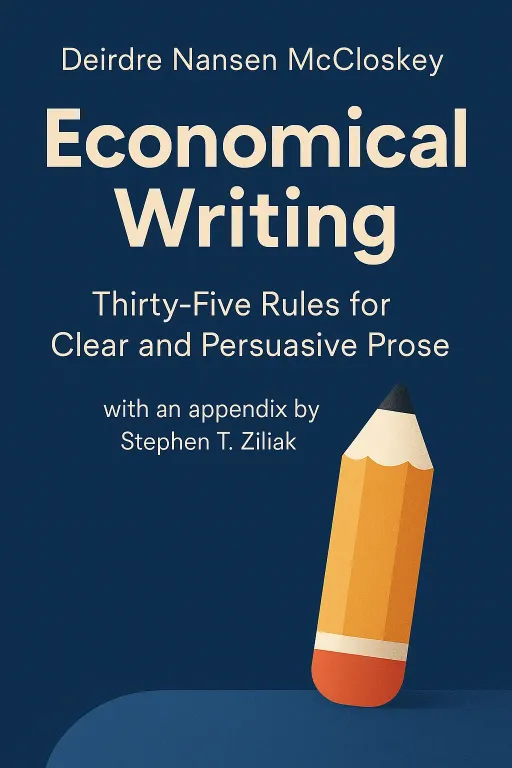
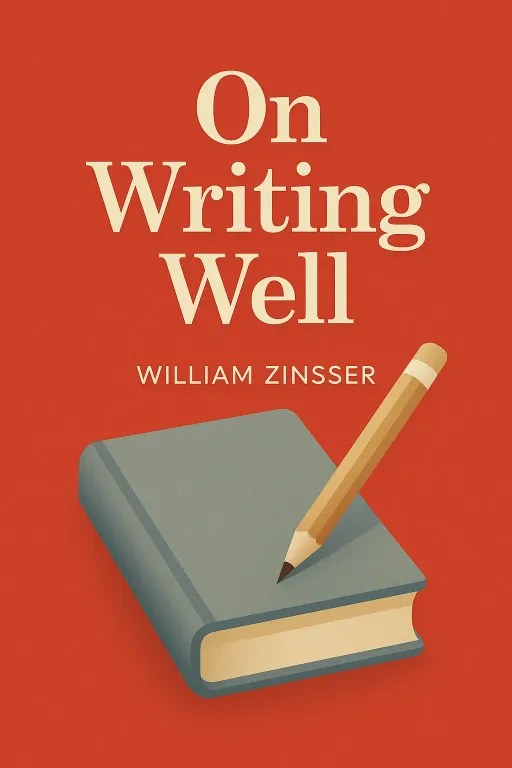
Nova: It absolutely is. This guide distills the timeless wisdom of communication giants like William Zinsser and William Strunk Jr. and E. B. White. These aren't new books, but their principles are the absolute bedrock of clear, impactful communication, as relevant today as they were decades ago. They teach us that articulation isn't just about grammar; it's about influence.
Atlas: That gives me chills. So, what’s the core philosophy driving this shift from just "writing" to "articulating" with impact?
Deep Dive into Core Topic 1: The Philosophy of Clarity – Why Less is More in Communication
SECTION
Nova: Well, the guide really starts with Zinsser’s profound insight: good writing, or rather, good articulation, begins with clear thinking. It’s a philosophy that champions stripping away clutter. Think of it like a sculptor. They don't clay to create a masterpiece; they everything that isn't the sculpture.
Atlas: I like that analogy. But wait, I’ve often heard that complex ideas require complex language to do them justice. Are you saying we should simplify everything, even if it feels like we’re dumbing down a nuanced concept?
Nova: That’s a fantastic question, and it’s a common misconception. Simplification isn't about dumbing down; it's about intellectual generosity. It’s about respecting your audience’s time and mental energy by presenting your complex thought in its most accessible form. When Zinsser talks about "clutter," he means the unnecessary words, the vague phrases, the redundancies that obscure your original, brilliant idea.
Atlas: Can you give me an example of what that "clutter" looks like in practice? Because I imagine a lot of our listeners, especially those crafting strategy documents or detailed reports, might not even realize they’re doing it.
Nova: Absolutely. Imagine a sentence like this: "It is vitally important that all personnel make an effort to proactively engage in the process of optimizing interdepartmental communication channels in a timely manner."
Atlas: Oh boy. I’ve definitely read that sentence, or versions of it, a thousand times.
Nova: Right? Now, what if we said: "Personnel must optimize interdepartmental communication promptly"? Or even, "Improve team communication now." The meaning is the same, but the impact is wildly different. The first version is a dense fog; the second is a clear path. The clutter doesn't add nuance; it adds resistance.
Atlas: That’s a great way to put it. So, if you’re a strategist or a professional trying to influence a decision, this isn't just about making your reports easier to read. It's about getting your core ideas understood, accepted, and acted upon.
Nova: Exactly. It's about ensuring your insights aren't just, but. It’s intellectual honesty. When you strip away the clutter, you’re not just making your words clearer; you’re making your clearer, and that clarity is a tool for influence.
Deep Dive into Core Topic 2: The Mechanics of Impact – Precision, Conciseness, and Professional Influence
SECTION
Atlas: That makes perfect sense. The philosophy of clarity is powerful. But how do we that? What are the practical mechanics for a professional who needs to be precise and concise, especially when the stakes are high?
Nova: Well, this is where Strunk & White come in with their unwavering focus on conciseness and directness. Their advice is almost surgical: use active voice, omit needless words. They frame language not as decoration, but as a finely tuned machine where every single part, every single word, must have a precise purpose. If it doesn't contribute, it detracts.
Atlas: So, it’s not just about removing the obvious fluff, but about making every word pull its weight. I’m curious, can you give me an example where using active voice, for instance, makes a huge difference in, say, a persuasive argument or an executive summary? Because I know many people default to passive voice without thinking about it.
Nova: Oh, active voice is a supercharger for impact. Think about this: "The decision was made by the committee to postpone the project." That's passive. Who made the decision? It's vague, it defers responsibility. Now, compare that to: "The committee decided to postpone the project."
Atlas: Wow. The second one immediately assigns agency. It's clearer, more direct, and it feels more authoritative.
Nova: Precisely. In professional communication, active voice conveys responsibility, clarity, and confidence. It cuts through ambiguity. And when you combine that with omitting needless words – avoiding phrases like "due to the fact that" when "because" works, or "in the eventuality of" when "if" suffices – you create a message that is not only understood but also commands attention and respect. It's about eliminating what some call "death by a thousand qualifiers," where a sentence is so weighed down by unnecessary adjectives and adverbs that its core meaning collapses.
Atlas: So, that "Tiny Step" the guide suggests – cutting 20% of the words from an email or report – isn't just about brevity. It’s about sharpening the message, making it more potent, and ensuring it truly commands attention, especially for someone trying to influence a strategic outcome.
Nova: Absolutely. Conciseness forces you to distill your core message, to get to the absolute essence of your insight. When you do that, your message becomes more potent, more memorable, and far more likely to achieve the impact you desire. It’s a strategic choice, not just a grammatical one.
Synthesis & Takeaways
SECTION
Nova: So, what we’re really talking about here is a two-pronged approach to impactful communication: clarity starts with clear thinking and stripping away mental clutter, and conciseness is the execution – the precise, direct language that ensures your message lands. The goal isn't just good writing, but truly impactful articulation that unlocks your influence.
Atlas: That’s a really powerful reframing. It sounds like this isn't just a writing guide; it's a guide to strategic communication, to professional excellence. For anyone who wants their ideas to truly land and drive action, this is absolutely essential.
Nova: It truly is. And the best part is, it's a skill you can cultivate daily.
Atlas: Which brings us back to that "Tiny Step" from the guide. This week, take your last email or report. Can you cut 20% of the words without losing meaning? Just try it. You might be surprised how much stronger, clearer, and more impactful your message becomes. It's a simple practice, but the returns are immense.
Nova: And remember, trust your voice. Your unique perspective is your power. When you articulate it clearly and concisely, you become unstoppable.
Atlas: Because ultimately, your ability to articulate clearly is your superpower.
Nova: This is Aibrary. Congratulations on your growth!