Stop Fumbling, Start Framing: The Guide to Clearer Communication.
Golden Hook & Introduction
SECTION
Nova: Atlas, five words. What's your instant review of the concept "Stop Fumbling, Start Framing"?
Atlas: Less words, more impact. Seriously.
Nova: Exactly! You just distilled the essence in five perfect words. And that's precisely what we're dissecting today. We're talking about how to achieve that kind of powerful, concise communication.
Atlas: Oh, I love that. Because my inbox, Nova, my inbox is a graveyard of fumbled messages. So I'm ready for some framing.
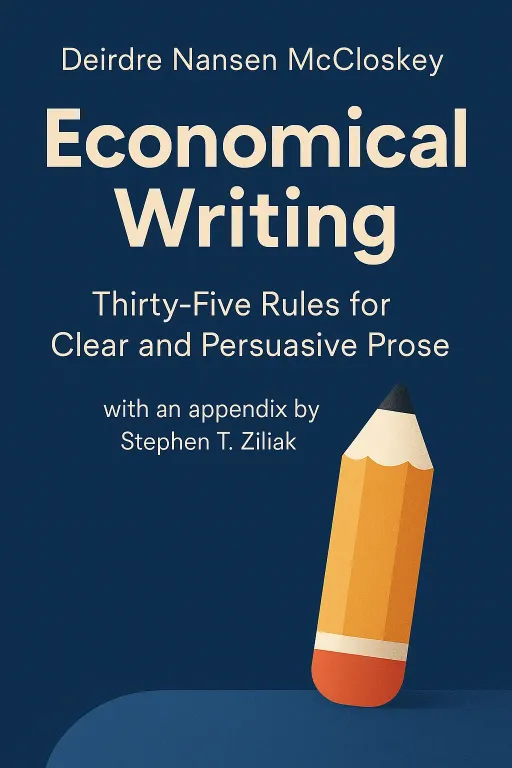
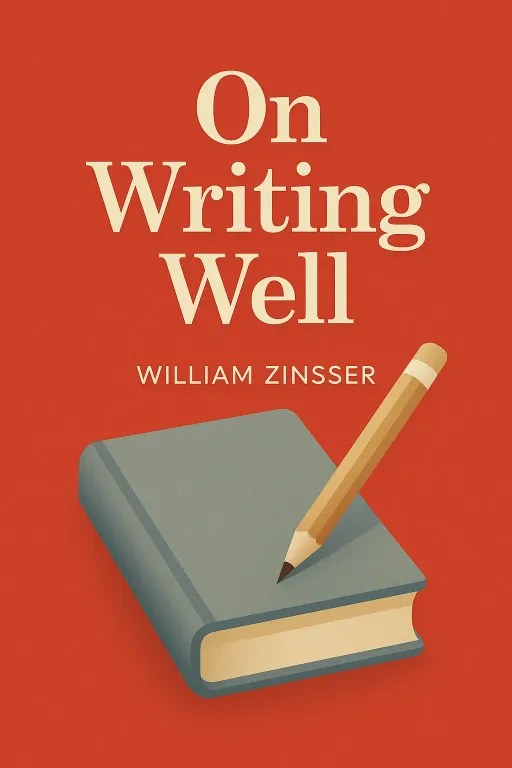
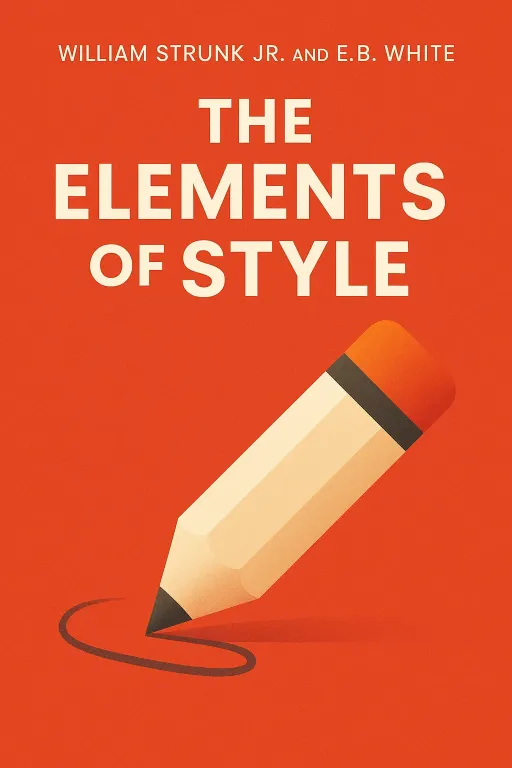
Nova: Well, then you're in for a treat. Much of the wisdom we're drawing from today comes from two foundational texts that, despite their age, remain utterly indispensable: "The Elements of Style" by William Strunk Jr. and E. B. White, and "On Writing Well" by William Zinsser. What's particularly fascinating about "The Elements of Style" is its rather humble beginnings. It started as a private textbook, literally a little booklet, for Strunk's Cornell English classes way back in 1918. It only gained its widespread fame and became the literary cornerstone it is today when E. B. White, one of his former students, revised and expanded it decades later.
Atlas: Wow, that's incredible. So it started as a teacher's secret weapon, then became a classic. That gives it a lot of credibility right there.
Nova: It really does. It shows the timelessness of these principles. And it brings us to the core challenge: so many of us struggle to convey complex thoughts simply. We add words, thinking it adds clarity, but it often does the opposite. It leads to misunderstandings, missed opportunities, and just a lot of wasted time.
The Principle of Brevity (Strunk & White)
SECTION
Nova: And this is where Strunk and White, in "The Elements of Style," drop their mic with one of the most powerful directives in communication: "Omit needless words." It sounds almost too simple, doesn't it? But it's a revolutionary concept.
Atlas: That sounds rough, but I imagine a lot of our listeners feel that way. I mean, isn't it hard to cut words without losing nuance? Sometimes I feel like I those extra words to explain myself fully.
Nova: That's a classic misconception, Atlas. Think of it this way: imagine you're trying to explain a critical project update to your team. You could write a dense, paragraph-long email that says, "It is imperative that we give consideration to the various factors that are influencing the current trajectory of the project's timeline, in order to ascertain the optimal pathway forward for the achievement of our overarching objectives."
Atlas: Oh, I've gotten that email. Probably sent it too.
Nova: Exactly! Now, what if you wrote: "We need to review project factors to find the best path forward." Same meaning, drastically different impact. The first one buries the key message under a mountain of jargon and fluff. The second one, clear and direct, demands attention and action. Every word in that first example is a speed bump, a moment where your reader's attention could drift. Strunk and White taught us that every single word should serve a purpose. If it doesn't, it's clutter.
Atlas: So you're saying the extra words aren't just redundant, they're actually to understanding? That's a powerful idea. It's like trying to see a beautiful painting through a dirty window.
Nova: Precisely! The "cause" is a habit of over-explaining or trying to sound more important. The "process" is that the reader expends mental energy sifting through the unnecessary, and the "outcome" is often confusion or, worse, disengagement. They simply don't grasp your intent. The elegance of brevity is that it forces you to clarify your own thoughts before you even start writing or speaking.
Atlas: Okay, so how do we even begin to identify these "needless words"? Is there a quick trick to start stripping them away?
Nova: A simple mental exercise: read your sentence aloud. If you can take out a word or phrase and the meaning remains intact, or even becomes clearer, then cut it. Or, imagine you're paying a dollar for every word. Would you still use "in order to" instead of "to"? Would you still say "at this point in time" instead of "now"? It forces a ruthless efficiency.
The Pursuit of Clarity (Zinsser & Nova's Take)
SECTION
Nova: And that naturally leads us to the second key idea we need to talk about, which often acts as a counterpoint to pure brevity: William Zinsser's championing of simplicity, clarity, and humanity in writing, from his seminal work, "On Writing Well." Zinsser argues that good writing is about stripping every sentence to its cleanest components, making complex ideas accessible. It's not just about cutting words, but about choosing the words to build a crystal-clear structure.
Atlas: I can see how that would be... challenging. What do you mean by "stripping every sentence to its cleanest components"? It sounds easy in theory, but I imagine it's a huge challenge for someone trying to discuss complex ideas without sounding simplistic.
Nova: It's not about being simplistic, Atlas, it's about being. Think of a master sculptor. They don't just hack away at the marble; they understand the form within and carefully, precisely, chip away everything that isn't the final sculpture. Zinsser's approach is similar. It's about understanding the core message you want to convey and then meticulously removing anything that obscures it. For example, have you ever heard someone try to explain a complex technical process, and they use ten acronyms in the first two sentences, assuming you know them all?
Atlas: Oh, I've been there. And my eyes glaze over almost instantly.
Nova: Exactly. That's a failure of clarity, even if they're being brief. Zinsser would say, explain the acronym, or better yet, avoid it if a simpler term suffices. It's about empathy for your audience. My own take, "Nova's Take," builds on this: mastering these foundational principles allows you to articulate intricate ideas with effortless clarity. It ensures your audience doesn't just hear your words, but grasps your. It transforms a jumble of thoughts into a coherent narrative.
Atlas: So it's not just about economy, but about precision and empathy. It’s like being a translator for your own brain, making sure your internal monologue makes sense to an external listener. That’s a great way to put it.
Practical Application & Tiny Step
SECTION
Nova: And that brings us to our "Tiny Step" for today, something immediately actionable. Pick one recent email you sent. Just one.
Atlas: Okay... I'm already mentally scrolling through my sent folder.
Nova: Now, look at that email and ask yourself: can you cut 20% of the words without losing meaning? Not just cutting words, but actively looking for stronger verbs, eliminating redundant phrases, and streamlining sentence structure. It's a deliberate exercise in becoming your own editor.
Atlas: What's the instant win here? Beyond just cutting words, what profound shift happens when someone actually does this for the first time?
Nova: Honestly, that sounds like my Monday mornings. The instant win, Atlas, is twofold. First, you gain a profound understanding of your own message. You're forced to identify the absolute core of what you want to say. Second, you begin to cultivate a habit of intentionality in your communication. It’s not just about what you say, but about respecting the other person's time and attention. This small effort builds your foundation, allowing you to discuss complex ideas with newfound confidence and competence, which is exactly what our aspiring communicators want.
Synthesis & Takeaways
SECTION
Nova: So, what we've really explored today is that clear communication isn't just a nicety; it's a superpower. It's about understanding that every word you choose, or choose to use, shapes how your message is received. It's about building trust, exerting influence, and truly connecting with people on a deeper level. This mastery isn't some innate talent; it's cultivated through deliberate practice, through the tiny steps of omitting needless words and stripping sentences to their cleanest components. It’s a profound shift in how you approach every interaction.
Atlas: That's actually really inspiring. It redefines "good communication" from just "getting your point across" to "making your point undeniable and unforgettable." It's about giving your audience the gift of clarity. So, I challenge all our listeners: think about the most recent thing you wrote or said. Was every word essential? Could you have framed it better?
Nova: This is Aibrary. Congratulations on your growth!