The 'Artistry' Trap: Why You Need Systems to Scale Your Vision
Golden Hook & Introduction
SECTION
Nova: What if the very thing that makes your business brilliant—that unique, singular artistry you pour into every detail—is also the invisible cage holding it back from true greatness?
Atlas: Oh, I like that. Because I imagine a lot of our listeners, the visionaries, the curators, they're nodding right now, feeling that exact tension. It's like, how do you scale a masterpiece without diluting its soul?
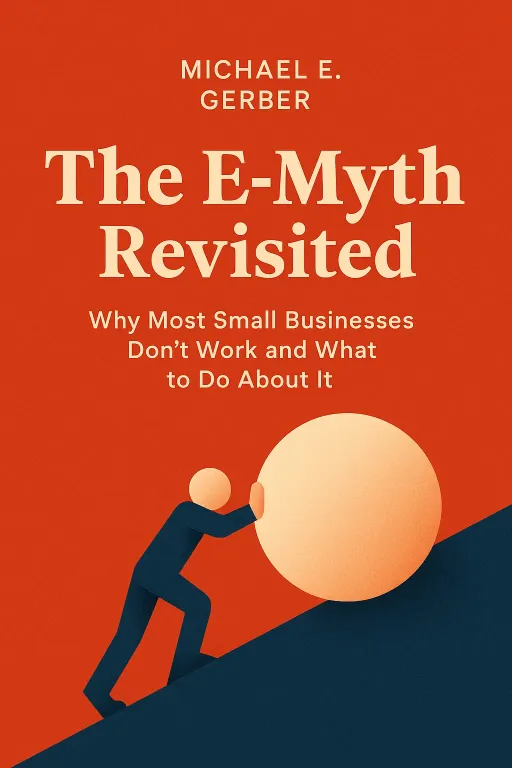
Nova: Exactly! It’s the paradox at the heart of so many ambitious ventures. And it's why today, we're diving deep into 'The Artistry Trap: Why You Need Systems to Scale Your Vision.' We're pulling insights from two foundational texts: Michael E. Gerber's seminal work, 'The E-Myth Revisited,' and Jim Collins and Jerry I. Porras's groundbreaking study, 'Built to Last.'
Atlas: Two absolute titans in the business world! I’m curious, tell me a little about Gerber. What makes his perspective so unique?
Nova: Well, Gerber spent decades consulting with small business owners, seeing firsthand why so many brilliant, passionate people struggled to grow beyond themselves. He observed the patterns of burnout and stagnation, which gave him an unparalleled, boots-on-the-ground view of the challenges. And Collins, with 'Built to Last,' used this incredibly rigorous methodology, comparing companies that achieved enduring greatness with their direct competitors, to uncover what truly makes a vision last.
Atlas: That makes me wonder, if you’re so passionate about your craft, if your entire brand is built on your personal touch, how do you even begin to extract yourself from the day-to-day without feeling like you’re abandoning your creation?
Escaping the 'Artisan's Trap': From Technician to Entrepreneur
SECTION
Nova: That's precisely where Gerber's work becomes so illuminating. He argues that most small business owners are, at heart, technicians. They're brilliant at the work – whether it's baking the perfect cake, designing exquisite experiences, or crafting bespoke products. But they often lack the entrepreneurial mindset needed to build a around that skill.
Atlas: So, you're saying that the master artisan, the person whose hands literally sculpt the vision, is often the biggest bottleneck when it comes to growth? That sounds rough, but I can definitely relate. For our listeners who are curating high-end experiences, this concept might feel like asking a master sommelier to just… manage inventory.
Nova: It can feel that way, yes. But Gerber's point isn't that the artistry is bad; it's that the on it being your hands is the trap. Imagine a phenomenal bespoke tailor. Their craft is unparalleled. But if every single stitch, every client consultation, every fabric order go through them, their business hits a ceiling. They're working the business, not it.
Atlas: And that's the distinction, isn't it? Working versus working. But wait, how does a visionary maintain their unique touch, that intangible quality that makes their brand special, if they're just documenting processes and stepping back? Doesn't that risk making everything feel generic?
Nova: Not at all. In fact, it’s the opposite. The entrepreneur’s role, as Gerber defines it, is to build a system that and the artisan's vision. Think of it like this: the artisan creates the perfect recipe, the entrepreneur creates the world-class kitchen and training program that ensures every dish from that kitchen, no matter who cooks it, embodies the founder's original brilliance and quality standards.
Atlas: That’s a great way to put it. So, the system isn't about diluting the artistry; it's about essentially creating a blueprint for its consistent, high-quality reproduction. It's about designing a process for excellence. Can you give an example of someone who made that leap successfully?
Nova: Absolutely. Think of a high-end chocolatier. Initially, the founder spent every waking hour hand-crafting each piece. The chocolate was divine, but they were exhausted and couldn't meet demand. By embracing the entrepreneurial mindset, they documented their precise techniques, trained a small, dedicated team, and created quality control checkpoints. The founder then shifted their focus to innovation, sourcing new ingredients, and designing new collections – the higher-level artistry – while the system ensured the consistent delivery of the core product. The business scaled, and the founder's unique touch, rather than being lost, was amplified and made accessible to more people.
Atlas: That makes sense. It’s about leveraging your genius rather than being consumed by it. So, for someone listening right now, someone who's feeling that pull of the 'artisan's trap,' what’s the first tangible, tiny step they can take to start systematizing their unique craft?
Nova: The first tiny step is often the hardest psychologically, but the simplest practically. Identify one recurring task in your business that only you currently do. And then, even imperfectly, document its process as if you were training someone else. Don't aim for perfection, just get it down.
Building Clocks, Not Just Telling Time: Crafting Enduring Visionary Companies
SECTION
Nova: And once you've started to step out of the daily grind, once you've begun to codify your unique contributions, the next question becomes: how do you build something that truly lasts, something that has a life and a legacy beyond your direct, daily involvement? This is where Jim Collins and Jerry Porras's insights from 'Built to Last' become invaluable. They talk about "building clocks, not just telling time."
Atlas: Building clocks? For someone who curates experiences and builds worlds, whose entire ethos is about creating something deeply personal and impactful, that sounds a bit… mechanical, cold even. Where's the soul in a clock? Isn't a clock just a mechanism?
Nova: That's a brilliant way to frame the skepticism, Atlas, and it gets to the heart of their message. Collins and Porras aren't advocating for a soulless bureaucracy. Quite the opposite. They found that truly visionary companies, those that endured for decades and centuries, weren't defined by a single brilliant product or a charismatic leader. They were defined by their "core ideology" – a set of enduring core values and a core purpose that remained fixed, while everything else adapted.
Atlas: So, the "clock" isn't the product itself, it’s the underlying mechanism that consistently produces excellence and relevance, regardless of who's at the helm? It’s about embedding the artistry into the very DNA of the company, not just the product?
Nova: Exactly! It’s about institutionalizing the values, the principles, the very "why" of the business. Take a company like Disney, a classic example from their research. Walt Disney was an undeniable visionary, an artisan of storytelling and animation. But the company's enduring success wasn't solely dependent on Walt's individual genius. It was built on a core ideology of imagination, optimism, and creating happiness. These values became the "clock" that allowed the company to keep innovating, to expand into theme parks, media empires, and still resonate with audiences long after Walt was gone. The soul wasn't lost; it was woven into the very fabric of the organization.
Atlas: That’s fascinating. It’s a profound thought: the ultimate artistry is not just in a beautiful thing, but in creating a that allows that beauty, that vision, to be recreated and evolve indefinitely. But how do you prevent those core principles from becoming stale or rigid over time? How do you ensure the clock keeps ticking with relevance, without becoming an antique?
Nova: That's the delicate balance. Collins and Porras emphasize that while the core ideology must be fixed, everything else, the strategies, the products, the operating practices, must be open to change and adaptation. Visionary companies have a relentless drive for progress, a "preserve the core, stimulate progress" mentality. They constantly experiment, they challenge the status quo, and they adapt to a changing world, but always through the lens of their unchanging core values. It's like a finely tuned instrument: the fundamental notes remain, but the melody can be endlessly reinterpreted and innovated upon.
Synthesis & Takeaways
SECTION
Nova: So, when we bring Gerber and Collins together, the message for the visionary is clear: escaping the artisan's trap through systematization, and then building an enduring "clock" through a strong core ideology, isn't about sacrificing your unique touch. It's about elevating it, making it scalable, and ensuring it leaves a truly lasting legacy.
Atlas: Right. The real artistry isn't in doing every single thing yourself. It's in designing a system that ensures your vision, your excellence, can be replicated and shared, creating a lasting legacy that truly builds worlds beyond your own direct reach. That's actually really inspiring.
Nova: It is, isn't it? It transforms the burden of being the sole artisan into the profound joy of being the architect of an enduring vision. And for anyone feeling that challenge, we've got a tiny step for you this week.
Atlas: Yes, that one recurring task that only you can do? Document its process, even imperfectly. Just start. It’s the first step in building that clock, in truly embracing the journey of continuous refinement and expanding your impact.
Nova: Because your vision deserves to scale, and your artistry deserves to endure.
Atlas: Absolutely. That's a powerful thought to leave our listeners with.
Nova: This is Aibrary. Congratulations on your growth!