The Art of Quoting & Administering: Precision in Every Project
Golden Hook & Introduction
SECTION
Nova: You know, Atlas, I was talking to a friend the other day who runs a small business, and she joked that her biggest challenge wasn't sales or marketing, but just… figuring out how to actually everything. Quoting, invoicing, managing projects. It got me thinking about how many brilliant ideas never see the light of day because the nuts and bolts of execution trip people up.
Atlas: Oh, I know that feeling. It's like having a fantastic recipe but no clear steps, or the wrong kitchen tools. You end up with a mess, or worse, nothing at all. That's going to resonate with anyone who's ever felt buried under the sheer volume of administrative tasks.
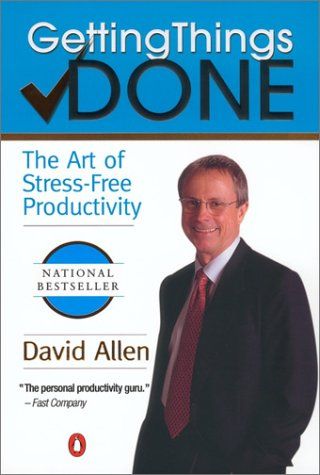
Nova: Exactly! And that's why today we're diving into the often-overlooked, yet absolutely critical, world of operational excellence, specifically in quoting and administration. We're pulling insights from two foundational texts: "Getting Things Done: The Art of Stress-Free Productivity" by David Allen, and "The E-Myth Revisited: Why Most Small Businesses Don't Work and What to Do About It" by Michael E. Gerber. What’s fascinating about David Allen is his background as a management consultant, who spent decades working with executives to refine these productivity systems. He wasn't just theorizing; he was in the trenches, solving real-world overwhelm.
Atlas: That makes perfect sense. Because for anyone running a project, or even just a busy life, the idea of "stress-free productivity" almost sounds like a myth in itself. How do these books, particularly Allen's, help us bridge that gap from chaotic to calm and precise?
The Art of Stress-Free Productivity in Administration
SECTION
Nova: Well, Allen's core methodology, often just called GTD, is all about creating what he terms an "external brain." Think of it this way: our brains are fantastic at ideas, but terrible at them. Every open loop, every uncaptured task, every reminder we try to keep in our head, creates cognitive drag.
Atlas: So you're saying that trying to remember everything is actually what makes us less productive? Because I imagine a lot of our listeners, especially those who are visionaries and strategists, probably pride themselves on their ability to juggle a million things in their heads.
Nova: Precisely. Allen's insight is that this mental juggling is incredibly inefficient and stressful. The first tiny step he recommends, which is deceptively powerful, is to "capture everything." Get all pending tasks, ideas, commitments, and information out of your head and into a single, trusted system. Whether it's a notebook, a digital app, or a voice recorder.
Atlas: That sounds a bit out there. Like, just writing it down magically makes it better? I mean, I can write down a to-do list a mile long, and it still feels overwhelming. How does capturing it make it "stress-free"?
Nova: It’s not just writing it down; it’s about having a system. Once it’s captured, you process it. Is it actionable? If yes, what's the very next physical action? If it takes less than two minutes, do it immediately. If not, delegate it, defer it, or file it. The magic happens when your brain trusts that everything is safely stored and organized elsewhere, freeing up mental RAM for focus and creativity, rather than constant remembering.
Atlas: Okay, so it’s less about the act of writing and more about the around the writing. Like, if I capture a client quote request, I then immediately decide: 'Is this a quick reply? No. Does it need a meeting? Yes. So the next action is 'schedule meeting with client X for quote.'' That removes the mental burden of 'oh, I need to get back to client X.'
Nova: Exactly! And this applies directly to quoting and administration. How many times do we lose track of a follow-up, miss a detail in a proposal, or delay sending an invoice because the information is scattered or still rattling around in our heads? By systematically capturing every incoming request, every administrative task, and defining the next action, you build a robust, reliable system.
Atlas: So it's about making sure no ball drops, not because you have a perfect memory, but because your has a perfect memory. That’s a game-changer for anyone who values precision in their projects, like our user, who doesn't just quote, but administers.
The E-Myth and Systematizing Quoting and Administration
SECTION
Nova: And that brings us perfectly to Michael E. Gerber’s "The E-Myth Revisited." While Allen focuses on personal productivity, Gerber zooms out to the business level, particularly for small businesses. His central argument is profound: most small businesses fail not because the owner lacks technical skill, but because they’re working their business, not it.
Atlas: Oh, I know that feeling. The technician doing the work, the manager overseeing the work, and the entrepreneur designing the work. It’s like a chef opening a restaurant. They’re amazing cooks, but then they get bogged down in hiring, ordering, marketing, and suddenly they're not cooking anymore.
Nova: That’s a perfect analogy! Gerber argues that the entrepreneur needs to build the business. Even if you never intend to franchise it, thinking this way forces you to create systems. These systems ensure consistent quality, efficiency, and scalability, allowing the business to run smoothly the constant, direct intervention of the owner.
Atlas: But wait, looking at this from a strategic growth perspective, isn't that a bit impersonal? A lot of visionary entrepreneurs pride themselves on their unique touch, their personal involvement. Doesn't systematizing everything strip away that unique value?
Nova: That's a common misconception, Atlas. Gerber isn't saying eliminate the personal touch; he's saying it. Define the by which the personal touch is delivered. Think about a world-class restaurant. Every dish is consistent, every service interaction is top-notch, not because the owner is personally overseeing every plate, but because they've built a system that ensures that excellence, regardless of who is performing the task.
Atlas: So the deep question here is: How can you apply Gerber's E-Myth principles to systematize your quoting and administration processes, allowing you to focus more on strategic growth rather than day-to-day minutiae? It’s about creating an operational blueprint, as you called it earlier.
Nova: Precisely. If your quoting process relies solely on your personal knowledge and experience, what happens when you’re sick or busy? If your administration is a series of ad-hoc responses, how do you scale? Gerber would say you need to document every step: how a quote is initiated, what information is gathered, how it’s formatted, how it’s delivered, and how follow-up is managed.
Atlas: So, for quoting, it could be a standardized template, a checklist of questions to ask the client, a clear escalation path for complex projects. And for administration, it's about automated reminders, clear task assignments, and a standardized client onboarding process. It's about making the "how" repeatable and reliable.
Nova: Exactly. This allows the business to function like a well-oiled machine, freeing up the visionary, the strategist, to work the business: spotting new opportunities, innovating, connecting with key clients, and planning for the future. It moves you from being indispensable every task to being essential the overall direction. It’s a profound shift in mindset that allows for true growth and scalability.
Synthesis & Takeaways
SECTION
Nova: So, when we bring David Allen's "Getting Things Done" and Michael E. Gerber's "The E-Myth Revisited" together, we see a powerful synergy. Allen gives us the tools for personal mastery over our tasks, ensuring nothing falls through the cracks and our minds are clear. Gerber then shows us how to elevate that personal mastery into systematic, scalable business processes.
Atlas: That's actually really inspiring. Because for someone who's driven by impact and tangible results, the thought of getting bogged down in administrative quicksand can be soul-crushing. But what you're saying is, by applying these principles, you're not just getting things done; you're building a resilient, future-proof engine for your vision.
Nova: Absolutely. Operational excellence in quoting and administration isn't about working harder; it’s about working smarter by establishing clear systems and processes that ensure accuracy, efficiency, and scalability. It's the silent engine that powers innovation and growth. It allows you to move from the day-to-day grind to the strategic horizon.
Atlas: So, the next time you're feeling overwhelmed by a pile of quotes or administrative tasks, don't just push harder. Pause. Think: how can I capture this? How can I systematize this? And most importantly, how can I build this process so it runs without me, freeing me up to focus on the bigger picture? That’s a powerful shift.
Nova: It truly is. It's about empowering yourself and your business to achieve precision in every project, not through sheer willpower, but through intelligent design.
Atlas: That’s a fantastic way to frame it. For our listeners who are constantly seeking that edge, that future-forward approach, this is gold.
Nova: This is Aibrary. Congratulations on your growth!