Stop Guessing, Start Building: Your Blueprint for Artisan Business Growth
Golden Hook & Introduction
SECTION
Nova: Atlas, five words. Describe the exact moment a brilliant artisan, someone truly gifted at their craft, realizes they now have to run a.
Atlas: Oh, I've got it. "My beautiful craft, now paperwork!"
Nova: Perfect! Because that, my friend, is the cold, hard truth at the heart of what we're tackling today. Many brilliant artisans stumble when their passion becomes a business.
Atlas: That’s going to resonate with anyone who’s ever tried to turn a hobby they love into a livelihood. It feels like you’re suddenly speaking a different language.
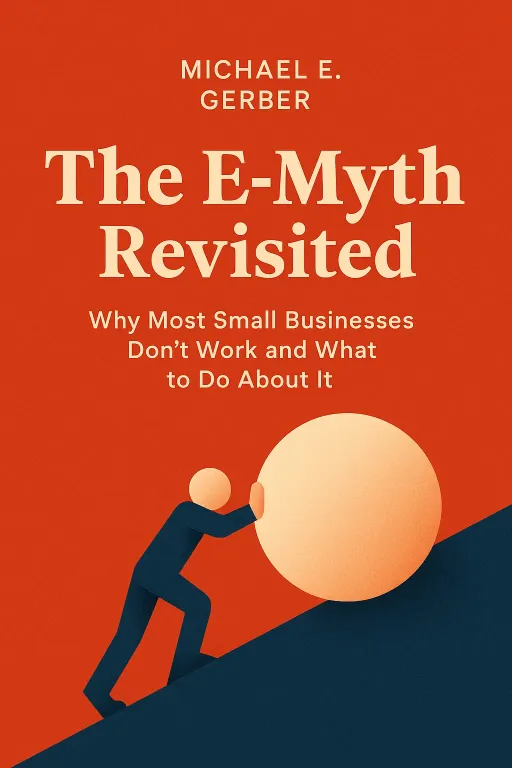
Nova: Absolutely. And to help us decode that language, we’re diving into some foundational texts that are practically blueprints for this transformation. We’re talking about "The E-Myth Revisited" by Michael E. Gerber, and then building on that with "Built to Sell" by John Warrillow.
Atlas: Both widely acclaimed, I know. I’ve heard whispers of Gerber’s book being a 'business bible.'
Nova: It absolutely is, and for good reason. What's fascinating about Gerber's work is how it completely upended traditional small business thinking when it first came out. He argued, quite provocatively, that merely being exceptional at your craft doesn't automatically make you a good business owner. It's a truth bomb for many.
Atlas: So, being a master baker doesn't mean you're a master of the bakery business? That sounds almost counterintuitive.
Nova: Exactly! And Warrillow's "Built to Sell" then steps in to show you to escape that exact trap Gerber so brilliantly identifies. It’s about turning your unique skill into something repeatable, something that can truly scale.
Atlas: I can already feel the tension building between the artist’s soul and the business brain. So, where do we start unraveling this?
The Artisan's Entrepreneurial Awakening: From Craft to Commerce
SECTION
Nova: Let's start with what Gerber calls "The Entrepreneurial Seizure." Imagine Sarah, a cake artist. She bakes the most exquisite, custom-designed cakes you’ve ever seen. Her passion for flavor, her eye for detail, her mastery of advanced decorating techniques – it’s all unparalleled. Friends rave, orders pour in, and boom! She decides to open her own cake studio.
Atlas: That sounds like a dream come true for any artisan, right? The ultimate expression of their craft.
Nova: On the surface, yes. But here’s where the seizure happens. Sarah, the brilliant technician who the cakes, suddenly finds herself wearing countless other hats. She’s now the manager, scheduling orders, hiring staff, overseeing production. She’s the marketer, trying to get her brand out there. She’s the salesperson, negotiating prices and closing deals.
Atlas: Oh, I know that feeling! It’s like you start out with this clear vision of doing what you love, and then suddenly you’re drowning in all these other tasks you never signed up for. And they’re often tasks you’re not even good at.
Nova: Precisely. Gerber would say Sarah is suffering from an entrepreneurial seizure because she’s a technician who mistakenly believes that her technical skill is enough to run a business. She loves the work, but she lacks the to scale beyond herself. Her business becomes an extension of her, rather than a self-sustaining entity.
Atlas: So you're saying being at making cakes actually makes you at running a cake business? That’s a tough pill to swallow for someone so driven by excellence.
Nova: It's not that it makes you, Atlas. It's that the skills required to are fundamentally different from the skills required to a business. The technician focuses on the present task, the manager focuses on organizing the present, and the entrepreneur focuses on the future, on vision and systems. Most artisans are brilliant technicians, but they haven't developed their inner manager or entrepreneur.
Atlas: But how do artisans, who are so deeply driven by their hands-on craft, even begin to shift that mindset without feeling like they’re betraying their art, or losing that unique creative vision they started with? That's a real fear, I imagine, for a lot of our listeners who are so passionate about their craft.
Nova: That’s the crux of it, isn't it? The fear that systemizing means losing creativity. But what Gerber, and later Warrillow, illuminate is that it’s actually the opposite. By building robust systems, you’re not stifling creativity; you’re it. You’re building a foundation that allows your creative energy to be directed where it truly belongs: on advanced decorating, on innovative designs, on pushing the boundaries of your craft, rather than on chasing invoices or managing inventory.
Atlas: That makes a lot of sense. It’s like, if you’re constantly worried about the leaky pipes, you can’t focus on designing the beautiful fountain.
Building a Business That Works Without You: The Power of Systems and Productization
SECTION
Nova: Exactly! And that feeling of constantly firefighting, Atlas, naturally leads us to the solution Warrillow champions in "Built to Sell": building a business that doesn't depend solely on. It's about creating a business that's an asset, not just a job. It’s about ‘Built to Sell,’ not ‘Built to Burn Out.’
Atlas: Ah, the holy grail for many artisans: a business that can thrive even when you're not physically there, kneading every dough or piping every rose. How does Warrillow propose we achieve that?
Nova: He emphasizes productization. Think about our cake artist, Sarah. Her initial success came from bespoke, one-off creations. Every cake was a custom consultation, a unique design, hours of intense, individualized labor. While that showcases her excellence, it’s incredibly difficult to scale.
Atlas: Right, because her capacity is strictly limited by time and hands. That’s a bottleneck if I ever heard one.
Nova: Precisely. Warrillow would advise Sarah to productize her services. This means identifying the repeatable elements of her craft and turning them into clear, distinct offerings. Instead of saying, "Tell me your wildest cake dream," she might offer "Signature Celebration Cake Collections" – pre-designed themes with customizable elements, or "Heirloom Wedding Cake Packages" with defined tiers of design complexity and flavor profiles.
Atlas: So, it’s like creating a menu, even for something as artistic as a cake? But isn't productizing just... making it generic? Losing the artisan's unique touch, that drive for excellence? That's a real concern for many who pour their heart into every single creation.
Nova: That's a common misconception, Atlas, and it’s a vital point for artisans. Productization isn't about making things generic; it's about in a way that’s clear, repeatable, and scalable. It’s about creating a framework for your creativity. Think of a master tailor. They still offer bespoke suits, but they also have a range of signature cuts and fabrics that define their brand and allow them to serve more clients consistently.
Atlas: So, it’s not about losing the artistry, but about strategically focusing it.
Nova: Exactly. Sarah, our cake artist, can still offer high-end, fully bespoke creations, but now they become her premium, limited-edition offerings. The productized collections handle the consistent, high-volume demand, ensuring quality and reputation, and freeing her to pour her advanced techniques into those truly unique, elevated pieces.
Atlas: That actually sounds like it could her craft, not diminish it. By systemizing the foundational elements, she has more time and energy for true innovation and mastery.
Nova: Absolutely. It allows her to attract ideal clients who understand and value her specific brand of excellence, rather than clients who just want 'a cake.' And a crucial part of this productization is documenting the process.
Atlas: Documenting? You mean, writing down how to make a cake? That seems… basic.
Nova: It might seem basic, but it’s revolutionary. It’s the "Tiny Step" that unlocks scalability. If Sarah can outline the exact steps someone else could follow to make her signature vanilla buttercream, suddenly she's not the only one who can make it. She can train a team, ensure consistency, and replicate her quality. That’s how you build consistency and reputation that extends beyond your own hands.
Atlas: I can see how that would build incredible value for the business itself, rather than just the individual artist. It shifts the focus from 'I make great cakes' to 'My business consistently delivers exceptional cakes.'
Synthesis & Takeaways
SECTION
Nova: And that brings us full circle, Atlas. The "Cold Fact" is that many artisans stumble when their passion becomes a business because they fail to make that entrepreneurial shift. They remain brilliant technicians, but don't build the systems necessary for true growth.
Atlas: And the insights from Gerber and Warrillow show us that systemizing your craft isn't about losing your creative vision; it's about freeing it. It’s about building a robust foundation so you can actually dedicate specific time to advanced techniques, to master them, and to elevate your cakes.
Nova: Precisely. It’s about moving from guessing how to grow, to building a clear blueprint. It’s the path to not just making cakes, but building a thriving business that reflects your drive for excellence and establishes your name.
Atlas: So for someone listening right now, maybe a passionate cake maker, who feels that tension between their craft and their growing business, what’s one tiny, practical step they can take to start building that blueprint?
Nova: One tiny, powerful step: identify just repetitive task in your cake-making process. Maybe it’s preparing ingredients, or mixing a specific frosting, or even cleaning up. Then, outline the exact steps someone else could follow to do it. Write it down, make it clear, make it repeatable.
Atlas: That’s fascinating. It’s not about outsourcing everything immediately, but about thinking like a system builder from the get-go. It's the first brick in building a business that works for you, not just because of you.
Nova: Exactly. It's about taking that first step towards reclaiming your creative time and ensuring your passion can truly thrive as a business.
Atlas: That gives me chills, thinking about artisans everywhere, finally able to trust their creative vision and build something truly lasting.
Nova: This is Aibrary. Congratulations on your growth!