Stop Chasing, Start Building: The Guide to Sustainable Craft Growth
Golden Hook & Introduction
SECTION
Nova: You know, Atlas, there’s this pervasive myth in the world of craft and entrepreneurship that if you just work harder, longer, and pour every ounce of your soul into your passion, success is inevitable.
Atlas: Oh, man, that's not a myth; that's practically the artisan's creed! Every maker, every self-starter I know, including myself, has lived by that. The grind is real.
Nova: Exactly! And it’s precisely that grind that often leads to burnout, stagnation, and ironically, prevents the very growth they’re striving for. It’s a classic case of working your business, not it.
Atlas: That’s going to resonate with anyone who’s ever felt trapped by the thing they love doing. Like, you started this incredible journey to build something, and now it feels like the thing is building you.
Nova: Precisely. And that’s why we’re diving into a book today that offers a profound shift in perspective: "Stop Chasing, Start Building: The Guide to Sustainable Craft Growth." It's written to guide passionate individuals like the ones we're talking about, away from that endless chase and towards creating truly sustainable ventures.
Atlas: So, it’s about turning that passion into a thriving machine that serves you, instead of the other way around. I’m curious, for someone who thrives on the hands-on aspect, how do you even begin to think about stepping back?
The Technician's Trap: Working ON vs. IN Your Business
SECTION
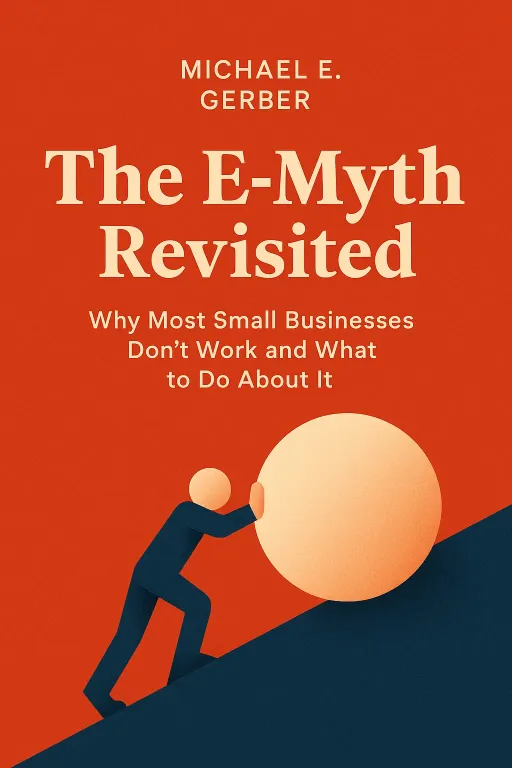
Nova: That's the million-dollar question, and it brings us straight to our first big idea, heavily inspired by Michael E. Gerber's seminal work, "The E-Myth Revisited." Gerber argues that most small business owners, especially craftspeople, aren't entrepreneurs at all. They're technicians suffering from an "entrepreneurial seizure."
Atlas: An entrepreneurial seizure? That sounds... dramatic. What does he mean by that?
Nova: He means you're a brilliant baker, right? You make the best sourdough in the city. Your friends tell you, "You should open a bakery!" So you do. But suddenly, you're not just baking. You're also the accountant, the HR department, the marketing team, the janitor... You’re still doing the technical work you love, but you’re also doing a hundred other things you might not be good at, or even enjoy.
Atlas: Oh, I know that feeling. It’s like when I started doing custom woodworking. I loved the smell of sawdust, the precision of a dovetail joint. Then suddenly I was spending half my day answering emails, chasing invoices, and figuring out shipping logistics. It felt like my craft was getting diluted.
Nova: And that’s the trap. Gerber says you're a technician who started a business, not to build a business that could run without you. An entrepreneur, by contrast, designs a system. They envision a business that could be replicated by others, even if those people aren’t as skilled as the founder.
Atlas: Wait, are you saying the goal is to be the one doing the amazing craft? That sounds a bit out there for someone whose identity is tied to their mastery.
Nova: Not at all! It's about building a business your mastery, so your mastery can scale. Think of it this way: a world-class chef might design the menu and train the kitchen, ensuring every dish meets their standard, even if they're not personally plating every single one. They’re working the culinary system, not just the kitchen.
Atlas: I guess that makes sense. So, it's about creating a blueprint for your brilliance, rather than just being the sole brilliant person. But for a lot of our listeners who are hands-on, self-starters, how do you even start thinking like that? It feels like a huge leap from 'making a thing' to 'making a system for making a thing.'
Nova: It starts with the mindset shift. Recognize that your business isn't. Your business is a distinct entity that needs its own systems, processes, and even its own personality. You begin by documenting everything you do, even the smallest tasks. The goal is to build it as if you were going to franchise it tomorrow.
Atlas: Like, if I were to write down every step of making a custom dining table, not just for myself, but for someone else to follow? Even how to respond to client inquiries or how to package it for delivery?
Nova: Exactly! That’s the entrepreneurial mindset. You're building an asset, not just a job for yourself. And that leads us to our next crucial insight, because even the most perfectly designed system won't sustain itself without a healthy financial foundation.
Profit First: Redefining Financial Health for Sustainable Growth
SECTION
Nova: So, once you're thinking about systems, the next hurdle for many artisans and entrepreneurs is the money side. We often hear about "revenue," but the true measure of a healthy business is profit. And that’s where Mike Michalowicz's "Profit First" comes in, completely flipping traditional accounting on its head.
Atlas: Oh, I like that. "Flipping traditional accounting." Traditional accounting usually feels like trying to decipher an ancient scroll. What’s the big difference?
Nova: Well, traditional accounting follows the formula: Sales - Expenses = Profit. You make money, you pay your bills, and whatever's left over,, is profit. Michalowicz argues this is why so many businesses, even those with high revenue, struggle. Profit becomes an afterthought, a hopeful leftover.
Atlas: That sounds rough, but also really familiar. You see a big sale come in, you pay for materials, you pay your assistant, you pay for marketing, and then you’re looking at what’s left and thinking, "Where did it all go?"
Nova: Exactly! "Profit First" says: Sales - Profit = Expenses. You take your profit. Immediately. As soon as money comes in, a predetermined percentage goes into a separate 'Profit' account. This isn't just moving money around; it's a behavioral accounting system.
Atlas: Wait, so you’re saying, if I make a thousand dollars from a custom order, I immediately take, say, 10% for profit, and then I have to run my business on the remaining nine hundred? That feels… scary. Especially if cash flow is already tight.
Nova: It’s designed to be a little uncomfortable at first, because it forces discipline. If you only have $900 to run your business, you become incredibly resourceful. You find efficiencies, you negotiate better deals, you cut unnecessary expenses. Instead of hoping for profit, you're it.
Atlas: So, it's like putting money into a savings account the moment you get paid, before you even think about bills. You make profit non-negotiable.
Nova: That’s a perfect analogy! And it aligns so well with the self-reliant, results-driven artisan. You're taking control of your financial destiny, making your business intrinsically profitable from day one, not just revenue-driven. It ensures your passion isn't just breaking even, but actually building wealth for you.
Atlas: I’m curious, the book mentions a "tiny step" – allocating 1% of your next project's revenue to a separate 'Profit' account. For someone with inconsistent income, how does that really make a difference? Is 1% enough to matter?
Nova: It’s not about the immediate amount, Atlas; it’s about establishing the habit. That 1% is a psychological win. It proves to you that profit is possible, and it starts building that muscle of financial discipline. Over time, as you get comfortable, you can slowly increase that percentage. It’s a tangible, low-risk way to begin building financial health without feeling overwhelmed. It's building the foundation, one brick at a time.
Synthesis & Takeaways
SECTION
Nova: When you bring these two ideas together, the E-Myth’s focus on building systems and Profit First’s approach to financial health, you get a powerful synergy. Systems create the capacity for your craft to grow beyond your direct labor, and Profit First ensures that growth is financially sustainable and rewarding.
Atlas: So, for the artisan, the entrepreneur, the self-starter, it’s about realizing that building a robust business isn't a distraction from your craft, but actually the ultimate way to protect it, nurture it, and allow it to flourish without consuming you. You're not just crafting beautiful things; you're crafting a beautiful life around your craft.
Nova: Exactly. It's about intentional design, both for your business operations and your financial future. The tiny step today is allocating just 1% of your next project's revenue to a separate profit account. It's a small action, but it's a huge shift in mindset.
Atlas: And it forces you to ask: Am I working my passion, or am I building my passion? That distinction can make all the difference between burnout and true, sustainable growth.
Nova: This is Aibrary. Congratulations on your growth!