Stop Chasing Luck, Start Building Systems: The Guide to Predictable Success.
Golden Hook & Introduction
SECTION
Nova: What if the secret to achieving everything you've ever dreamed of, across all your passions, has absolutely nothing to do with luck?
Atlas: Whoa, that's a bold claim, Nova. Most people feel like they're constantly waiting for that big break, that lucky moment, especially when they're juggling a full plate of diverse interests. It's like you're constantly hoping for the stars to align.
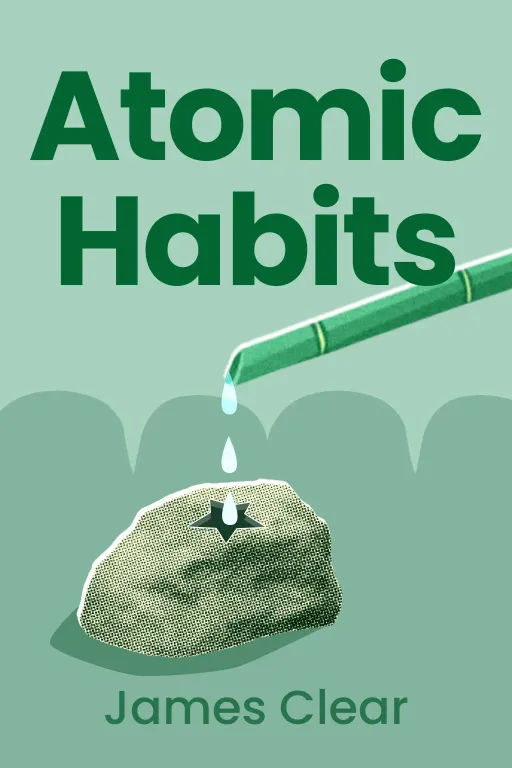
Nova: Exactly. And today, we're diving into a powerful framework that argues against that chase, encapsulated in the philosophy of "Stop Chasing Luck, Start Building Systems: The Guide to Predictable Success." It pulls insights from incredible thinkers like James Clear, author of "Atomic Habits," a writer who masterfully blends scientific research with practical strategies, not just for personal habits but for broader life design. Clear, himself a former collegiate baseball player turned entrepreneur and artist, brings a unique interdisciplinary perspective to habit formation, showing how small changes can compound into remarkable results.
Atlas: And Michael E. Gerber, whose "The E-Myth Revisited" completely reframed how we think about building sustainable ventures. Gerber's work especially resonates with anyone who's ever poured their heart into a passion project, only to realize the passion alone isn't enough to keep the lights on or the dream alive. It’s a wake-up call for the "technician" stuck in the business. So, we're talking about predictable success, not just wishful thinking or waiting for a lucky break.
Nova: Precisely. And we'll explore this from two angles: first, how micro-habits create exponential growth, and then, how building robust systems turns ambition into sustainable reality.
The Power of Micro-Habits: Stacking for Exponential Growth
SECTION
Nova: So, let's start with that idea of predictable success, and how it really begins with something almost imperceptible: the micro-habit. Clear's whole premise in "Atomic Habits" is that true, lasting change doesn't come from grand, sweeping gestures, but from tiny, consistent, almost unnoticeable actions. He calls them 'atomic' because they're small, fundamental building blocks, but also because they contain immense power.
Atlas: So basically, instead of relying on sheer willpower, you're saying make the good choice the easiest choice? That's actually really inspiring for anyone who's ever felt overwhelmed by massive goals, especially when they have multiple, demanding goals across different fields.
Nova: Exactly. Clear emphasizes engineering your environment, not just your willpower. He calls it "designing your world so that good habits are inevitable and bad habits are impossible." Think about it: if you want to eat healthier, you don't just to eat healthier. You remove all the junk food from your pantry and fill it with healthy options.
Atlas: But for someone with multiple, complex interests – say, a cybersecurity expert who also wants to be an actor – how do you apply this without feeling like you're just adding more "to-dos" to an already packed schedule? I imagine many of our listeners, especially those with diverse passions, feel this pressure to constantly "level up" in multiple areas, and the idea of adding tasks can feel counterproductive.
Nova: That's where the "atomic" part comes in. It's not about big, sweeping changes. It's about asking, "What's the smallest, almost ridiculously easy step I can take today for my acting career? Maybe it's just opening a script for five minutes, not even reading it, just opening it. For financial independence, maybe it's reviewing one investment statement for two minutes, or just putting five dollars into a dedicated savings account." The idea is to make the entry point so low that you can't say no.
Atlas: Right, like setting up your morning coffee maker the night before, but for your entire life's ambitions. It sounds a bit like building a self-driving car for your habits, where the environment does the heavy lifting, rather than you constantly having to exert conscious effort.
Nova: Precisely! And the British cycling team is a perfect illustration of this. They weren't just looking for one big breakthrough to win the Tour de France or Olympic gold. Their coach, Dave Brailsford, introduced the concept of "the aggregation of marginal gains." They looked at every single tiny detail – from better bike seats to the specific massage gels for recovery, even the type of pillow the athletes slept on. It was about hundreds of 1% improvements that aggregated into dominant, unprecedented performance.
Atlas: That gives me chills. It's not one big secret, it's just relentless, intelligent iteration. That makes me wonder, where do people usually mess this up when trying to implement these micro-habits across diverse areas? Because it sounds so simple, yet it's clearly not easy for most.
Nova: Often, they still focus on the outcome. They say, "I want to be financially independent," instead of, "I want to become the type of person who consistently manages their finances." The identity shift is key. You're not just doing a habit; you're embodying an identity. You become a financially savvy person by doing financially savvy things, however small, again and again.
Building Systems, Not Just Dreams: The Entrepreneurial Mindset for Creatives
SECTION
Nova: That's a fantastic segue, because while atomic habits are great for personal growth, for someone trying to fund an acting dream or build a cybersecurity consulting side-hustle, you're talking about something bigger than just personal discipline, aren't you? It moves from individual habits to organizational systems.
Atlas: Absolutely. This is where Michael Gerber's "The E-Myth Revisited" becomes essential. Gerber argues that most small businesses fail not because the owner lacks passion or skill – the "technician" role, someone who's brilliant at their craft – but because they fail to build robust systems. They work their business, perfecting their craft, instead of their business, creating processes that allow it to run without them.
Nova: Exactly. Think of a brilliant chef who opens a restaurant. They're an incredible 'technician' in the kitchen, their food is divine. But if they don't have systems for managing inventory, training staff, marketing, or customer service, their restaurant is likely to fail, not because of bad food, but because of a lack of operational systems.
Atlas: So, a brilliant actor might be amazing on stage, but if they don't have a system for auditions, networking, managing finances, or even promoting themselves, their "business" of acting is going to struggle. It’s like a chef who makes incredible food but can’t manage the kitchen staff or the supply chain, and then wonders why the restaurant is always losing money.
Nova: Precisely! For our polymath listeners, this means recognizing that their acting career, their financial independence strategy, even their confidence-building techniques, aren't just one-off tasks or passions. They are mini-businesses or life projects that need systems. You need a system for consistent auditioning, a system for financial tracking, a system for skill development, and yes, even a system for networking and self-promotion.
Atlas: That sounds rough, but it makes so much sense. For creatives who thrive on spontaneity and the "flow" state, isn't there a risk of becoming too rigid, of stifling the art itself, if everything is systematized? That's a common fear I hear from artists.
Nova: That's a common and valid concern. But the paradox is that systems create freedom. Think of it like a jazz musician. They have incredibly rigorous systems for scales, chords, and music theory. That mastery, that deep understanding of the system, is precisely what allows them the freedom to improvise brilliantly. The system isn't the cage; it's the trampoline. It provides the reliable structure so that your creative energy can be fully unleashed without constantly worrying about the operational minutiae.
Atlas: Oh, I love that analogy! So, instead of thinking of systems as handcuffs, it's about providing a solid foundation, a reliable engine, so the creative energy can be fully unleashed without worrying about the mundane, repetitive tasks. It's about getting out of your own way by setting up the right pathways.
Nova: Exactly. The tiny step we mentioned earlier – identifying one small, repeatable action for financial independence and scheduling it – is an atomic habit, yes. But it's also the seed of a system. It's working your financial future, not just the daily grind of earning and spending. It’s about building the infrastructure for your dreams.
Synthesis & Takeaways
SECTION
Atlas: This has been incredibly illuminating, Nova. It really reframes the idea of success from this external, unpredictable "luck" into something we can actively build and control. It's about being the architect of your own destiny, not just a passenger waiting for a destination to appear.
Nova: Absolutely. The cold fact is, many of us dream big, but real, sustainable progress comes from small, consistent systems. Whether it's the 1% improvement of an atomic habit or building the robust operational systems for your creative endeavors, it’s all about deliberate design. It’s about creating freedom through structure, moving from inconsistent progress to long-term growth across all your ventures.
Atlas: And for our listeners who are juggling cybersecurity and acting, or any other complex combination of passions, this isn't just theory. It's the guide to funding that acting dream, building confidence, and merging art with enterprise in a way that truly lasts. It's about having the intelligence to build the scaffolding for everything you want to achieve.
Nova: So, our tiny step for you today: identify just one small, repeatable action you can take daily for of your ventures – financial, creative, personal – and schedule it for the same time each day. Make it so small you can't say no. Start building that system.
Atlas: Don't chase luck; build the systems that make success inevitable. It's a game-changer for predictable growth.
Nova: This is Aibrary. Congratulations on your growth!