Build Your Practice, Not Just a Job: The Blueprint for Lasting Influence.
Golden Hook & Introduction
SECTION
Nova: Atlas, quick, describe the feeling of being indispensable in your work. Go! Five words or less.
Atlas: Oh, man, it’s a double-edged sword: deeply satisfying, but also… terrifying. Like, I'm the only one who truly gets this.
Nova: Terrifying. That's the word. That feeling of being the sole linchpin, the only one who can do perfectly, that’s exactly what we’re dissecting today. It's the seductive trap that brilliant experts fall into, where their very skill becomes their biggest barrier to growth.
Atlas: I know that feeling. It’s like, you’re so good at what you do, and people rely on you, and that feels amazing… until it feels like a gilded cage.
Nova: Precisely. And that's the core of what we explore in my book,. It emerged from countless conversations with incredible professionals—the resilient guides, the eloquent architects, the empathetic strategists—who, despite their profound expertise, found themselves on the brink of burnout, chained to their desks, unable to scale their impact. It’s about breaking free from being the bottleneck in your own brilliance.
Atlas: That hits home for so many people I know. So, today we're diving deep into two critical perspectives: first, the seductive trap of being stuck working your business, not it, drawing insights from 'The E-Myth Revisited.'
Nova: And then, we'll discuss how to strategically build a 'sellable' practice through systematization, inspired by 'Built to Sell,' and my own blueprint for lasting influence. It's a journey from potential burnout to lasting, amplified impact.
The Technician's Trap & The E-Myth Revisited
SECTION
Atlas: Okay, so let's start with this 'technician's trap.' What's the biggest misconception people have about starting their own practice, especially when they're really, really good at what they do?
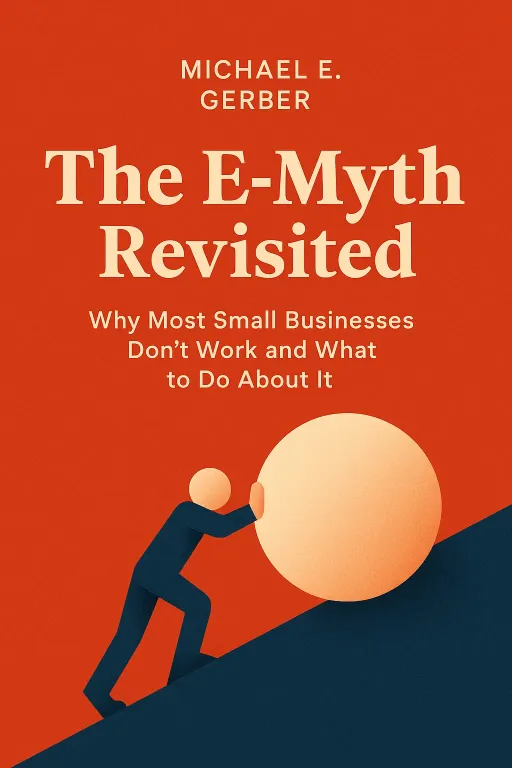
Nova: That if you're a brilliant technician, you automatically know how to run a business. It’s what Michael E. Gerber calls the 'fatal assumption' in his seminal work,. He argues that most people who start businesses are technicians suffering from an 'entrepreneurial seizure.'
Atlas: An entrepreneurial seizure? That sounds… dramatic. But I kind of get it. You're great at your craft, so you think, "I'll just do this for myself!"
Nova: Exactly. Imagine a chef, a truly gifted culinary artist. Their food is transcendent, people rave about it. So, they decide to open their own restaurant. They envision creating glorious dishes every day.
Atlas: Sounds like a dream, right? The ultimate expression of their passion.
Nova: In theory. But suddenly, this brilliant chef is not just cooking. They're managing suppliers, dealing with staff disputes, balancing the books, marketing the restaurant, fixing the leaky faucet, and chasing down late payments. They’re working 18-hour days, not making the food they love, but buried under the sheer weight of.
Atlas: Oh, I know that feeling. The passion gets buried under the paperwork. I imagine a lot of our listeners who are experts in their field—whether they're consultants, coaches, designers—they've felt that exact squeeze. They're amazing at the, but the is a whole different beast.
Nova: It’s a profound shift. Gerber points out that you have to wear three hats: the technician, the manager, and the entrepreneur. Most experts are phenomenal technicians, but they never truly step into those other roles. They're stuck their business, not it.
Atlas: So, for our 'eloquent architects' or 'resilient guides' out there, who are incredibly skilled at what they do, how do they even begin to recognize that they've fallen into this trap? Is it just burnout? Or are there more subtle signs?
Nova: It’s often burnout, yes, but also stagnation. They hit a ceiling because they physically cannot do more work. They become the bottleneck. Another sign is when every single decision, every client interaction, requires direct involvement. They can't take a vacation without everything grinding to a halt. There's no leverage.
Atlas: That gives me chills just thinking about it. It sounds like the business owns them, rather than the other way around. And it’s not just about making money, it’s about their ability to create impact. If they're burned out, they can’t serve anyone effectively.
Nova: Exactly. Their impact is limited to their own two hands and their available hours. The brilliance is contained, rather than amplified.
Building a Sellable System & Built to Sell
SECTION
Atlas: So if being a brilliant technician isn't enough, how do we build something that actually lasts, something that can grow beyond us and truly amplify our impact?
Nova: That’s where John Warrillow's comes in. He shifts the mindset from "building a better mousetrap" to "building a better mousetrap." It’s about creating a business that is not just profitable, but also attractive to a buyer, which means it can function without the founder.
Atlas: So, it's about making yourself, I don't know, replaceable? That sounds a bit counter-intuitive for someone who's built their whole practice on their unique expertise. Isn't that risky? Doesn't it dilute the personal touch?
Nova: That’s a common fear, and a valid one. But it's not about making yourself irrelevant; it’s about making your repeatable. Think of it this way: imagine a graphic designer, incredibly talented, who creates stunning, custom-designed logos for every single client. Each one is a masterpiece, totally bespoke.
Atlas: Clients would love that! That's the ultimate personalized service.
Nova: Absolutely. But the designer is constantly reinventing the wheel. Every project starts from scratch, every process is unique. They can't delegate any part of it because it all lives in their head. They’re chained to their desk, working late nights, and the business can't take on more clients than they can personally handle.
Atlas: That’s the technician’s trap again, but this time, in the name of bespoke service.
Nova: Right. Warrillow would advise this designer to standardize their service offerings. Maybe they create three clear logo packages: a basic, a premium, and an enterprise. And for each, they outline a repeatable design process, from initial briefing to final delivery.
Atlas: So, it's not about making less creative logos, but about creating a more predictable, structured way to the creative work.
Nova: Exactly! This allows them to document the process, train others, and delegate tasks. The unique "Nova touch" isn't lost; it’s embedded into the system. The quality becomes consistent, the client experience is standardized and predictable, and the business can scale. It becomes less dependent on the individual designer's direct, hourly involvement, and thus, far more valuable and impactful.
Atlas: That’s actually really inspiring. Because as an 'empathetic strategist,' I can see how that shift from purely bespoke to systematized delivery could allow someone to serve so many more people, to have a much broader impact, without burning out. But it sounds like it takes a lot of discipline to step back and build those systems.
Nova: It demands a strategic shift from technician to entrepreneur. It's about building repeatable systems that capture your brilliance, rather than relying solely on your presence. It’s how you take your unique expertise and transform it into a thriving practice that can truly grow and create lasting influence.
Synthesis & Takeaways
SECTION
Nova: What we've been talking about today, Atlas, is really about empowering the brilliant experts of the world. It’s not about stripping away their unique gifts or turning their passion into a soulless machine. It’s about designing a framework so their genius can reach more people, so their impact isn't limited by their own energy or time.
Atlas: That’s a powerful reframing. It’s not about becoming less of an artist or expert; it’s about becoming a better architect of your own impact. It's about building a vehicle for your purpose, rather than the vehicle.
Nova: Precisely. The cold fact is many brilliant experts struggle because they're working their business, not it. But the solution isn't to work harder; it's to work smarter, by building systems. Systems aren't just for efficiency; they're for amplifying influence and ensuring sustainability.
Atlas: I love that. So, for our listeners who are feeling that pull, that tension between their brilliance and the demands of their practice, what's one tiny step they can take right now?
Nova: Pick one routine task you perform daily. Just one. And for that task, outline the exact, step-by-step process required to complete it. Ask yourself: could I hand these steps to someone else and have them do it? That simple exercise is the first brick in building your practice, not just a job.
Atlas: That makes perfect sense. It’s about taking that first step towards making your brilliance repeatable. If you've taken that tiny step, or if this conversation has sparked an idea, we'd love for you to share it on social media. What's one routine task you're going to systematize this week? Let's build practices, not just jobs, together.
Nova: This is Aibrary. Congratulations on your growth!