The 'Meaning Crisis' Law: Rethinking Connection in a Decentralized Future.
Golden Hook & Introduction
SECTION
Nova: Atlas, I’ve got a challenge for you today. We're diving into something I'm calling "The Meaning Crisis Law." Give me your five-word review of that concept, right now. No overthinking allowed.
Atlas: Oh, I like that! Okay, five words... "Stories shape futures, choose wisely."
Nova: Ooh, straight to the heart of it! That's excellent, and perfectly sets the stage for what we're unpacking. Today, we're exploring this idea of "The Meaning Crisis Law": rethinking connection in a decentralized future. It’s all about understanding that human connection and governance aren't static. They're constantly evolving, and a lot of that evolution is driven by the stories we collectively believe in.
Atlas: That makes me wonder, what's behind this "Meaning Crisis Law"? Is it like, a new scientific principle, or more of a philosophical observation?
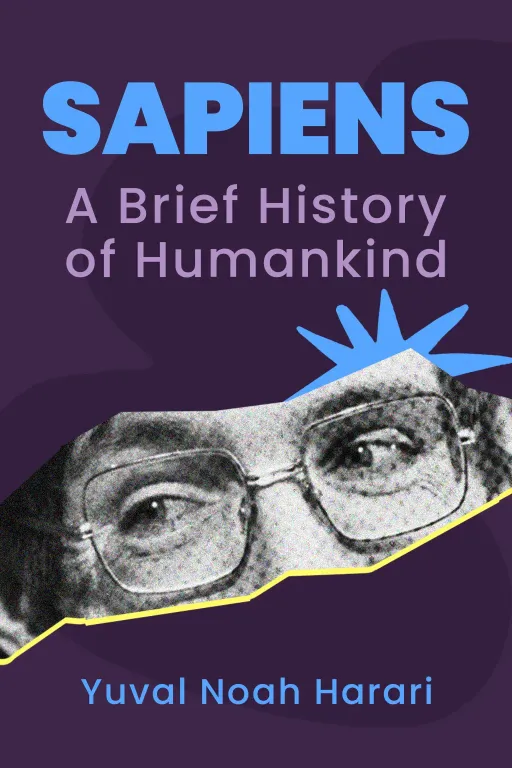
Nova: It's more of a profound observation, really, but one with immense practical implications, especially for anyone thinking about future societal structures. We’re drawing heavily from two incredibly influential, and critically acclaimed books that have profoundly shifted how we view human history and cooperation. First, Yuval Noah Harari's "Sapiens," which became a global phenomenon for its audacious sweep of human history, and then David Graeber and David Wengrow’s "The Dawn of Everything," a monumental work that completely upends conventional narratives of societal development. Both are challenging, but incredibly rewarding reads that have sparked massive intellectual debates worldwide.
Atlas: Right. I know both of those, and they’re… dense. So how do these books, which seem to cover such vast historical ground, connect to something as modern and forward-looking as a "decentralized future"? That feels like a big leap.
The Invisible Architecture of Cooperation
SECTION
Nova: That’s the magic, Atlas. Harari, in "Sapiens," makes a truly groundbreaking argument. He says that what allowed to dominate the planet, to build cities and empires, to cooperate in groups far larger than any other animal, wasn't our individual strength or intelligence. It was our unique ability to believe in what he calls "shared fictions."
Atlas: Shared fictions. So you’re saying things like nations, money, even human rights... these are just stories we tell ourselves? That sounds a bit cynical, doesn't it? Like we're just... making things up.
Nova: Not cynical at all! It’s actually incredibly powerful. Harari emphasizes that "fiction" doesn't mean "false" or "lie." It means something collectively imagined and agreed upon. These are the invisible operating systems of humanity. Think about it: a lion can’t convince another lion to give it a banana today for an extra banana tomorrow. But we can! Because we both believe in the fiction of a currency, a contract, a shared future promise.
Atlas: Okay, I see. It's not about being untrue, it's about being. So, like, money isn't inherently valuable, but because we it is, it becomes a powerful tool for cooperation.
Nova: Exactly! Take money as a perfect example. Before money, how did societies trade beyond small, trust-based groups? You needed to find someone who had what you wanted and wanted what you had. It was incredibly inefficient. The invention of money, this abstract concept, this shared fiction, allowed a farmer in ancient Sumer to trade grain with a weaver in Egypt, without ever meeting them, purely because they both believed in the value of the same shells or coins. The cause was the need for large-scale, impersonal exchange. The process was this collective agreement on an abstract value. And the outcome? Global commerce, vast empires, intricate supply chains that would be impossible without this shared belief.
Atlas: That's fascinating. So, for our listeners who are building, say, ethical AI or new decentralized governance systems, understanding these "shared fictions" is crucial. It's not just about the code or the algorithms, but what collective stories that code is built upon? What new fictions do we need to consciously design to ensure these systems are truly human-centric and ethical?
Nova: Precisely. If we’re moving towards decentralized structures, towards new forms of digital governance or economic exchange, we’re essentially asking people to believe in new shared fictions. We need to understand the mechanics of how these fictions take hold, how they foster cooperation, and how they can be designed to serve humanity, not just efficiency.
Beyond the Blueprint: Reimagining Governance Through Historical Diversity
SECTION
Nova: And that naturally leads us to a fascinating counterpoint, or perhaps a deeper layer, brought to light by "The Dawn of Everything." While Harari shows us the power of shared fictions, Graeber and Wengrow challenge the very of those fictions we often take for granted.
Atlas: So you're saying societies weren't just on a one-way street to where we are now? That feels... counterintuitive to everything I learned in history class, where it was always hunters and gatherers, then agriculture, then states, then us.
Nova: Absolutely. They completely dismantle that linear, inevitable narrative of human progress. They show that for most of human history, our ancestors experimented with an astonishing diversity of social organizations. Some societies were egalitarian, some hierarchical, some switched between the two seasonally! There wasn't one single, predetermined path. They were incredibly agile and inventive with their forms of governance and connection.
Atlas: Wow. That's a huge shift in perspective. It implies that our current systems, our current "fictions" of how society be organized, are just one of many possibilities, not the inevitable peak of evolution.
Nova: Exactly. Consider the indigenous peoples of North America, like the Nambikwara of Brazil, or various groups in ancient Mesopotamia. "The Dawn of Everything" details how some societies would intentionally choose to live without rulers for certain periods, or actively dismantle hierarchical structures that had emerged. They had what the authors call "social self-consciousness," the ability to reflect on and intentionally reshape their own societies. The cause was often a collective desire for freedom or a response to seasonal resource availability. The process was often through consensual decision-making or temporary leadership that dissolved after specific tasks. And the outcome? Highly resilient, adaptable societies that maintained a profound sense of communal well-being, often for thousands of years. They were actively designing their 'fictions' of governance.
Atlas: That’s incredible. So, for our listeners focused on decentralized governance, this isn't just a historical curiosity. It’s a blueprint for possibility. Like, how could a DAO or a new blockchain-based community actually learn from an ancient indigenous council? What specific mechanisms or 'stories' could we borrow to build more human-centric, resilient decentralized systems?
Nova: The key takeaway is intentionality. These historical examples show that our ancestors weren't just passively evolving; they were actively designing their social worlds. They understood that governance was a conscious creation. For decentralized governance, it means moving beyond simply replicating old power structures with new tech. It means asking: what kind of shared belief system, what kind of 'fiction' about power, cooperation, and individual freedom, are we embedding in our smart contracts, our DAOs, our tokenomics? Are we consciously choosing flexibility and human well-being, or are we just defaulting to old habits?
Synthesis & Takeaways
SECTION
Nova: So, bringing it all together, the 'Meaning Crisis Law' isn't about shunning shared fictions, but understanding their profound power. Harari shows us they’re the engine of human cooperation, and Graeber and Wengrow show us that the of these fictions is incredibly diverse and malleable, shaped by conscious choice throughout history.
Atlas: That makes me really think about the "Deep Question" you posed at the beginning. Given all this history of creating shared fictions for cooperation, what new 'stories' are essential for a truly human-centric decentralized future? What's the narrative we need to collectively believe in, right now, as we build these new systems?
Nova: That's the million-dollar question, isn't it? Perhaps it's a story of radical transparency, or a fiction of shared ownership and responsibility, or even a story that prioritizes ecological balance above endless growth. The crucial part is recognizing that these are choices we make. We are the storytellers. And the future of human connection, ethical AI, and decentralized governance depends on the stories we choose to believe, and more importantly, to build.
Atlas: Wow, that gives me chills, in a good way. It's a call to conscious creation. I love that. For all our listeners out there, we invite you to ponder that question: what new stories are essential for our decentralized future? Share your thoughts, challenge our assumptions. Let's build these narratives together.
Nova: Absolutely. Your insights are invaluable as we navigate these complex shifts.
Atlas: This is Aibrary. Congratulations on your growth!