Unlocking Collective Intelligence: Building Teams That Think Together
Golden Hook & Introduction
SECTION
Nova: We're often taught that leadership is about control, about having all the answers and directing the ship. It's an ingrained instinct, this drive for centralized command, this belief that a strong hand at the helm is the only way to navigate choppy waters.
Atlas: Right? It feels almost primal, doesn't it? The person at the top knows best, everyone else executes. That's the playbook we've all been given. But I can already tell by your tone, Nova, you're about to tell me that playbook is… well, maybe a little outdated.
Nova: You've read me like a book, Atlas! Because what if that very instinct, that very drive for centralized control, is actually holding us back? What if the quest for total command is precisely what's preventing us from being truly adaptive, truly innovative, and truly intelligent as a collective?
Atlas: That's a provocative thought. Especially for anyone trying to build something significant, trying to grow, trying to scale. You feel like you control to ensure quality, to ensure direction.
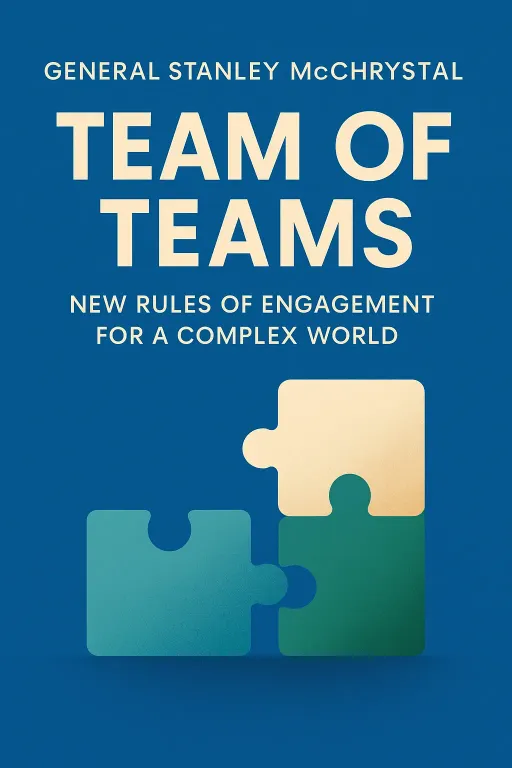
Nova: Absolutely. And today, we're tearing down some of those old leadership paradigms with insights from two pivotal books. We're diving into General Stanley McChrystal's "Team of Teams" and Daniel Coyle's "The Culture Code." What's fascinating about McChrystal’s work is that it emerged from his time leading the Joint Special Operations Task Force in Iraq. He was a four-star general, a career military man, trained in the most rigid, hierarchical structures imaginable. Yet, he found those very structures were failing against a decentralized, agile enemy. He had to completely rethink how an organization could operate effectively, transforming an elite military unit into something far more fluid.
Atlas: Wow, so he wasn't just theorizing from an ivory tower; he was literally on the battlefield, realizing the old ways weren't cutting it. That’s a powerful origin story. It makes me wonder, how does that translate to the boardrooms and the startups? Because the stakes feel incredibly high in those environments too, just in a different way.
Nova: Precisely. And that's our journey today. We're exploring how to build truly adaptive, innovative teams by embracing collective intelligence, moving beyond old command structures, and cultivating a human-centric culture.
From Command to Collective: The 'Team of Teams' Paradigm Shift
SECTION
Nova: So, let's start with McChrystal. His core argument in "Team of Teams" is that traditional hierarchical structures, the ones we're all so familiar with, are simply too slow for the pace of today's world. They create information silos, bottlenecks, and a slow, ponderous decision-making process.
Atlas: I can definitely relate. I've been in organizations where information gets stuck, decisions take forever, and by the time you've acted, the market has already moved on. It feels like you're constantly playing catch-up.
Nova: Exactly. McChrystal realized his highly trained, incredibly capable special operations units, despite their individual brilliance, were operating as a "team of individuals" rather than a "team of teams." They were efficient within their silos, but not effective as a collective against an enemy that was essentially a network. His solution? Decentralized execution guided by shared understanding and trust.
Atlas: Hold on, so are you saying top-down control is just... obsolete? How does that even work without chaos, especially for someone trying to scale an organization, trying to grow, trying to maintain quality? It sounds like a recipe for a hundred different agendas.
Nova: That's the crucial misconception, Atlas. It’s not about a lack of leadership or an absence of structure. It's about a different of leadership. It’s about creating what he calls "shared consciousness." Imagine every single person in your organization, from the newest hire to the CEO, having the same, up-to-the-minute understanding of the overarching mission, the current environment, and the challenges you face. Not just their piece of the puzzle, but the entire picture.
Atlas: Okay, so total transparency, essentially? But in a large organization, isn't that just overwhelming? How do you instill that shared consciousness without constant micromanaging, without just flooding everyone with an unmanageable amount of data?
Nova: That's where trust comes in. McChrystal didn't just open up information; he fostered a culture where people were empowered to make decisions, closest to the action, because he trusted they had the shared context to make the decisions. He moved from a model of "command and control" to "communicate and trust." He talks about daily "Operations and Intelligence" briefings, not just for senior leaders, but for hundreds, sometimes thousands, of people across the entire task force, sharing everything. This wasn't about telling people what to do; it was about giving them the context to decide for themselves.
Atlas: That makes me wonder, for a strategic builder who's trying to attract top talent and build a culture-first organization, how appealing is that? Because if you're offering true autonomy and a sense of shared purpose, that's a huge draw, right? It's not just about compensation anymore; it's about belonging to something bigger and having agency.
Nova: Absolutely. It taps into a fundamental human need for purpose and autonomy. When people feel trusted and informed, they're not just employees; they're invested partners. And that, in turn, makes your organization incredibly attractive to the kind of innovative, self-starting talent you want. It’s a virtuous cycle.
The Human Operating System: Cultivating Collective Intelligence
SECTION
Nova: And that brings us perfectly to the – the underlying human operating system that makes a "team of teams" not just possible, but powerful. This is where Daniel Coyle's "The Culture Code" comes in. Coyle spent years studying highly successful groups, from Pixar to the Navy SEALs, and identified three key skills that build strong group cultures.
Atlas: Okay, so McChrystal gives us the structure, and Coyle gives us the glue. What are these three skills?
Nova: The first is. This is the feeling that you can take risks, make mistakes, and speak up without fear of punishment or humiliation. It’s the foundation. The second is, which means leaders and team members are willing to show weakness, admit errors, and ask for help. And finally,, ensuring everyone understands the group exists and what it's striving for.
Atlas: That word 'safety' can feel soft in a high-performance environment. How do you convince a leader that being tough on people, that having an intense, fear-driven culture, actually leads to better results and innovation? Isn't there a risk of complacency?
Nova: That's a critical question, Atlas, and it's a common misconception. Psychological safety isn't about being "nice" or avoiding tough conversations. It's about creating an environment where people feel safe, to challenge ideas, to admit when they don't know something, or to flag a potential problem. Think about it: if people are afraid to speak up, you lose out on crucial information, you miss opportunities, and you repeat mistakes. Google's Project Aristotle famously found psychological safety to be the single most important factor for team effectiveness. It’s about, not comfort. For a strategic builder, this means fewer hidden problems, more creative solutions, and faster adaptation.
Atlas: Wow, that's powerful. So it's not about coddling, it's about enabling radical honesty and rapid learning. That transforms how I think about building an innovative team. What about shared vulnerability? That sounds even riskier. Is it truly strategic to be vulnerable, or just... uncomfortable?
Nova: Oh, it's definitely uncomfortable for many, especially those in leadership roles. But Coyle shows that vulnerability is actually a superpower for building trust. When a leader says, "I messed up," or "I don't have all the answers, I need your help," it signals to the team that it's okay for to do the same. This creates a ripple effect of trust and openness. It breaks down the facade of perfection and allows real, human connection to form, which is essential for deep collaboration.
Atlas: I guess I can see that. If you're trying to attract top talent, you're looking for people who are willing to push boundaries. But they won't do that if they're constantly trying to hide imperfections or pretend to know everything. Vulnerability, in that context, becomes a pathway to innovation.
Nova: Exactly. It makes the team more resilient and innovative because they can tackle problems openly, share diverse perspectives, and learn from mistakes much faster. It's about creating a "culture of inquiry" rather than a "culture of advocacy." And then, establishing purpose ties it all together. When everyone understands the 'why' – the larger mission, the impact they're making – it creates a powerful intrinsic motivation that far surpasses any external incentives.
Synthesis & Takeaways
SECTION
Nova: So, when you combine McChrystal's structural insights about decentralized execution and shared consciousness with Coyle's cultural insights on psychological safety, shared vulnerability, and purpose, you get a complete picture. It's how you move beyond simply managing people to cultivating an environment where collective intelligence can truly thrive. It’s about building teams that think, not just work alongside each other.
Atlas: That's a profound shift, moving from a manager of tasks to a cultivator of an ecosystem. So, if I'm a leader listening to this, and I want to start somewhere, what's one tangible, tiny step I can take to decentralize and build this 'shared consciousness' and 'psychological safety' without turning my organization upside down overnight? How do I begin to foster sustainable success and attract the kind of talent that thrives in this environment?
Nova: It's a great question, Atlas, and the core content offers a perfect "tiny step." Identify one decision your team currently makes. Just one. Then, next time, empower the people closest to the action to make that decision. Trust them with the context, and then trust them with the choice. It might feel small, but it's a powerful act of decentralization and a huge signal of trust.
Atlas: I love that. It’s about trusting your inner wisdom as a leader to let go, and trusting the wisdom of your team to step up. And celebrating those small wins, acknowledging that progress, is how you build momentum for something truly transformative.
Nova: Absolutely. It's about embracing the journey of building a truly intelligent collective. This is Aibrary. Congratulations on your growth!