The Unseen Architect: How Culture Shapes Your Organization
Golden Hook & Introduction
SECTION
Nova: Atlas, I want to play a quick game. Give me your five-word review of "organizational culture." No pressure, just five words.
Atlas: Oh, man, only five? Okay… "Invisible, powerful, messy, intentional, essential."
Nova: "Messy, intentional, essential." I love that, especially "messy." Because today, we’re diving into the unseen architect, the hidden influence that shapes every single decision within an organization, often without us even realizing it. We’re talking about culture, and how it’s not just a buzzword, but a core driver.
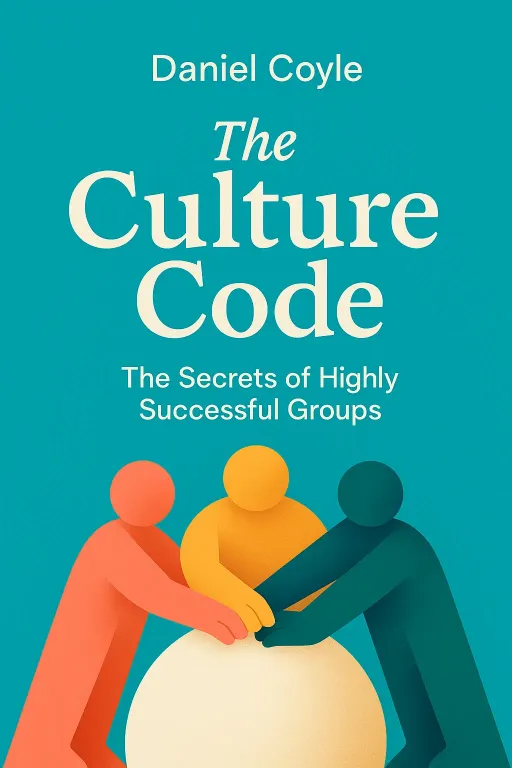
Atlas: Right? It’s like the air you breathe in a company; you don't notice it until it’s toxic, or until it’s incredibly invigorating. We’re drawing insights from two absolute giants in this space: Daniel Coyle’s "The Culture Code" and Jim Collins’s seminal work, "Good to Great."
Nova: And these aren't just academic musings. Collins, for instance, is famous for his almost obsessive, multi-year research into what truly makes companies leap from good to great, sifting through mountains of data to find the patterns. Coyle, on the other hand, is a journalist who practically embedded himself in highly successful teams, almost like an anthropologist, to uncover the hidden mechanisms of their cohesion.
Atlas: So, we're talking about something that's always there, but we often don't it until it’s too late, or until it’s propelling us forward. For someone trying to build a resilient, impactful movement, that feels like a huge, critical vulnerability or a massive opportunity.
The Invisible Power of Organizational Culture
SECTION
Nova: Exactly. And that’s our first core idea: the invisible power of organizational culture. We often treat culture as a soft, intangible aspect, separate from strategy or execution. It’s like we have this brilliant blueprint for a skyscraper—our strategic goals—but we completely ignore the soil it’s built on.
Atlas: Hold on, if culture is so powerful, why do so many leaders still treat it like a nice-to-have, or something HR handles on the side? For someone trying to build a movement, that feels like a huge blind spot. It's almost like a form of self-sabotage if you aren't paying attention.
Nova: It absolutely can be. Think of a company with a fantastic new product idea, a clear market, and seemingly a solid execution plan. But in reality, their culture punishes failure. Employees are afraid to take risks, afraid to admit mistakes, or even bring up new, potentially disruptive ideas because the culture subtly communicates: "Don't mess up."
Atlas: Oh, I know that feeling. The stated goal is innovation, but the lived experience is fear.
Nova: Precisely. The strategy says "innovate," but the culture says "play it safe." And guess which one wins every time? Coyle, in "The Culture Code," gives us so many examples of this. He talks about a software company, for instance, that was struggling despite having brilliant engineers. They were hitting all their metrics on paper, but their internal communication was fragmented, trust was low, and collaboration was almost non-existent.
Atlas: So, on the surface, they looked fine, but underneath, the currents were pulling them apart.
Nova: Exactly. Their strategic goal was to build groundbreaking software, but their culture was silently undermining their ability to collaborate, to trust, to truly innovate. It wasn't about the code they were writing; it was about the they were writing it in. The moment they started focusing on building psychological safety, encouraging vulnerability, and clarifying their collective purpose, everything shifted. Suddenly, the same brilliant engineers, in the same roles, started producing exponentially better results.
Atlas: So it's less about the grand plan, and more about the micro-interactions, the unspoken rules, the daily habits that determine if the plan even has a chance. That’s actually really inspiring, because it means culture isn't some mystical force; it's something we can actively shape.
The DNA of High-Performing Cultures: Safety, Vulnerability, Purpose & Discipline
SECTION
Nova: That micro-interaction point is exactly what brings us to the actual building blocks. What does it like inside those high-performing cultures? Coyle distills it down to three key skills: building safety, sharing vulnerability, and establishing purpose.
Atlas: Okay, safety and vulnerability, I get how those foster innovation. Psychological safety means I can speak up without fear of being shamed. Vulnerability means I can say, "I don't know," or "I need help," or "I made a mistake." Both are crucial for learning and growth, especially in a messy middle.
Nova: Absolutely. Think of psychological safety as creating a 'safe harbor' for ideas and people. It’s the feeling that you belong, that your voice matters, and that you won’t be punished for honest mistakes. Vulnerability is the courage to actually that safe harbor—to admit you don't have all the answers, to ask for help, or to put a half-formed idea out there. And purpose, that’s the shared north star, the reason everyone is doing what they’re doing. It’s what unites diverse individuals into a cohesive team.
Atlas: But wait, then Collins talks about discipline in "Good to Great." How do you square that with vulnerability? It almost sounds contradictory for a leader trying to foster empathy and an environment of psychological safety. Discipline sounds like rules and rigidity, which could shut down vulnerability.
Nova: That's a brilliant distinction, and it's where the synergy truly happens. Collins isn't talking about authoritarian discipline; he’s talking about a coupled with. It’s not about rigid control, but about people who are self-disciplined enough to adhere to a clear, well-understood system of excellence, and who are disciplined in their approach to understanding reality.
Atlas: So it's not discipline of vulnerability, but discipline vulnerability to flourish?
Nova: Exactly! Imagine a team that has psychological safety, so everyone feels safe to speak their mind. They share vulnerability, so they can admit when things aren't working or when they need help. And they’re united by a clear purpose. Now, layer on Collins’s discipline: these are people who are disciplined enough to confront the brutal facts, to stick to their commitments, and to consistently execute on their shared vision, even when it’s hard.
Atlas: That’s a powerful combination for building something enduring. It’s not about being soft rigid, but about creating a framework where people feel safe enough to be vulnerable, united by a clear purpose, and then disciplined enough to execute on that shared vision. It’s like the scaffold that allows the creative, empathetic work to happen without dissolving into chaos.
Synthesis & Takeaways
SECTION
Nova: And that’s the magic, isn’t it? Culture isn't just the backdrop; it's the operating system for your strategic goals. It determines whether your brilliant plans actually take root and flourish. Understanding and intentionally shaping these cultural elements—safety, vulnerability, purpose, and discipline—isn't just about making people feel good; it's about building a foundation for sustained excellence and achieving your strategic objectives quarter after quarter.
Atlas: For anyone trying to navigate the messy middle, trying to build a movement, or just trying to create something meaningful and enduring, this reframes culture not as a distraction, but as the ultimate leverage point. It's about designing an environment where your team can actually achieve its highest potential. It makes me wonder, what’s one small cultural shift you could make this week that would directly impact your biggest strategic goal?
Nova: That's the question we all need to ask ourselves. Because the unseen architect truly is the most powerful.
Atlas: This is Aibrary. Congratulations on your growth!