The Silent Language: Unlocking Organizational Culture with Data.
Golden Hook & Introduction
SECTION
Nova: You know, we talk a lot about strategy, innovation, market disruption. But what if I told you the single most powerful, yet often overlooked, driver of an organization's success isn't any of those things? It's something many still dismiss as a 'soft skill,' an intangible, fuzzy concept.
Atlas: Oh, I know where this is going. Are we talking about... culture? The thing everyone says is important but nobody quite knows how to actually or? Because honestly, for many leaders, it often feels like trying to herd mist.
Nova: Precisely, Atlas! It feels like mist, yet it’s the invisible operating system driving everything. Ignoring its mechanics leads to disengagement, high turnover, and stifled innovation, regardless of how brilliant your strategy is. Today, we're decoding that silent language.
Atlas: Okay, I’m intrigued. You’re saying we can actually the mist? That sounds like a superpower for any strategic leader who’s trying to craft culture and inspire understanding.
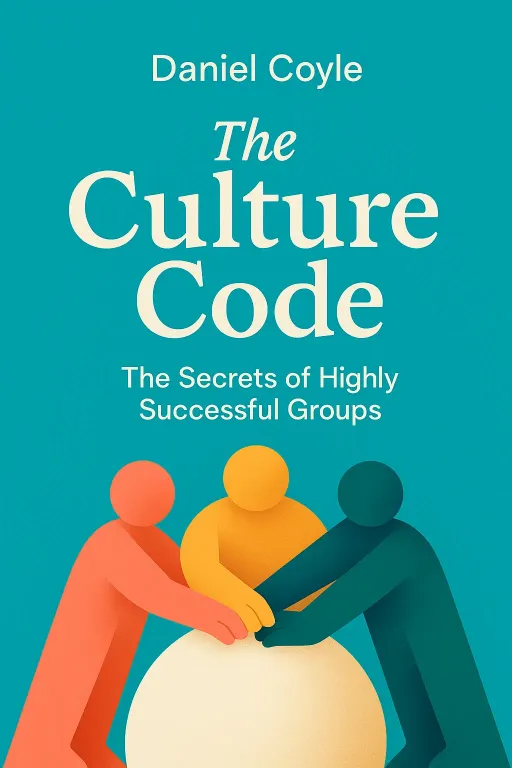
Nova: Absolutely. And we’re going to do it by diving into two groundbreaking books: Daniel Coyle’s "The Culture Code" and Jim Collins’ "Good to Great." Coyle, for instance, didn't just theorize about culture; he spent years embedding himself with some of the world's most successful teams—from Pixar to the Navy SEALs—to uncover the hidden, learnable mechanisms of group cohesion. He peels back the layers on what truly makes a team click.
Atlas: That’s a fascinating approach. So, he’s not just giving us theory, but showing us how it’s built, brick by brick, from human interaction. What did he find? What makes these incredibly diverse, high-stakes teams?
Deep Dive into Core Topic 1: Building Psychological Safety and Vulnerability
SECTION
Nova: He distilled it down to three core skills: building safety, sharing vulnerability, and establishing purpose. And the first one, building safety, is paramount. Coyle argues that psychological safety isn't about being 'nice'; it's about creating a place where people feel secure enough to take risks, make mistakes, and be vulnerable without fear of punishment or humiliation.
Atlas: Oh, I like that. So it’s not about being soft, it’s about creating a robust, resilient environment. But wait, how does that translate into actual, tangible actions? For leaders in high-stakes environments, vulnerability can sound, well, vulnerable in a bad way. How do you encourage that without it devolving into chaos or excuses?
Nova: That’s the magic. Coyle gives an incredible example of a professional basketball team where the coach intentionally fostered psychological safety. He would constantly ask his players for feedback on his own coaching, admitting when he made a mistake, and creating a space where even the newest player felt comfortable challenging a decision or pointing out an error.
Atlas: Really? A pro team? That’s counter-intuitive. You’d think in that kind of competitive environment, you’d want ironclad authority.
Nova: Exactly! But the coach understood that true high performance comes from rapid learning and adaptation. He’d say things like, "That was my fault, I should have called a different play," or "What did you see out there that I missed?" This wasn't weakness; it was a demonstration of shared vulnerability. It modeled the behavior he wanted.
Atlas: So, by him being vulnerable, it created a ripple effect, making it safe for everyone else to be vulnerable too? To admit mistakes, offer suggestions, and ultimately, learn faster?
Nova: Precisely. And the outcome? Their communication improved dramatically. They became incredibly agile, able to adjust on the fly, and their performance soared. They weren't just executing plays; they were co-creating solutions in real-time. It’s about creating a high-trust, high-candor environment, not a 'nice' one.
Atlas: That makes sense. It’s like the difference between a team that just follows orders and a team that truly innovates. For anyone leading a team, especially in rapidly evolving industries, that ability to adapt and innovate is everything. It’s not just about making people feel good; it’s about making them effective.
Deep Dive into Core Topic 2: Discipline, Leadership, and 'First Who, Then What'
SECTION
Nova: And that naturally leads us to the second key idea we need to talk about, which often acts as a foundational counterpoint to what we just discussed. Because once you have that culture of safety and vulnerability, Atlas, who are the to build it and lead it? And how do you find them?
Atlas: That's the million-dollar question, isn't it? Because you can have the best intentions for culture, but if you have the wrong people on the bus, it's going nowhere.
Nova: Exactly. This is where Jim Collins comes in with "Good to Great." His research team undertook a five-year study, poring over decades of financial data and thousands of pages of interviews to identify companies that made a sustained leap from good to great. And one of his most profound findings was the concept of 'Level 5 Leadership.'
Atlas: Level 5 Leadership. What does that entail? Because in today's competitive landscape, the popular image of a leader is often charismatic, visionary, almost larger-than-life.
Nova: Collins found the opposite. Level 5 leaders are a paradoxical blend of extreme personal humility and intense professional will. They're not the charismatic, ego-driven types that often grab headlines. Instead, they channel their ego away from themselves and into the larger goal of building a great company. They look out the window to assign credit for success, and in the mirror to assign responsibility for failure.
Atlas: That's actually really inspiring. Humility and professional will. So it's not about being weak, it's about being relentlessly focused on the organization's success above personal glory?
Nova: Absolutely. And this ties directly into another one of his core principles: 'first who, then what.' The good-to-great companies first got the right people on the bus, the wrong people off the bus, and the right people in the right seats— they figured out where to drive the bus.
Atlas: So basically, building the team is the strategy, not just a prerequisite for it. Can you give an example of how that played out? Because for a strategic integrator, the sequence of 'who' and 'what' is critical.
Nova: Think about Walgreens. Collins highlights how they, under Cork Walgreen, focused relentlessly on getting the best people, cultivating a disciplined culture, and then adapting their strategy as needed. They weren't afraid to shift their 'what' – like moving into the convenience store model – because they had the 'who' in place: disciplined people capable of adapting and executing. It wasn't about a brilliant, unchanging strategy from day one; it was about having brilliant, adaptable people.
Atlas: That makes perfect sense. It's like building a world-class orchestra. You don't just hand out sheet music and expect a masterpiece. You first pick the most talented, disciplined musicians, foster a culture where they can perform at their best, and then, together, you decide on the repertoire. That's a powerful shift in perspective for cultivating a high-achieving culture.
Synthesis & Takeaways
SECTION
Nova: And that's the profound connection here. Coyle shows us to build the relational mechanics of culture—the psychological safety, the vulnerability, the purpose. Collins then layers on the and the foundational discipline. Together, they reveal that organizational culture isn't a soft skill; it's the invisible operating system that, when intentionally designed with disciplined people and empathetic leadership, drives sustained excellence.
Atlas: It’s clear that ignoring its mechanics leads to disengagement and stifled innovation, regardless of strategy. This isn't just about 'making people happy'; it's about unlocking performance and shaping the future of your industry. It’s about understanding that the human dynamics the data.
Nova: Exactly. So, for our listeners, I want to leave you with this: observe a recent team interaction. Could fostering more psychological safety have changed the outcome? How? It's a tiny step, but it's where the silent language begins to speak volumes.
Atlas: That's a great reflective question. What a powerful way to integrate these insights.
Nova: This is Aibrary. Congratulations on your growth!