The Overlooked Pillar: Why Your Team Culture is Your Strongest Asset
Golden Hook & Introduction
SECTION
Nova: Most leaders think the greatest threat to a product, or a service, or a company, is a competitor. Or maybe a bad market. But what if the real silent killer isn't external at all? What if it's sitting right there, inside your own walls, unnoticed, eroding everything you're trying to build?
Atlas: Inside your own walls? That's a bold claim, Nova. Most of us are busy looking outwards, strategizing against market shifts or the next big disruption. You're saying the biggest risk is... internal?
Nova: Absolutely, Atlas. Today, we're diving into "The Overlooked Pillar: Why Your Team Culture is Your Strongest Asset." It's a powerful and concise piece that flips our traditional understanding of what truly drives lasting success on its head. It suggests that building a great product or service is only half the battle.
Atlas: That resonates deeply with anyone trying to build sustainable systems and people, not just products. It implies a holistic approach, which I think our listeners, particularly those focused on long-term impact and human well-being, will find crucial. But what does this "bedrock" actually like? What are its components?
The Foundational Power of Psychological Safety and Vulnerability
SECTION
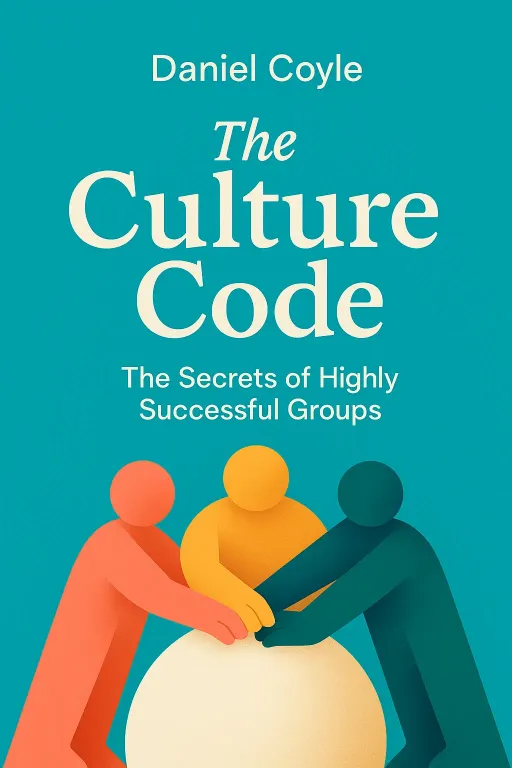
Nova: Well, one of the most critical components comes from insights by Daniel Coyle in "The Culture Code." He identifies three key skills for building cohesive, high-performing groups: building safety, sharing vulnerability, and establishing purpose. And let me be clear: these aren't soft skills. They are foundational to peak performance.
Atlas: Okay, "psychological safety" sounds a bit like corporate jargon to some. And "vulnerability"? For a strategic leader, or anyone in a high-stakes environment constantly navigating negotiations, isn't that perceived as a weakness? How does that actually translate into higher performance, especially when you're trying to project strength and secure your vision?
Nova: That's a brilliant question, Atlas, and it gets to the heart of the misconception. Psychological safety isn't about being "nice" or avoiding tough conversations. It's about creating an environment where people feel safe enough to take risks, to challenge ideas, to admit mistakes, and to ask so-called "dumb" questions without fear of reprisal or judgment.
Atlas: So it's about creating a space where the team can innovate without the paralyzing fear of failure. I can see how that would be a critical debugging tool for someone building complex systems – if people are afraid to point out flaws, those flaws persist.
Nova: Exactly. Think about a team trying to launch a new feature. In a low-safety environment, if someone spots a potential bug, they might hesitate to speak up, fearing blame or looking incompetent. That bug goes live, creating a much larger problem. In a high-safety environment, that person speaks up immediately, the team collaborates, fixes it, and everyone learns. The difference in outcome is massive.
Atlas: That makes sense. It's not about avoiding mistakes, it's about making them visible and learnable. But what about vulnerability? That still feels like a big ask for leaders who are often expected to have all the answers.
Nova: Vulnerability, in this context, isn't about oversharing personal details. It's about leaders modeling trust by admitting their own mistakes, asking for help, or acknowledging they don't have all the answers. It's about saying, "I messed up," or "I need your input here because I'm stuck."
Atlas: That's a huge leap for many leaders, especially when the stakes are high, and you're trying to empower your team while also securing your vision. It almost sounds like a negotiation with your own ego. How do you cultivate that without feeling exposed in a way that undermines authority?
Nova: It actually strengthens authority, paradoxically. When leaders show vulnerability, it signals to the team that it's okay for them to be imperfect too. It creates a powerful bond of trust. I once heard about a CEO who, after a significant product launch failure, stood before his team and openly took responsibility for the strategic missteps. He didn't blame anyone; he articulated what had learned and asked for their collective wisdom on how to move forward. The team didn't lose respect; they rallied. They saw a human leader, not an infallible one, and their cohesion and problem-solving capacity went through the roof.
Unifying Purpose: The 'Why' Behind Unstoppable Teams
SECTION
Nova: And that notion of leading with integrity, of understanding what truly motivates us beyond just the bottom line, brings us directly to our second pillar: the power of purpose. Simon Sinek famously said, "People don't buy what you do, they buy why you do it." This applies just as much, if not more, to your team.
Atlas: The "why." It sounds so simple, yet so many organizations struggle to articulate it beyond a generic mission statement. How does a clear "why" actually a team beyond just knowing the company's goal? What's the psychological mechanism at play there?
Nova: It's about tapping into something deeper than a paycheck or a task list. A strong purpose connects individuals to a shared vision that transcends their daily grind. It gives their work meaning. Imagine two teams developing a new app. One team is told to build an app with certain features by a certain deadline. The other team is told they are building an app that will empower thousands of small businesses to compete with giants, leveling the playing field and creating economic opportunity.
Atlas: Oh, I see. The second team isn't just coding; they're contributing to a larger narrative, a bigger impact. That's a completely different emotional landscape.
Nova: Precisely. When setbacks hit, the first team might grumble about deadlines. The second team, connected to that larger "why," finds resilience. They push through because they believe in the impact they're creating. Their work isn't just a job; it's a contribution to something meaningful. That's Nova's Take in action: intentional culture building transforms a group of individuals into a resilient, unstoppable force. It directly impacts your product's scalability and impact because everyone is pulling in the same direction, with the same conviction.
Atlas: So it's not just about a "feel-good" statement; it's a strategic force multiplier. It sounds like the ultimate answer to burnout and stress, giving people a reason to push through the inevitable challenges, a north star for their energy. For the "Empathetic Builder" listening, how do you operationalize this "purpose"? Is it a workshop? A mantra? How do you ensure it's truly shared and not just a top-down declaration?
Nova: It's definitely not just a top-down declaration. It starts with leadership truly embodying the "why," and then consistently communicating it, bringing it to life with stories and examples. It’s about every team member understanding how their individual contribution links to that larger impact. It could be a regular "impact moment" where a user story is shared, or a team brainstorms how their next sprint specifically advances the "why." It's about weaving purpose into the fabric of daily work, making it tangible and personal.
Synthesis & Takeaways
SECTION
Nova: So, when we bring these two pillars together – the psychological safety and vulnerability that creates a fertile ground for trust, and the unifying purpose that provides direction and meaning – you get a culture that is not just resilient, but truly unstoppable. It’s the engine that powers sustainable growth and allows your product or service to scale with integrity.
Atlas: That's powerful. It's incredible how these "soft" elements are actually the hardest and most impactful levers for building something truly resilient and sustainable. It's about building a legacy of well-being and impact, not just profit. So, for our listeners who are ready to move from theory to action, what's one tiny, tangible step they can take this week to start cultivating this kind of culture?
Nova: The piece suggests identifying one small ritual you can introduce this week to foster a greater sense of psychological safety or shared purpose within your team. It could be something as simple as starting your team meetings with a "win and a learn" share—everyone shares one small success and one small lesson learned from the past week. It builds vulnerability and shared understanding.
Atlas: I love that. It’s a practical framework, a concrete action that immediately addresses the human element. It reminds us that culture isn't some abstract concept; it's built brick by brick, interaction by interaction.
Nova: Exactly. It's the overlooked pillar, but once you lean on it, once you intentionally build it, everything else becomes stronger. Your team becomes a force that can overcome any external challenge.
Atlas: What a compelling thought. Thank you, Nova.
Nova: My pleasure, Atlas.
Nova: This is Aibrary. Congratulations on your growth!