The Network Effect Trap: Why Your Culture Needs a Stronger Core
Golden Hook & Introduction
SECTION
Nova: Culture: more than free snacks.
Atlas: Purpose, trust, vulnerability, real growth.
Nova: Exactly! And if those five words from Atlas didn't just encapsulate the entire problem and solution to organizational culture, I don't know what will. Welcome back to Aibrary, where we dissect the ideas that truly build enduring success.
Atlas: Oh man, Nova, your five-word review hit a nerve. I think a lot of people still equate a 'great culture' with, you know, the shiny perks. The ping-pong tables, the kombucha on tap, the unlimited vacation days.
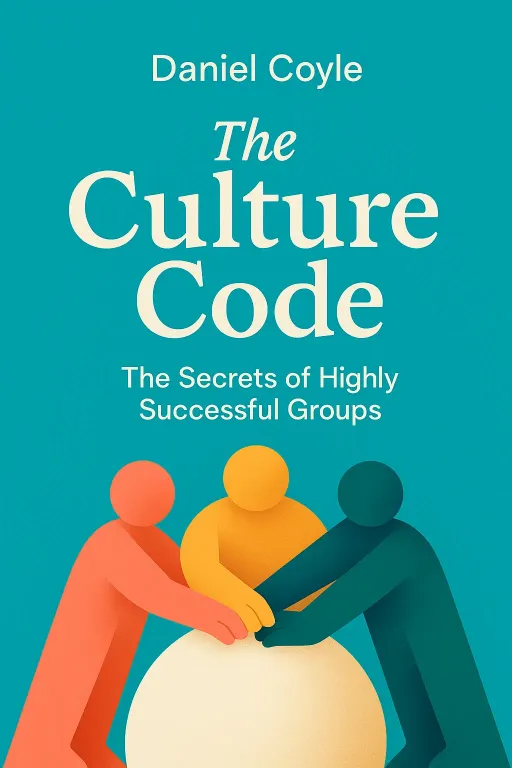
Nova: Absolutely. And that's precisely the cold, hard fact we're tackling today, drawn from the brilliant insights of Daniel Coyle's "The Culture Code" and Dave Logan's "Tribal Leadership." The core message, the one that often surprises people, is that building a strong culture isn't about those superficial add-ons. It's about something far more foundational, something you intentionally design and consistently reinforce.
Atlas: That makes me wonder, if it’s not the perks, what it? Because for strategists and architects building out new ventures, the 'culture' often feels like this nebulous, organic thing that just… happens. But you're suggesting it’s a deliberate blueprint.
Deconstructing 'Strong Culture': Beyond Perks to Core Principles
SECTION
Nova: It’s absolutely a deliberate blueprint. And that's where Daniel Coyle's work in "The Culture Code" becomes so illuminating. He shows us that successful groups, the ones that really thrive, don't just have a great product or a brilliant strategy. They foster three key elements: psychological safety, shared vulnerability, and a clear sense of purpose.
Atlas: Okay, but isn't psychological safety just about being 'nice'? How does that translate into a competitive edge, especially in a fast-paced, high-stakes environment where tough decisions need to be made constantly? It almost sounds counterproductive to speed.
Nova: That's a brilliant question, Atlas, and it's a common misconception. Psychological safety isn't about being nice or avoiding conflict. It’s about creating an environment where team members feel safe to take risks, ask questions, admit mistakes, and offer dissenting opinions without fear of punishment or humiliation. Think about a high-stakes surgical team. If a junior surgeon spots a potential error, but feels too intimidated to speak up, the consequences can be catastrophic. A psychologically safe team, on the other hand, those challenges. It's about candor, not comfort.
Atlas: So it’s less about avoiding failure and more about rapid learning from it, because everyone feels empowered to surface problems early. That makes sense. For someone leading complex projects, that ability to debug in real-time is invaluable. And what about shared vulnerability? That sounds even more… squishy.
Nova: Not at all! Shared vulnerability is the glue. It's when leaders, especially, are willing to say, "I don't have all the answers," or "I made a mistake here, and I need your help." When leaders show that they are human and imperfect, it signals to the team that it's okay for to be human and imperfect too. It builds trust and a collective sense of ownership. Imagine a tech founder admitting to their team, "Look, this feature launch didn't go as planned, and parts of that were on me. How can we learn from this, together?" That's far more powerful than a leader pretending everything is perfect.
Atlas: I can definitely see how that would break down barriers and foster genuine collaboration. It creates a space where people aren't just performing, but truly contributing. But then, what about this "clear sense of purpose"? For someone designing complex systems, 'purpose' can feel abstract. How do you make that concrete and actionable for a team, beyond just a generic mission statement on a wall?
Nova: A clear sense of purpose isn't just about what you do, but you do it, and for whom. It’s the north star that guides every decision, every interaction. Think about the early days of any groundbreaking company. Their purpose wasn't just to sell a product; it was to revolutionize an industry, to solve a deeply felt problem for their users. That clarity of purpose helps teams navigate ambiguity, prioritize effectively, and even persevere through setbacks. It's the emotional and intellectual fuel that keeps everyone rowing in the same direction, even when the seas are rough.
Cultivating Cultural Strength: Intentional Design & Strategic Elevation
SECTION
Nova: Once we understand these core elements – psychological safety, shared vulnerability, and purpose – the next question for any architect is: how do you actually it? And even more, how do you it? This is where Dave Logan's "Tribal Leadership" provides an incredible framework, identifying five distinct stages of tribal culture, from alienated to world-changing.
Atlas: Five stages? That sounds like a rigid framework. For early-stage dynamics, isn't culture often more fluid, more chaotic? How does understanding a 'stage' help you elevate a culture, rather than just categorizing it? It sounds like a label, not a lever.
Nova: It's precisely a lever, Atlas, because it’s a diagnostic tool, not a judgment. Logan's stages describe the predominant mindset within a group. Stage One is "Life sucks," where individuals are alienated and hostile. Stage Two is "My life sucks," where people are apathetic and disengaged. Stage Three is "I'm great," characterized by individualistic competition. Stage Four is "We're great," where teams unite around shared values and purpose. And Stage Five, the rarest, is "Life is great," where the team is focused on world-changing impact. Understanding your current stage isn't about putting a label on it; it's about understanding the prevailing language and mindset, so you can design interventions to move to the next level.
Atlas: So it's like a cultural GPS, showing you not just where you are, but the path to where you want to go. Can you give an example of how recognizing a stage helps?
Nova: Absolutely. Imagine a startup where everyone is constantly blaming each other when things go wrong, or hoarding information. That sounds a lot like a Stage Two "My life sucks" environment, possibly with some Stage One blame. The strategic intervention there isn't to hold a "fun day" with free pizza. It's to build psychological safety, to encourage shared vulnerability, to start fostering a collective "we" mentality rather than an "I" mentality. By identifying the stage, you know Coyle-esque elements to focus on building. You can't jump from "Life sucks" to "Life is great" overnight. You have to build the foundational trust and purpose first.
Atlas: That makes perfect sense. It’s about meeting your team where they are, culturally, and then intentionally guiding them. So, what's the 'Nova's Take' on this? How do these authors' insights combine to form a truly actionable strategy for someone trying to optimize complex systems, who thrives on foundational principles?
Nova: My take, and what these insights reveal, is that true cultural strength comes from intentional design and consistent reinforcement of core principles, not accidental growth. Coyle gives us the for a healthy culture: safety, vulnerability, purpose. Logan gives us the for how cultures evolve and how to strategically move them forward. So, for the architect designing systems, you're not just building the physical infrastructure; you're consciously wiring the human operating system. You're leveraging psychological safety to ensure open feedback loops, fostering shared vulnerability to build resilient connections, and articulating a clear purpose to align everyone's compilers.
Synthesis & Takeaways
SECTION
Nova: So, in essence, the network effect trap isn't just about external factors; it's about an internal one. If your culture isn't intentionally designed, if it's left to chance, even brilliant strategies will falter. It’s a deliberate construct of shared values and clear communication, built on psychological safety, vulnerability, and purpose.
Atlas: Wow. It makes you realize that the most powerful algorithms in any system aren't in the code, but in the human interactions. It's the invisible architecture that dictates everything else. So, if I'm looking at my own team, trying to understand where we stand culturally, what's a 'tiny step' I can take today, something concrete that helps me see these principles in action or absence?
Nova: That’s the perfect question, Atlas. And it's exactly the kind of foundational insight we want listeners to walk away with. The tiny step is this: observe a recent team interaction. Pick one. Then, identify one element of psychological safety or shared purpose that was present, or noticeably absent.
Atlas: That’s actually really insightful. It's not about redesigning everything overnight, but simply becoming a more keen observer of the dynamics already at play. It's about debugging the human operating system, one interaction at a time. How often do we truly pause to debug?
Nova: Not often enough, Atlas. And that's why this work is so critical. It’s about building the fundamental trust and clarity that allows any team to not just survive, but to truly thrive and create something world-changing.
Atlas: Powerful stuff. This is Aibrary. Congratulations on your growth!