The Network Effect Trap: Why Your Culture Needs a Stronger Core
Golden Hook & Introduction
SECTION
Nova: Forget the free snacks, the foosball tables, and the 'bring your dog to work' Fridays. If you think culture, you're missing the entire point.
Atlas: Whoa, Nova, that's a bold declaration right out of the gate! Are you saying my carefully curated office plant collection isn't driving peak performance? Because I had high hopes for Gertrude.
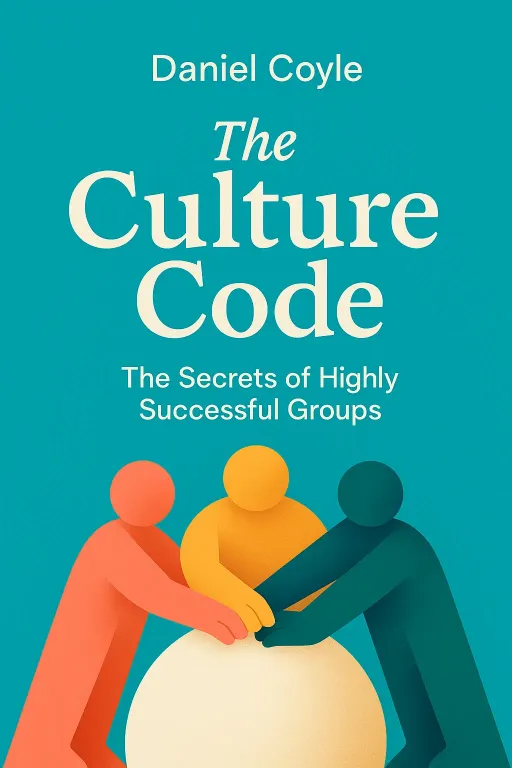
Nova: Gertrude is lovely, Atlas, I'm sure she provides excellent oxygen. But we're talking about the of success. Today, we're diving into the powerful ideas presented in 'The Network Effect Trap: Why Your Culture Needs a Stronger Core,' which brilliantly synthesizes insights from powerhouses like Daniel Coyle's "The Culture Code" and Dave Logan's "Tribal Leadership."
Atlas: And Coyle, interestingly, spent years embedded with some of the world's most successful teams—from Pixar to the Navy SEALs, even a notorious group of jewel thieves—to literally reverse-engineer their secret sauce. He didn't just theorize; he observed, like an anthropologist of high-performing groups.
Nova: Exactly. He wasn't looking at who had the brightest minds, but at how those minds. It's a foundational principle, something any strategist or architect designing a system needs to grasp. And it really challenges our assumptions about what makes a team click.
The Invisible Architecture of Culture: Psychological Safety & Shared Purpose
SECTION
Atlas: So, if it's not the perks, what this invisible architecture Coyle talks about? What did he find hiding in plain sight with the Navy SEALs and Pixar?
Nova: He found three core elements: psychological safety, shared vulnerability, and a clear sense of purpose. Think of psychological safety as the bedrock. It's that feeling, that unspoken agreement, where you know you can take risks, make mistakes, and even ask "dumb" questions without being shamed or punished. It's the opposite of walking on eggshells.
Atlas: That makes sense. For anyone building a complex system, if you're afraid to surface a potential flaw or ask for clarification, that system is eventually going to crash. How do you even begin to that? It sounds so… squishy, for lack of a better word.
Nova: It’s not squishy at all; it’s incredibly strategic. Coyle observed that the highest-performing teams weren't necessarily the ones with the most individual talent, but the ones with the highest levels of psychological safety. They made more mistakes, which meant they learned faster. They shared weaknesses, which built trust. It’s like a jazz ensemble that improvises brilliantly because each musician trusts the others to catch them if they hit a wrong note. They’re vulnerable, but that vulnerability is their strength.
Atlas: So, it's less about individual brilliance and more about collective intelligence, fueled by a safe environment. I imagine a lot of our listeners, who are often in high-stakes environments, might be thinking: "But how do I measure this 'feeling' of safety? What are the metrics?"
Nova: That's a great question, and it speaks to the analytical mindset. You measure it by observing behavior. Do people interrupt each other? Do they openly disagree? Do they admit when they don't know something? Do they offer help without being asked? These are all observable signals. Coyle found teams that actively signal belonging, like making eye contact or frequently saying "thank you," tend to have higher psychological safety. It’s not about avoiding mistakes; it’s about from them together.
Atlas: Right. It’s a feedback loop, but one that’s built on trust rather than fear. If a team lacks this core, this foundation, then even the most brilliant strategy could falter because no one feels safe enough to point out the cracks. That's the 'network effect trap' right there, isn't it? A brilliant strategy gets derailed by a fragile human network.
Cultivating Intentional Culture: From Accidental Growth to Strategic Design
SECTION
Nova: Absolutely. And that naturally leads us to the second key idea we need to talk about, which often acts as a counterpoint to what we just discussed: the idea that culture isn't accidental, but something you can, and must, intentionally design and evolve. Dave Logan's "Tribal Leadership" really shines a light on this.
Atlas: So, cultures aren't just organic weeds that sprout up; they're more like gardens that need careful tending and design. Logan identifies five distinct stages, right? Can you walk us through them? Because I'm guessing most people assume their culture is at the "world-changing" stage when it might be stuck somewhere else.
Nova: Precisely. Logan's five stages give us a framework. Stage One is "Life Sucks," characterized by hostile alienation, often found in gangs or dysfunctional organizations. Stage Two is "My Life Sucks," where people are apathetic, victims of circumstance, like a cubicle farm where everyone just clocks in and out.
Atlas: "My Life Sucks"—that resonates with anyone who's ever felt like a cog in a giant, indifferent machine. It’s a behavioral economics nightmare, where motivation is completely depleted.
Nova: Then comes Stage Three: "I'm Great." This is where many professional organizations operate. Individuals are ambitious, competitive, focused on personal success. It's often the realm of star performers, but it can create internal silos and cutthroat competition, hindering collaboration.
Atlas: That's the one I imagine many strategists might fall into, or see in their teams. High individual achievement, but maybe at the expense of collective synergy. It's where the "network effect trap" could really take hold if individual success isn't channeled correctly.
Nova: Exactly. Stage Four is "We're Great." Here, the focus shifts to the team. People are proud of their group, collaborate effectively, and aim to beat competitors. Think of a high-performing sports team. This is a very powerful stage. And finally, Stage Five: "Life is Great." This is the pinnacle, where the team's purpose transcends their own group; they're driven by a noble cause, a world-changing vision. They're innovating not just for themselves, but for humanity.
Atlas: "Life is Great." That sounds like the ultimate goal for any organization seeking mastery and deep purpose. But how does a leader, someone trying to architect a better system, intentionally move a team from, say, Stage Three, "I'm Great," to Stage Four, "We're Great"? What's the strategic lever?
Nova: Logan suggests small, deliberate actions. It starts with leaders speaking the language of the next stage. For example, moving from "I'm Great" to "We're Great" involves shifting conversations from individual achievements to team victories, celebrating collective milestones, and encouraging cross-functional collaboration. It's about consistent reinforcement of core principles, as our article points out, not accidental growth. It's intentional design.
Atlas: So, it's not just about identifying the stage, but actively interventions, almost like a systems engineer debugging a complex program. You have to understand the current state and then strategically introduce new inputs to shift the entire system.
Nova: Precisely. And it doesn't happen overnight. It's a continuous process of observation and adjustment. The "Tiny Step" recommended in the article is brilliant for this: observe a recent team interaction, identify one element of psychological safety or shared purpose that was present, or noticeably absent. That tiny observation is your data point, your entry into understanding your current cultural stage and where to nudge it next.
Synthesis & Takeaways
SECTION
Atlas: So, bringing Coyle and Logan together, it sounds like culture isn't just a fuzzy HR concept; it's a measurable, designable, and utterly critical component of strategic success. Neglect it, and you fall into the 'network effect trap' where your brilliant ideas never fully take hold.
Nova: That's it. Coyle shows us the of a strong culture – safety, vulnerability, purpose. Logan gives us the to navigate cultural evolution. The article powerfully synthesizes that true cultural strength comes from intentional design and consistent reinforcement of core principles. It's about building a core that's so strong, so psychologically safe, and so purpose-driven, that it becomes an unbreakable network effect in itself.
Atlas: It's an investment in human capital that yields exponential returns. It's about understanding the foundational principles of human interaction to build a system that's not just efficient, but resilient and truly transformative. It's the ultimate systems thinking applied to people.
Nova: Absolutely. It's the difference between a group of individuals working in parallel, and a truly cohesive, world-changing team.
Atlas: What interaction did you observe recently, in your own team, and what did it tell you about its cultural core?
Nova: This is Aibrary. Congratulations on your growth!