The 'Isolated Genius' Trap: Why Collaboration is Key to Innovation in Tech.
Golden Hook & Introduction
SECTION
Nova: Forget everything you thought you knew about innovation. The lone genius toiling away in a basement, striking gold with a single, brilliant idea? That's not just a myth; it’s a trap that’s actively hindering progress in today's most complex fields.
Atlas: Whoa, that's a bold claim, Nova. Most of us grew up with stories of Einstein or Edison, the solitary figures changing the world. Are you telling me that's all just… a nice bedtime story?
Nova: In essence, yes, for the kind of challenges we face today. We’re often captivated by the image of the individual visionary, but contemporary thought leaders are revealing a different, far more powerful truth. The most impactful innovations in areas like advanced computing, synthetic biology, or even sustainable energy, don't spring from isolated brilliance. They come from highly collaborative, adaptive teams.
Atlas: So, what we're really talking about today is why we need to recalibrate our understanding of where true innovation originates. It's not about the singular 'aha!' moment in a vacuum.
Nova: Exactly. Today, we're diving deep into why the future of innovation isn't about individual genius, but about mastering the art and science of collaborative, adaptive teams. We'll explore why the myth of the lone genius is holding us back in an increasingly complex world. Then, we'll discuss the crucial building blocks—like psychological safety and radical adaptability—that truly define high-performing collaborative teams.
Atlas: I'm curious, then, why does this myth of the lone genius persist so strongly, especially when the evidence seems to point elsewhere?
The Myth of the Lone Genius in Modern Innovation
SECTION
Nova: It’s a powerful narrative, isn’t it? It’s romantic, it’s dramatic, and it’s easy to understand. We love the idea of one person, against all odds, having a breakthrough. But this narrative, while inspiring on a surface level, glosses over the intricate web of interactions, failures, and collective intelligence that actually underpins nearly every major advancement. Think about the Manhattan Project, or even the development of the internet. Neither was the brainchild of a single individual. They were massive, distributed efforts.
Atlas: That's a great point. I mean, even the most celebrated inventors often built on centuries of accumulated knowledge, right? It wasn't just pulled out of thin air.
Nova: Precisely. The complexity of modern problems, whether it's developing the next generation of LPN systems or designing smart grids for electricity, simply overwhelms any single human mind. The sheer breadth of knowledge required, the diverse skill sets, the iterative problem-solving—it all demands a collective approach.
Atlas: But I can imagine some listeners, especially those in highly specialized tech roles, thinking, "My expertise is my currency. My individual contribution is what matters." How does this collaborative model reconcile with individual specialization?
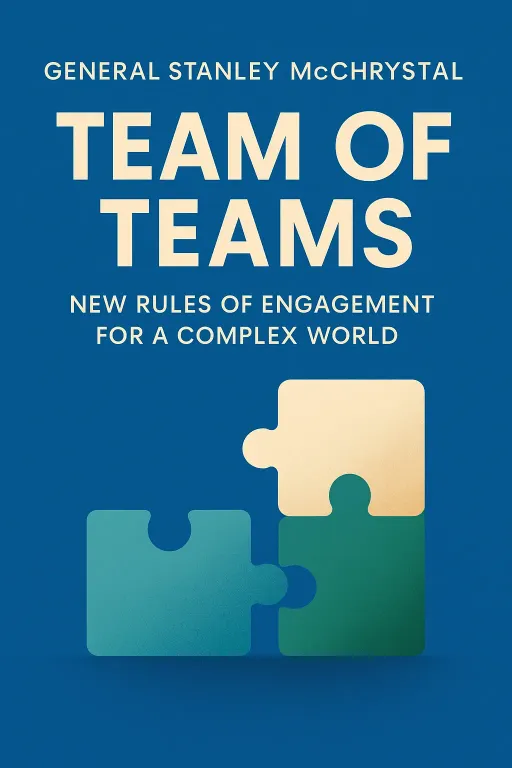
Nova: That’s a critical question. And it’s not about diluting individual brilliance; it's about amplifying it. General Stanley McChrystal, in his incredible book "Team of Teams," provides a fascinating blueprint. He talks about how the US military, a notoriously hierarchical and command-and-control organization, had to fundamentally transform itself to combat a decentralized, adaptive enemy like Al-Qaeda in Iraq.
Atlas: Oh, I've heard of that. The idea of a military organization needing to be is quite counterintuitive to the traditional image of rigid structure.
Nova: Absolutely. McChrystal realized their traditional, siloed structure, where information flowed up and down strict channels, made them too slow and cumbersome. They were excellent at executing planned operations, but terrible at responding to dynamic threats. His solution was to foster a "team of teams"—a network of empowered, decentralized units with what he called "shared consciousness."
Atlas: Shared consciousness. That sounds like a fancy way of saying "everyone knows what's going on." But how is that different from just having good communication?
Nova: It goes far deeper than just good communication. Shared consciousness means every team member, regardless of their specific role, has a deep understanding of the overall mission, the context, and what other teams are doing. It’s about building an almost intuitive sense of the larger ecosystem. They achieved this through radical transparency, daily "operations and intelligence" briefings that brought everyone from special ops to intelligence analysts together, breaking down those traditional silos.
Atlas: Okay, so it’s not just about passing information, it's about building a collective, holistic understanding. And I can see how that would make them faster and more adaptable. But how does that translate to, say, a tech company developing a new AI algorithm?
Nova: It's directly analogous. In a tech project, if a developer only understands their piece of the code, and a UX designer only understands the user interface, and they don't have that shared consciousness of the overall product vision, the customer pain points, and what other teams are struggling with, you get friction, rework, and missed opportunities for innovation. Decentralized decision-making, empowered by that shared understanding, means teams can react to challenges and seize opportunities without waiting for layers of approval. It’s about speed and resilience.
Atlas: So, the complexity of the problem demands a network of interconnected brains rather than a single super-brain. It makes sense when you think about it. The "lone genius" model is too slow, too fragile for today's pace.
Cultivating the Collaborative Edge: Psychological Safety and Adaptability
SECTION
Nova: Precisely. And that naturally leads us to the second key idea we need to talk about: how do you actually these collaborative powerhouses? Because it’s not just about putting smart people in a room. It requires a specific kind of culture. Daniel Coyle, in his brilliant book "The Culture Code," identifies three key skills that build strong, cohesive cultures capable of this kind of collaboration: psychological safety, shared vulnerability, and purpose.
Atlas: Psychological safety. That sounds a bit… soft, doesn't it? Especially for a tech team dealing with high-stakes LPN systems where precision and correctness are paramount. What does it actually look like in practice, beyond just 'being nice'?
Nova: That’s a common misconception, Atlas. Psychological safety isn't about being nice or avoiding tough conversations. It’s about creating an environment where team members feel safe enough to take risks, ask "dumb" questions, admit mistakes, and offer candid feedback without fear of negative consequences, like being embarrassed, punished, or marginalized. Coyle gives fantastic examples. Think about Pixar’s "Braintrust" meetings, where directors present their unfinished films and get brutally honest feedback, but it’s always framed as helping the film, not attacking the director.
Atlas: That’s fascinating. So, it's about separating the person from the problem, and creating a space where the goal is collective improvement, not individual blame. I can see how that would accelerate learning. If people are afraid to point out flaws or suggest radical ideas, you’re missing out on vital input.
Nova: Exactly. Or consider the Navy SEALs. Their post-mission debriefs are legendary for their candor. Everyone, from the commanding officer to the newest recruit, can voice observations and critiques without fear. It's a relentless pursuit of learning and improvement. This isn't soft; it's a strategic imperative for continuous innovation and adaptability in high-stakes environments.
Atlas: So, for someone leading a small engineering team, or even just contributing to one, what’s a "tiny step" they can take to foster this psychological safety? Because it sounds like a big cultural shift.
Nova: It can start small. One powerful "tiny step" is to model vulnerability yourself. As a leader, openly admit a mistake you made, or ask for help with something you don't know. That signals to your team that it's okay to not be perfect, that learning is valued over flawless execution. Another step is to actively solicit dissenting opinions. Literally say, "I've presented my idea, now tell me what I'm missing, what could go wrong?" Make it part of your routine.
Atlas: That’s powerful. It shifts the dynamic from a leader who knows everything to a leader who facilitates collective intelligence. And the shared vulnerability and purpose Coyle talks about, how do they tie into this?
Nova: Shared vulnerability complements psychological safety by building trust. When team members see each other as human, with strengths and weaknesses, it deepens connection. And purpose—a clear, compelling reason the team exists and impact it's trying to make—acts as the ultimate glue. It aligns everyone’s efforts and provides direction, especially when things get tough. It’s the North Star.
Atlas: So, it sounds like these aren't just "nice to have" interpersonal skills. They are the fundamental operating system for any team that wants to tackle complex, uncertain problems effectively. The insights from McChrystal's military context and Coyle's organizational psychology really converge here.
Nova: They do. They reveal that cultivating effective collaboration isn't a soft skill, but a strategic imperative. In today's world, where technical challenges are increasingly multifaceted and dynamic, the ability to build and sustain these adaptive, psychologically safe, and purpose-driven teams is the ultimate competitive advantage. It’s the difference between merely executing tasks and truly innovating.
Synthesis & Takeaways
SECTION
Atlas: It’s fascinating how what seems like a 'soft skill'—like psychological safety—is actually the hard science of innovation. It completely flips the traditional view of how breakthroughs happen.
Nova: It really does. Because at its core, the most complex problems aren't solved by the smartest individual, but by the most effectively connected collective intelligence. It’s about creating an environment where diverse perspectives can clash constructively, where mistakes are seen as learning opportunities, and where everyone feels safe to bring their full selves to the problem. That's where the magic, and the true innovation, happens.
Atlas: So, for our listeners, especially those who are explorers, analysts, and builders, keen on expanding their horizons and applying new knowledge, what would be the single most important takeaway from this discussion?
Nova: It's this: for your next project, identify one area where you can intentionally foster more psychological safety within your team. Maybe it’s by openly sharing a personal learning moment, or by creating a dedicated space for "no-blame" problem-solving. Start small, but start building that collaborative muscle. That single tiny step can unlock immense innovation.
Atlas: That’s a powerful, actionable challenge. It’s about taking these profound insights and making them tangible in our daily work.
Nova: Absolutely. It’s about embodying the change we want to see in our teams.
Atlas: Incredible insights today, Nova. Thank you.
Nova: My pleasure, Atlas. Always a great conversation.
Atlas: This is Aibrary. Congratulations on your growth!