The Hidden Cost of Speed: How to Build Teams That Last.
Golden Hook & Introduction
SECTION
Nova: Atlas, you're all about building things, building fast, getting that competitive edge. If I asked you to build me a 'dream team' right now, what's the first thing you'd do?
Atlas: Oh, man, that's easy, Nova. I'd headhunt the absolute best individual talent, the rockstars, the unicorns. Then I'd throw them into a room, give them a tight deadline, and tell them to innovate. Speed to market, right? That's the name of the game.
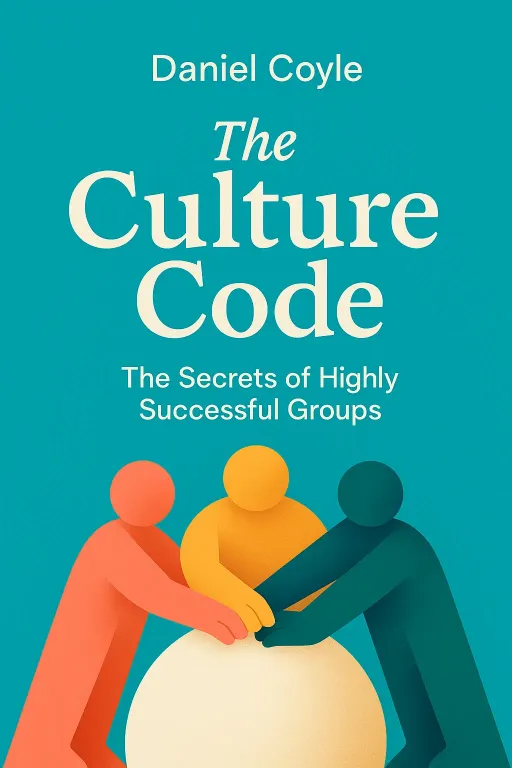
Nova: Exactly, and that's precisely where many of us, especially those driven by impact and market validation, often hit a hidden cost. We focus on the individual stars and completely miss the invisible architecture that truly binds a group together. Today, we're diving into that often-overlooked truth, inspired by powerful insights from two incredible books: Daniel Coyle's "The Culture Code" and General Stanley McChrystal's "Team of Teams."
Atlas: Hold on, a journalist observing successful teams and a four-star general leading special operations? How do those two perspectives even begin to converge on team building? That sounds like a fascinating, if unlikely, pairing.
Nova: That's the beauty of it. Coyle, as a journalist, meticulously dissected what made truly elite, cohesive groups tick, from Pixar to Navy SEALs. McChrystal, on the other hand, faced the absolute real-world chaos of modern warfare and realized traditional hierarchies were failing. Both, from vastly different worlds, arrived at strikingly similar conclusions about what makes teams not just perform, but.
The Invisible Architecture of High-Performing Teams
SECTION
Nova: And that brings us to our first core idea: the invisible architecture of high-performing teams. Coyle, in "The Culture Code," argues that high performance isn't just about skill. It's about deep psychological safety, shared vulnerability, and a clear, compelling purpose. These aren't just feel-good elements; they are the bedrock.
Atlas: Okay, but for someone trying to hit aggressive growth targets, for a strategist focused on competitive edge and market validation, how does 'deep psychological safety' actually move the needle? It sounds a bit... soft. How does it translate into concrete, measurable impact?
Nova: That’s a brilliant question, and it’s where the hidden cost comes in. Imagine two startup teams. Both have brilliant engineers, top-tier marketers. In Team A, there’s a subtle fear. People hesitate to voice half-baked ideas, point out flaws in the CEO's strategy, or admit they made a mistake. They play it safe. What happens? Innovation is stifled, problems fester unseen, and when a crisis hits, trust evaporates.
Atlas: Right, like they’re optimizing for looking good, not for actually good.
Nova: Exactly. Now, Team B. They’re explicit about psychological safety. They celebrate failure as a learning opportunity. When someone makes a mistake, the first question isn't "Whose fault is it?" but "What can we learn?" People feel safe to challenge assumptions, to be vulnerable, to say, "I don't know." This isn’t about being 'nice'; it’s about creating an environment where information flows freely, where risks are intelligently discussed, and where collective intelligence truly shines.
Atlas: I can see that. It’s like, the fear of looking bad is actually the biggest bottleneck to progress. So, vulnerability isn't weakness; it's a superpower for problem-solving. But how do you that? It sounds abstract.
Nova: Coyle found it starts with signals. Leaders who admit their own mistakes, who ask for help, who actively listen – they send signals that it's safe to be human. It’s about creating a sense of belonging, a clear message that "we are safe here." And then, sharing vulnerability. It's not about oversharing your personal life, but about admitting challenges, asking for feedback, and showing that you don't have all the answers. This creates a powerful bond.
Atlas: So, it's less about the individual hero and more about the collective brain trust. And that actually makes sense for high-stakes environments where information needs to flow quickly and accurately. You can't afford bottlenecks or hidden problems. It’s a competitive advantage, not a fluffy perk.
Nova: Precisely. And the third element, purpose, is about clearly articulating you exist beyond just making money. It's the North Star that guides decisions, particularly when things get tough. When teams understand their collective 'why,' they can adapt and innovate far more effectively than those just following orders.
Shifting from Command & Control to Trust & Adaptability
SECTION
Atlas: That makes sense for cultivating internal culture, but then how does that scale, especially when you're talking about massive operations or rapid expansion? For leaders who need to maintain control and drive results, how do you actually 'let go' without risking chaos? Isn't there a fine line between empowerment and anarchy, especially when onboarding top talent efficiently? This makes me think of McChrystal's work.
Nova: That’s a perfect segue, Atlas. General McChrystal’s "Team of Teams" is a masterclass in this very dilemma. He led the Joint Special Operations Task Force in Iraq, a highly complex, rapidly evolving environment. Traditional command-and-control structures, where every decision had to move up and down a rigid hierarchy, were simply too slow. They were losing.
Atlas: So, the very thing designed for efficiency and order was actually creating paralysis.
Nova: Exactly. He realized the world had become too complex for any single leader, or even a small group of leaders, to have all the answers. The solution wasn't to centralize more, but to distribute intelligence and decision-making. He shifted from a "command of teams" to a "team of teams."
Atlas: That sounds like a massive cultural overhaul. How do you convince seasoned military leaders, who are literally trained in hierarchy, to loosen the reins? That's got to be a tough sell for any established organization.
Nova: It was incredibly challenging. McChrystal focused on two key pillars: shared consciousness and empowered execution. Shared consciousness meant everyone, from the lowest-ranking analyst to the general, had access to the same, real-time information. Daily "operations and intelligence" calls involved thousands of people, sharing everything. This built trust and a common understanding of the fluid situation.
Atlas: So, essentially, democratizing information so everyone felt like they were part of the bigger picture, not just a cog. That’s a huge shift from need-to-know to needs to know.
Nova: Absolutely. And with that shared consciousness came empowered execution. Instead of waiting for orders, small teams on the ground, with the best situational awareness, were empowered to make rapid decisions. McChrystal fostered trust not by micromanaging, but by ensuring everyone understood the overall intent and had the context to act autonomously. He shifted from being a chess master, moving pieces, to a gardener, cultivating an environment where teams could thrive and adapt.
Atlas: A gardener, I like that. It’s like, instead of trying to predict every single move, you build a system that can respond to move. For someone designing high-performance team onboarding strategies, this is critical. You're not just bringing in talent; you're integrating them into a network of trust and shared purpose, where they can immediately contribute and adapt.
Synthesis & Takeaways
SECTION
Nova: So, what we see here, from Coyle's cultural insights to McChrystal's battlefield innovations, is a profound truth: speed without a foundation of deep trust and shared purpose is actually a hidden cost. It leads to fragility, not resilience. Investing in psychological safety and adaptable leadership isn't just a 'nice to have'; it's a strategic imperative for long-term growth, innovation, and ultimately, survival in any complex environment.
Atlas: That’s actually really inspiring. It means that the 'soft skills' are actually the hardest, most strategic skills to master. For strategists and architects out there, understanding this invisible architecture is the ultimate competitive edge. It’s about building teams that don't just perform, but can evolve and endure.
Nova: Absolutely. And it leads us to a crucial question for all our listeners: Reflect on your current team. What is one small, deliberate action you could take this week to enhance psychological safety within your group? It could be admitting a mistake, actively asking for feedback, or just genuinely listening to a dissenting opinion.
Atlas: Yeah, we'd love to hear your thoughts on that. What's your one small step? Share your reflections with us online. We're always keen to see how these insights resonate and what practical actions you're taking.
Nova: This is Aibrary. Congratulations on your growth!