The Ethical Imperative: Why Purpose Drives Profit
Golden Hook & Introduction
SECTION
Nova: Most business leaders think ethics are a 'nice-to-have,' a separate department, or even a drag on profit. But what if that belief is actually the biggest blind spot holding your organization back from true, sustainable success?
Atlas: Oh man, that's a bold claim right out of the gate! I imagine a lot of our listeners, especially those juggling P&Ls and quarterly reports, might be thinking, "Ethics are important, sure, but are they really a of profit, or just something we tack on to look good?" How could something as abstract as 'ethics' be more than just a 'nice-to-have'?
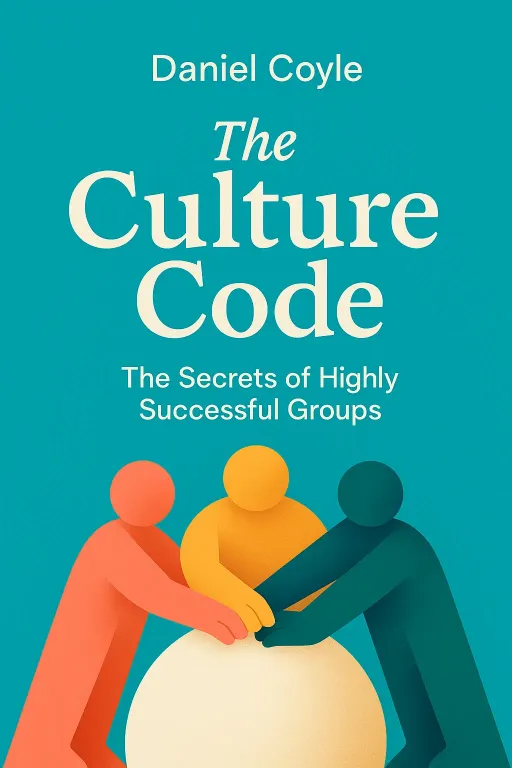
Nova: That's the core of what we're diving into today, Atlas. We're exploring "The Ethical Imperative: Why Purpose Drives Profit." And to really unpack this, we're drawing insights from two incredible thinkers: Daniel Coyle, author of "The Culture Code," and Simon Sinek, who gave us "Start with Why." Both, from very different angles, illuminate how purpose and deeply held values aren't just feel-good concepts. They are, in fact, powerful catalysts for innovation, resilience, and ultimately, a much more meaningful and sustainable kind of success.
Atlas: Right. So the traditional view—that ethics and profit are often at odds—is actually a blind spot. It's not just about doing good; it's about doing business. That makes me wonder, if ethics are so crucial, where do we even begin to build that foundation?
The Power of Ethical Culture
SECTION
Nova: Exactly. And that brings us to our first core idea, deeply rooted in Daniel Coyle's work: the power of an ethical culture. Coyle argues that superior performance doesn't come from a top-down, ruthless environment. It comes from cultures built on psychological safety and shared vulnerability. It's about belonging.
Atlas: I imagine a lot of our listeners in fast-paced industries might hear 'vulnerability' and think 'slow down,' 'get soft.' How do you reconcile that with the need for competitive edge?
Nova: That's a great question, and it's a common misconception. Let me paint a picture for you. Imagine a tech startup, let's call them 'Synergy Innovations.' They've got brilliant engineers, top talent, but for months, their performance is just… flat. The CEO, frustrated, pushes harder, implements strict KPIs, demands longer hours. But nothing changes. In fact, things get worse.
Atlas: That sounds like a lot of places. So what's the missing piece?
Nova: Well, they bring in a consultant, who quickly notices a climate of fear. Engineers are afraid to admit mistakes, to share half-formed, risky ideas, or to challenge the boss's assumptions. They're brilliant, but they're playing it safe, which stifles innovation. The consultant then implements Coyle's principles. They start with regular 'vulnerability huddles' where even the senior leaders share their own missteps, their own learning curves. They introduce a 'no-blame' policy for failed experiments, reframing them as learning opportunities. And they emphasize active, empathetic listening in all meetings.
Atlas: So, it's not about being soft, it's about being about human nature.
Nova: Precisely! Within six months, innovation at Synergy Innovations skyrockets. Not because the engineers suddenly became smarter—they always were—but because they felt safe enough to smart, to fail fast, to collaborate openly, and to bring their whole selves to problem-solving. This psychological safety, this ethical foundation of trust, was the catalyst. It translates directly into better products, faster solutions, and a more engaged workforce.
Atlas: Wow. So it's not just fluffy HR talk. It's a strategic advantage. It's about creating an environment where the best ideas can actually surface. Can you give me a tangible example of how a company might foster this kind of ethical culture, this "belonging cue" you mentioned earlier?
Nova: Absolutely. Think about a daily stand-up meeting. Instead of just status updates, what if leaders genuinely asked, "What's one thing you're struggling with today that we, as a team, can help you with?" Or, "What's an idea you have, no matter how half-baked, that you're hesitant to share?" These aren't just questions; they're belonging cues. They signal, "Your struggle is seen, your ideas are valued, we are in this together." That simple shift in communication, rooted in empathy and respect, builds the ethical fabric that allows people to thrive.
Purpose as the Ultimate Profit Driver
SECTION
Nova: And this idea of culture and belonging naturally feeds into our next big concept: the power of 'why.' Simon Sinek, in "Start with Why," argues that truly inspiring leaders and organizations don't start with 'what' they do, or 'how' they do it, but 'why' they do it. This 'why' is their core purpose, their belief, their cause.
Atlas: But isn't 'purpose' just a marketing buzzword these days? How do companies avoid it sounding hollow or performative? I mean, everyone claims to have a 'why' now.
Nova: That's a critical distinction, Atlas. An authentic 'why' isn't just a marketing slogan; it's the deeply held belief that drives every single action, from product development to employee engagement to customer service. It acts as an ethical filter for all decisions. Let's take another hypothetical. Consider two competing sustainable clothing brands.
Atlas: Okay, I'm listening.
Nova: Brand A goes to market saying, "We make organic cotton shirts!" That's their 'what.' They list the features, the thread count, the colors. Brand B, on the other hand, starts with, "We believe in protecting our planet and empowering artisanal communities through ethical, sustainable fashion." That's their 'why.' Their 'what' is also organic cotton shirts, but their 'why' is their guiding star.
Atlas: I see where this is going. Brand B's 'why' sounds a lot more compelling.
Nova: Exactly! Brand B's sales soar. They attract incredibly passionate customers who feel a connection to their mission, and they draw in dedicated employees who want to be part of something bigger than just selling clothes. Even if their products are sometimes a bit more expensive, people are willing to pay because they're buying into a purpose. Their 'why' guides every decision, from sourcing materials ethically to investing in fair labor practices, creating an authentic brand identity that resonates deeply. Brand A, focused only on the 'what,' struggles to differentiate itself and is seen as just another clothing company.
Atlas: That's a perfect example. So, for someone trying to bridge diverse fields, someone who wants to integrate values into action, how do you find a unifying 'why' that doesn't feel generic? How do you make that 'why' truly ethical and not just a corporate platitude?
Nova: That's where the deep reflection comes in. Your 'why' must be genuine. It's not what you people want to hear; it's what you believe. For an ethical innovator, it's about asking: What problems do I genuinely want to solve? What impact do I want to have on the world, beyond just making a living? When your 'why' is rooted in your deepest ethical commitments, it provides a compass. It guides you to innovate not just for profit, but for progress, for people, for the planet.
Synthesis & Takeaways
SECTION
Nova: So, bringing Coyle and Sinek together, what they both powerfully demonstrate is that when an organization's 'why' is rooted in deep ethical commitments, and its culture fosters psychological safety and belonging, you don't just get 'good' businesses. You get businesses that are inherently more innovative, more resilient, and ultimately, more profitable in the truest sense—generating value that extends far beyond the balance sheet.
Atlas: That's actually really inspiring. So, if our 'why' and our 'how' were guided by our deepest ethical commitments, it's not just about feeling good. It's about proactively fostering creative problem-solving and sustainable growth. It's about impact.
Nova: Precisely. The deep question isn't just a philosophical exercise; it's a strategic one. It forces us to align our actions with our values. For anyone listening who's looking to integrate values into action, to bridge diverse fields, to deepen their sense of purpose, I'd say start with a reflective journal.
Atlas: Oh, I like that. Not just about what you do, but you do it. What are the ethical commitments guiding your work, and where are the gaps? That's the first step to becoming that ethical innovator.
Nova: Exactly. Trust your unique blend of interests; they are your strength. When purpose and ethics become the foundation, everything else—from innovation to profitability—flows naturally. It's not just about making a profit; it's about making a difference that lasts.
Atlas: That's a powerful thought to leave our listeners with. Connecting those dots, finding that deeper meaning, it makes all the difference.
Nova: Absolutely.
Atlas: This is Aibrary. Congratulations on your growth!