The 'Culture' Trap: Why You Need to Design Your Environment, Not Just Your Will
Golden Hook & Introduction
SECTION
Nova: Picture two people trying to build a new habit. One has iron-clad willpower, the other has a cleverly designed environment. Atlas, who do you think wins the habit game?
Atlas: Oh, Nova, that’s a classic setup! My gut says the iron-clad willpower, because we're always told to "just do it," right? Grit, determination, pull yourself up by your bootstraps. But something in your tone tells me that’s precisely the wrong answer.
Nova: You've got a good ear, Atlas! Because the truth is, the person with the cleverly designed environment wins, almost every single time. And that counter-intuitive idea is at the heart of our discussion today, inspired by a really insightful collection of ideas we're calling 'The Culture Trap: Why You Need to Design Your Environment, Not Just Your Will.'
Atlas: Wow. That's a profound shift in perspective right there. It challenges everything we're taught about personal responsibility and self-control. So, we're not talking about some niche self-help book here, are we? This sounds like something that digs much deeper into human behavior.
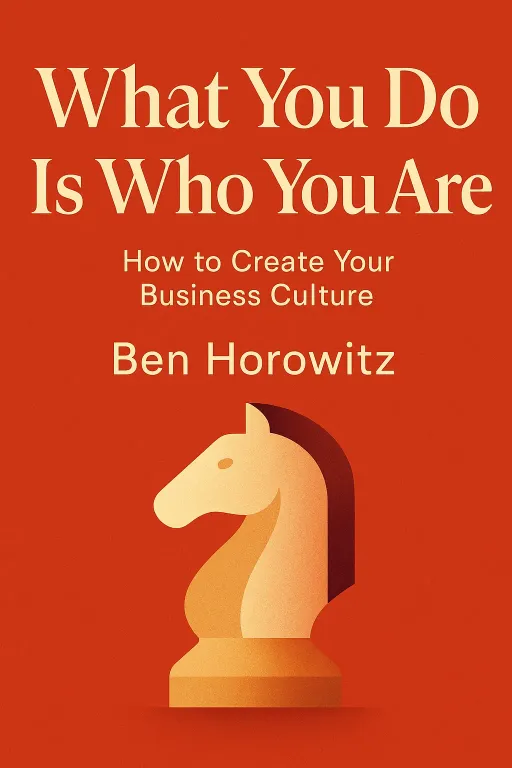
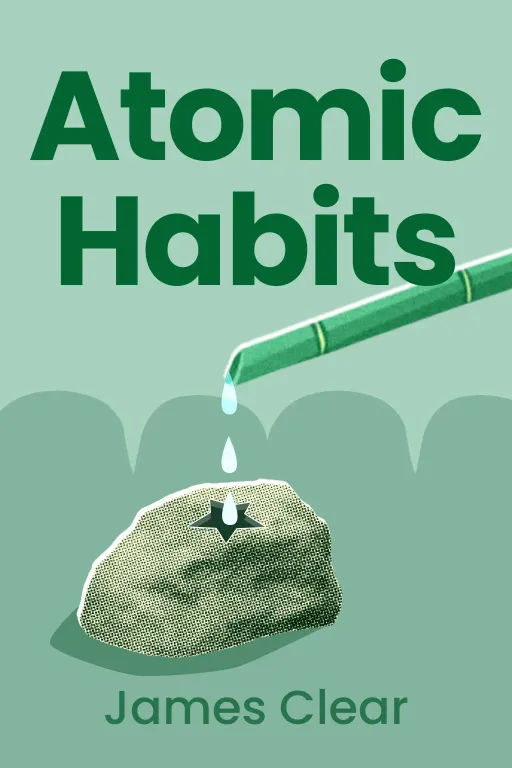
Nova: Precisely. This isn't just one book; it's a synthesis of ideas from critically acclaimed works like James Clear's "Atomic Habits" and Daniel Coyle's "The Culture Code," blended with some of our own insights. It's a powerful interdisciplinary approach that tackles a fundamental human struggle: why our best intentions so often fall short. It’s a concept that’s resonated deeply with millions of readers who’ve found Clear’s practical frameworks incredibly effective, and Coyle’s insights into group dynamics have been lauded as groundbreaking in understanding high-performing teams.
Atlas: That makes so much sense. Because I imagine a lot of our listeners, myself included, have felt that frustration of setting ambitious goals, having all the motivation in the world, and then… just not following through. It feels like a personal failing, but you're suggesting it might be something else entirely. Something outside of us?
The Subtle Tyranny of Environment: Why Willpower Isn't Enough
SECTION
Nova: Exactly, Atlas. It's often not a failing of willpower, but a failing of. James Clear, in "Atomic Habits," makes this point beautifully. He argues that our environment acts as the invisible hand shaping our choices. It's far more effective to create an environment where good habits are easy and bad habits are difficult, rather than trying to muscle through with sheer motivation.
Atlas: So, you're saying my environment is subtly manipulating me? Like a puppet master I don't even see? Give me an example, Nova, how does this invisible hand actually work in practice?
Nova: Think about it this way: if you want to practice guitar more, where do you keep it? If it's tucked away in a closet, out of sight, out of mind, you're relying on a surge of motivation to go get it out. But if you keep it on a stand in the middle of your living room, it becomes an obvious, visible cue. Every time you walk by, you're reminded, and the friction to pick it up is almost zero.
Atlas: That’s a great example. So, it’s about making the desired action unavoidable, almost? But what about something less physical, like a digital habit? We spend so much time on our phones, for instance. How do you "design" that environment?
Nova: That’s where it gets really interesting. For digital habits, it might mean deleting social media apps from your phone and only accessing them on your computer, adding a layer of friction. Or, if you want to read more, keeping a physical book by your bedside instead of your phone. Clear's work has been widely acclaimed for making these kinds of tactical insights so accessible. It's about making the cues for desired behaviors obvious and visible, and making the cues for undesired behaviors invisible and difficult.
Atlas: Oh, I know that feeling. I've tried to read more before bed, but then I pick up my phone "just for a minute," and suddenly it's an hour later. So, if I just put the phone across the room, or even better, in another room entirely, that's what we're talking about?
Nova: Precisely. That's the "Tiny Step" we often talk about. Identify one desired habit, then redesign your immediate physical space to make the cue for that habit impossible to ignore, or the bad habit impossible to easily access. It’s about being proactive in shaping your world, not just reactive to its demands. What Nova's Take adds here is that our personal environments are powerful, invisible forces. By consciously designing them, we can automate positive behaviors, almost making them happen on autopilot. It's like setting up a conveyor belt for good choices.
Atlas: That sounds great in theory, but I can hear some listeners thinking, "Okay, but if I want to eat healthier, and I put a bowl of apples on the counter, but the cookies are still in the pantry, won't I just go for the cookies anyway?" Is it really that simple?
Nova: That’s a valid challenge. It’s not about choice entirely, but about. When the apples are front and center, and the cookies require you to open a pantry door, reach up, open a container... you’ve added friction. The easier choice, in that moment of low willpower, becomes the apple. It’s a battle of convenience, and convenience almost always wins. It's a fundamental principle that has been shown to be incredibly effective in countless studies and real-world applications.
Beyond Individual Habits: The Collective Power of Culture Design
SECTION
Nova: Now, Atlas, if we can do this for our personal environments and habits, what happens when we scale this idea up? Can we design collective environments – entire cultures – to influence behavior and outcomes?
Atlas: That makes me wonder. Individual change is already hard enough. How do you even begin to design something as nebulous as "culture" for a whole group, whether it's a team at work or even a family? Isn’t culture just... what happens organically?
Nova: Many people think that, but Daniel Coyle, in "The Culture Code," would argue passionately against it. His book, which has received widespread acclaim for its groundbreaking research, demonstrates that highly successful groups aren't built on individual talent alone. They're built on consciously designed cultures of safety, vulnerability, and shared purpose. This collective environment isn't just a byproduct; it's actively cultivated to foster individual growth and high performance.
Atlas: So, it's not just about hiring brilliant people and expecting magic to happen? It's about how those brilliant people and within the group? That seems like a massive leap from putting your guitar in the living room.
Nova: Absolutely. Coyle reveals that the invisible forces at play in a group are just as powerful, if not more so, than those in our personal lives. He studied diverse, high-performing groups—from Pixar to the San Antonio Spurs to SEAL Team Six—and found common threads. One of the most striking findings, which Google's Project Aristotle also confirmed, is the paramount importance of. It's the belief that you won't be punished or humiliated for speaking up with ideas, questions, concerns, or mistakes.
Atlas: Wait, so a team's success hinges on whether people feel safe enough to admit they messed up? I imagine a lot of our listeners who are managing high-pressure teams might find that counter-intuitive. We often think of high performance as being about ruthless efficiency and zero mistakes.
Nova: That’s the trap, isn’t it? The 'Culture Trap.' If people don't feel safe, they hide mistakes, they don't share innovative ideas, and they certainly don't ask for help. This creates a brittle system. A leader who admits a mistake, or asks for help, isn't showing weakness; they're modeling vulnerability and strengthening the cultural bonds, creating a ripple effect of trust. This is where Nova's Take comes in again: by consciously designing these collective cultures, we tap into collective intelligence for far better outcomes. It's about creating an ecosystem where everyone can thrive.
Atlas: That’s actually really inspiring. So, it's about building an environment where people feel secure enough to be their authentic, sometimes messy, selves, which paradoxically leads to higher performance? How can someone start to implement this in their own team or even family?
Nova: A tiny step here could be to actively solicit dissenting opinions in a meeting, and genuinely thank the person who offers one. Or, if you're a leader, share a small, non-critical mistake you made and what you learned. This signals that vulnerability is okay, that learning from mistakes is valued. It's a conscious act of culture design that can shift the invisible forces at play.
Synthesis & Takeaways
SECTION
Nova: So, Atlas, whether we're talking about our personal habits or the dynamics of an entire team, the core message today is clear: our environments dictate our actions far more than our intentions.
Atlas: That really makes you rethink everything. It’s not just about trying harder; it’s about building smarter. It’s about understanding that the struggle often isn’t with us, but with the systems and spaces we inhabit. That's a profound insight that offers real liberation, actually.
Nova: Absolutely. By consciously designing our environments—from where we place our healthy snacks to how we foster psychological safety in our teams—we can automate positive behaviors and unlock incredible collective intelligence. We move from hoping for change to engineering it.
Atlas: And for our curious learners out there, those of us who love to explore new knowledge, this is a powerful framework. Instead of just reading about self-improvement, we can become architects of our own lives and the cultures around us.
Nova: Exactly. So, here's your tiny step for this week: look at one area where you're struggling with a habit, personal or professional. Instead of blaming your willpower, ask yourself: "How can I redesign this environment to make the good choice easier, or the bad choice harder?"
Atlas: And then, when you find that little tweak, you'll feel that incredible power of conscious design. It's truly transformative.
Nova: We'd love to hear what environmental tweaks you discover. Share your insights and let’s keep this conversation going.
Atlas: This is Aibrary. Congratulations on your growth!