The 'Culture Eats Strategy' Trap: Why You Need to Engineer Belonging
Golden Hook & Introduction
SECTION
Nova: You think you've got a brilliant strategy? A bulletproof plan that's going to revolutionize your industry, maybe even change the world? Think again. Because there's an invisible force, often dismissed as 'fluffy,' that's ready to devour your meticulously crafted strategy whole.
Atlas: Whoa, that's a bold claim right out of the gate. Are we talking about a rogue AI? A market crash? Or something far more insidious, like… the coffee machine being broken on a Monday?
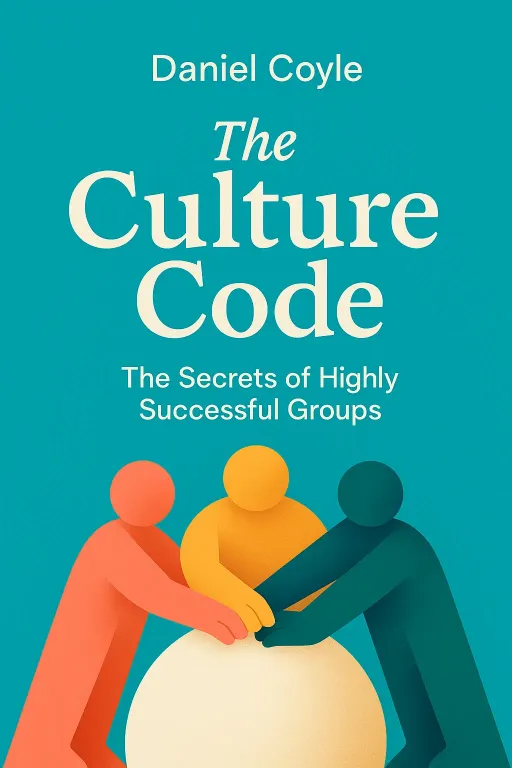
Nova: Even worse, Atlas. Far worse than a broken coffee machine, though that certainly doesn't help. We're talking about culture. Today, we're dissecting a powerful concept often attributed to management guru Peter Drucker, exploring what we're calling 'The Culture Eats Strategy Trap.' We're drawing insights from brilliant minds like Daniel Coyle, author of 'The Culture Code,' and the late Tony Hsieh, who built Zappos on the principles of 'Delivering Happiness.'
Atlas: So we're talking about culture, but not just the free-snack-and-foosball kind, right? Because I imagine a lot of our listeners, especially those building futures and navigating complex global landscapes, hear 'culture' and think 'HR initiative,' not 'strategic imperative.' What's the real distinction here?
Culture as the Invisible Operating System: Beyond 'Soft Skills'
SECTION
Nova: Exactly. That's the trap. Culture isn't just a soft skill; it's the invisible operating system of your entire organization. Think of it like this: your strategy is the incredible new software you've designed—sleek, powerful, game-changing. But if your operating system is ancient, buggy, riddled with viruses, or simply doesn't speak the right language, that amazing software is going to crash and burn. It won’t even launch.
Atlas: That makes perfect sense. So, the operating system dictates how everything else runs, even if you can't always see it. But what does that really look like in practice? Because for leaders driven by impact and progress, it can feel abstract to prioritize this 'invisible' thing over, say, a new product launch or a market expansion.
Nova: It’s incredibly concrete, even if it’s unseen. Let me paint a picture. Imagine a company, let's call it 'Synergy Global.' They have an absolutely brilliant strategy to enter a new, high-growth market. They’ve got the product, the funding, the talent. But their internal culture is a mess. There are deep-seated silos between departments, a pervasive fear of failure, and a leadership team that preaches collaboration but subtly rewards individual heroism.
Atlas: Oh, I've seen that movie. It rarely ends well.
Nova: Right? So, their strategy calls for rapid, cross-functional innovation to adapt to this new market. But because of the cultural operating system—the fear, the silos—teams are reluctant to share early-stage ideas, they blame each other when things go wrong, and no one takes risks. The brilliant strategy starts to crumble. Projects stall, key talent leaves, and eventually, a competitor with a less flashy strategy but a more cohesive culture swoops in and dominates. The strategy didn't fail because it was bad; it failed because the culture ate it alive.
Atlas: That's a powerful and frankly, a bit chilling, example. It sounds like the culture isn't just a backdrop; it's actively sabotaging the best intentions. But wait, looking at this from a high-stakes tech environment perspective, where speed and innovation are paramount, how do you convince someone to pause and 'design' culture when there's so much pressure to just execute? It feels almost like a luxury, not a necessity.
Nova: That’s the critical insight. It's not a luxury; it's foundational. As Daniel Coyle highlights in "The Culture Code," great cultures aren't accidental. They actively build connections through small, consistent signals. They foster safety, shared vulnerability, and a clear sense of purpose. So, when leaders ignore its deliberate design, they’re leaving their strategic ambitions vulnerable to these unseen forces and internal friction. It's like trying to win a Formula 1 race with a car that has a phenomenal engine but a chassis that's falling apart.
Atlas: So, the 'invisible operating system' isn't just about avoiding disaster; it's about enabling peak performance. It's the difference between a team that just and one that under pressure and innovation.
Engineering Belonging: The Tactical Playbook for High-Performing Teams
SECTION
Nova: Precisely. And that naturally leads us to the second key idea we need to talk about: how do we actually belonging? How do we move from understanding culture's power to actively shaping it into a high-performing, resilient collective?
Atlas: Yeah, because knowing it's important is one thing. Actually doing something about it, especially for global architects unifying diverse perspectives, that's where the rubber meets the road. "Engineering belonging" sounds like a very specific, almost scientific approach. What does that playbook look like?
Nova: It absolutely is. It's about intentional design. Think of Tony Hsieh, the visionary behind Zappos. He built a multi-billion dollar company on the radical idea that a focus on core values and employee happiness wasn't just about perks; it was a strategic framework for sustained growth and customer loyalty. Zappos codified their core values early on—things like 'Deliver WOW Through Service' and 'Build Open and Honest Relationships With Communication.' These weren't just words on a wall; they were lived, breathed, and actively hired and fired against.
Atlas: That's interesting. So, it wasn't just about making people; it was about operationalizing values. But how does that connect to Daniel Coyle's idea of safety and shared vulnerability? Because those feel a little softer than "delivering WOW."
Nova: They're two sides of the same coin, Atlas. Hsieh's core values created a framework for "what we stand for." Coyle's insights from "The Culture Code" tell us "how we actually behave when we stand for it." Great cultures foster psychological safety, where people feel safe enough to be vulnerable, to make mistakes, to ask for help without fear of reprisal. This shared vulnerability, underpinned by clear purpose, strengthens connections and builds trust. It's the small, consistent signals—a leader admitting a mistake, a team celebrating a learning experience from a failed project, not just the successes—that build this trust.
Atlas: So, it's not just about having values, but actively creating an environment where those values can be lived out, even when it's uncomfortable. For someone leading diverse, global teams, how do you even begin to identify core value that resonates across different cultures and priorities, let alone share a personal story illustrating it? It sounds simple, but it feels incredibly complex to execute.
Nova: It’s simpler than you might think, actually, because certain human values are universal: trust, respect, integrity, learning. The trick is to make them personal. The "Tiny Step" we advocate for, drawing from these insights, is to identify one core value you want to see more of in your team—maybe it's transparency, or courageous communication, or even just curiosity. Then, this week, share a personal story illustrating that value.
Atlas: Share a story? Not just a corporate anecdote? That feels… exposed. But I guess that's the vulnerability part, isn't it? It's about leadership modeling the behavior first.
Nova: Exactly. When a leader shares a story about a time they were vulnerable, or when they learned from a mistake, it sends a powerful signal. It says, "It's safe to be human here. It's safe to try, and even to fail." These aren't grand gestures; they're those small, consistent signals Coyle talks about. You're engineering connection, one story at a time. It transforms a group of individuals into a high-performing, resilient collective, because they feel seen, heard, and truly belong.
Synthesis & Takeaways
SECTION
Atlas: This has been incredibly insightful. It's clear that culture isn't some fluffy add-on; it's the very foundation upon which any successful strategy is built. And that engineering belonging, through things like shared values and psychological safety, isn't just about being a "nice" leader, but about building a truly resilient and innovative team.
Nova: Absolutely, Atlas. It's about recognizing that the 'invisible operating system' of your organization is either your greatest asset or your biggest liability. And the good news is, you have the power to engineer it. You can cultivate an environment where your best ideas can thrive and your team can truly connect.
Atlas: So, for our listeners who are navigating complexity, building futures, and genuinely driven by impact for their business, their family, and the world, what's one immediate, actionable step they can take this week to start engineering that belonging?
Nova: Here it is: Identify one core value you want to see more of in your team—whether it’s curiosity, integrity, or radical candor. Then, this week, share a personal story with your team that illustrates that value. Be vulnerable, be real. It’s a tiny step with a massive ripple effect.
Atlas: I love that. A tiny step, but a profoundly powerful one. Nova, this has been fantastic.
Nova: Always a pleasure, Atlas.
Nova: This is Aibrary. Congratulations on your growth!