The 'Culture Debt' Trap: Why Great Teams Outperform Great Products.
Golden Hook & Introduction
SECTION
Nova: Everyone talks about product-market fit. It's the holy grail, right? It's the metric founders obsess over, the one investors demand. But what if I told you that focusing solely on your product is actually the slowest, most exhausting way to build a truly great company?
Atlas: Whoa, Nova. That's a bold claim. Because for anyone building anything, whether it's a product, a team, or even just a new system, product-market fit feels like the absolute north star. You're saying we're looking in the wrong direction?
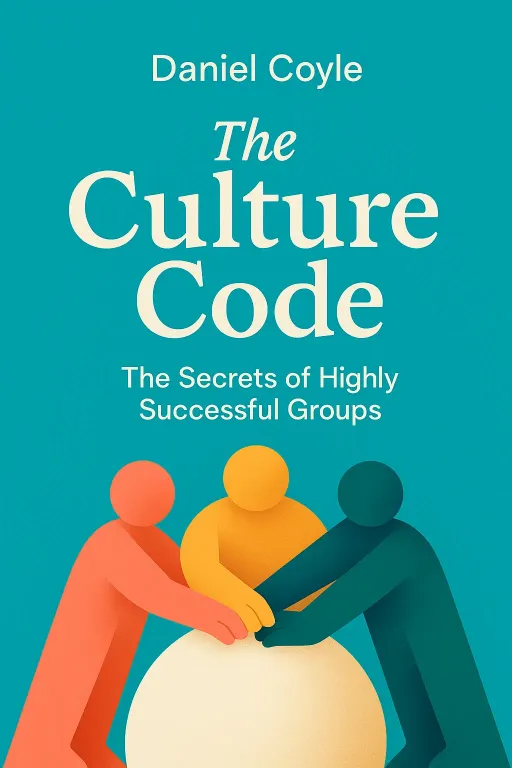
Nova: Not entirely the wrong direction, Atlas, but perhaps too narrowly. Because today we're cracking open two books that fundamentally upend that thinking: Daniel Coyle's "The Culture Code," written by a journalist who spent years embedded with some of the world's most successful teams, from Pixar to the San Antonio Spurs. And then we'll look at "Tribal Leadership" by Dave Logan, John King, and Halee Fischer-Wright, which comes from deep sociological research into how groups actually function at every level.
Atlas: So we're talking about the invisible architecture, the stuff you can't put on a spec sheet, but that dictates everything else.
Nova: Exactly. Today we'll dive deep into this from two crucial perspectives. First, we'll deconstruct the essential elements that build truly high-performing cultures, the very DNA of thriving teams. Then, we'll discuss how teams evolve through distinct 'tribal stages' and how you can intentionally guide that journey to build something lasting. It's about understanding that the core of our podcast today is really an exploration of why the invisible architecture of culture isn't just a 'nice to have,' but the most powerful, often overlooked, competitive advantage for any organization.
Atlas: I'm ready. Because for anyone trying to build something that scales, that lasts, the 'how' of culture feels like the biggest mystery. How do you even begin to design that?
The Hidden Code: Deconstructing High-Performing Cultures
SECTION
Nova: Well, Daniel Coyle, with his background in sports and talent development, offers a fascinating starting point in "The Culture Code." He argues that great cultures aren't built on charisma or grand gestures; they're built on three simple, yet profound, pillars: psychological safety, shared vulnerability, and collective purpose.
Atlas: Psychological safety. That phrase gets thrown around a lot. But what does it really? How does it manifest in a team, especially in a high-stakes environment where everyone's under pressure to deliver?
Nova: It’s the feeling that you can make a mistake, ask a "dumb" question, or offer a half-baked idea without being shamed, punished, or marginalized. Coyle gives this incredible example from Pixar. They have these "Braintrust" meetings, right? Where filmmakers show their unfinished work and receive brutal, honest feedback from their peers.
Atlas: Oh, I've heard about those. Sounds terrifying.
Nova: It terrifying, but it's precisely because they've cultivated such deep psychological safety that it works. Ed Catmull, one of Pixar’s founders, insisted that the Braintrust was. The feedback was never personal; it was always about making the better. So, the cause: they intentionally established a norm of radical candor combined with absolute personal respect. The process: filmmakers bring truly raw, vulnerable work, knowing their peers will tear it apart constructively. The outcome: films like "Toy Story" and "Up" that are not just hits, but cultural touchstones, because they were forged in an environment where imperfection was a pathway to perfection.
Atlas: Wow. That's actually really inspiring. Because for anyone who's ever tried to get candid feedback, it often feels like you're walking into a minefield. So, the safety isn't just about being "nice"; it's about creating the conditions for true, unvarnished truth to emerge, which is essential for innovation. But how do you that? For someone building systems, this sounds like a huge risk to efficiency. You’re talking about vulnerability when the clock is ticking, and deadlines are looming.
Nova: That’s the genius of it. Coyle argues these aren't soft skills; they are the hard wiring. They create an environment where talent thrives and innovation flourishes people aren’t wasting energy on self-preservation. It’s about signaling belonging, demonstrating care, and making it clear that mistakes are data points, not career-enders. It’s little things: eye contact, proximity, physical touch – things that build trust at an almost primal level. And that vulnerability you mentioned? It’s the second pillar. It’s admitting "I don't know," or "I made a mistake," or "I need help."
Atlas: Oh, I know that feeling. That’s going to resonate with anyone who struggles with letting go of control and empowering their team. It’s hard to delegate when you feel like you have to be the expert in everything. So, if safety lets you share your half-baked ideas, vulnerability lets you admit your weaknesses, and then purpose... that’s the north star, right?
Nova: Exactly. Purpose is the shared story, the 'why' behind what you do. It’s the collective belief that your work matters, that you’re part of something bigger than yourself. When you combine safety, vulnerability, and purpose, you get a team that’s cohesive, resilient, and incredibly effective. It's how you cultivate that deep "people-culture fit" that attracts talent who truly resonate with your mission, not just your product.
From Tribes to Titans: Navigating the Evolution of Team Identity
SECTION
Nova: And once you have that foundational safety, that ability to be vulnerable and align on purpose, the next layer is understanding how your team actually its collective identity, which is where "Tribal Leadership" by Logan, King, and Fischer-Wright comes in.
Atlas: Tribal stages? That sounds a bit esoteric. What does that mean for a real-world team trying to deliver value?
Nova: It’s actually incredibly practical. The authors identify five distinct 'tribal stages' that organizations and teams naturally move through, from apathy to shared vision. Think of them as cultural operating systems. Stage One is 'Life Sucks,' where individuals feel alienated and act out. Stage Two is 'My Life Sucks,' where people are passive-aggressive, gossip, and feel victimized.
Atlas: Right, like that one team where everyone just complains about management and nothing ever changes.
Nova: Exactly! Then you get to Stage Three, 'I Am Great' – a competitive, individualistic culture, where people strive for personal success, often at the expense of others. This is where you see a lot of brilliant individual contributors but not necessarily great teams.
Atlas: That makes sense, but it also sounds like a lot of high-performing, sales-driven organizations might actually in Stage Three, right? Where individual achievement is celebrated above all else. Is that necessarily bad if you're hitting your numbers?
Nova: It's not necessarily "bad" in the short term for individual output, but it's unsustainable and limiting for collective innovation and long-term growth. The authors argue that truly great organizations, the ones that innovate and scale effectively, operate at Stage Four: 'We Are Great.' Here, the focus shifts to the team's collective success. People collaborate, celebrate each other's wins, and genuinely believe in their shared capability.
Atlas: So, it's not just "I'm great," but "we're great." That sounds like the kind of environment where delegation actually works, where you can trust your team to take ownership. But how do you your current tribal stage without alienating your team? And what’s the smallest, most strategic 'nudge' you can make to start shifting that culture upwards, especially when you're focused on scaling impact?
Nova: That’s the key. It’s about listening to the language people use. Are they saying "I" a lot? Are they blaming others? Or are they saying "we" and focusing on shared victories? The tiny step is often about shifting that language and behavior. For example, a Stage Three "I Am Great" team leader might start explicitly recognizing collective efforts, not just individual ones. Or, if you’re in a Stage Two "My Life Sucks" environment, simply acknowledging the shared frustrations and then framing a path forward can be a powerful nudge.
Atlas: So, it's about moving beyond reactive firefighting, as you put it in your take, to proactive growth. Where your team's shared identity becomes your greatest asset.
Nova: Precisely. Understanding these stages allows you to be an intentional cultural architect, guiding your team towards a 'we-are-great' mentality, which is crucial for sustainable growth and scaling impact. It’s about building resilience not just in individuals, but in the entire collective, because you’re all operating from a place of shared purpose and belief.
Synthesis & Takeaways
SECTION
Nova: So, when you put Coyle’s "Culture Code" and "Tribal Leadership" together, you get a powerful framework. Coyle gives us the "what"—the essential elements of psychological safety, vulnerability, and purpose. And Logan, King, and Fischer-Wright give us the "how"—the understanding of cultural evolution and how to intentionally elevate your team’s collective identity.
Atlas: It’s like saying: first, build a strong foundation where people feel safe enough to be real. Then, understand the natural growth stages of your collective identity, and actively guide them towards a shared sense of greatness. So, it's not just about hiring smart people; it's about crafting the environment where their collective intelligence can truly flourish and scale.
Nova: Absolutely. Neglecting your culture creates 'culture debt.' It’s that invisible drag on your organization that makes it harder to attract top talent, innovate, and scale effectively. It's a long-term cost that far outweighs any short-term perceived efficiency gains.
Atlas: For anyone trying to build something lasting and meaningful, something that scales beyond their own individual effort, it sounds like culture isn't a soft skill; it's the ultimate strategic asset. It's the system that supports all other systems.
Nova: It truly is. And the beauty is, you can start small. This week, identify one small ritual or communication pattern in your team that either fosters or hinders psychological safety. Then, gently nudge it towards safety. Is it how feedback is given? How mistakes are discussed? How wins are celebrated?
Atlas: And as you do that, ask yourself, what 'tribal stage' are you nudging it towards? What kind of collective identity are you truly cultivating? Are you moving from 'my life sucks' to 'we are great'? It's a profound question for any leader.
Nova: It’s about being an architect of experience, not just product.
Nova: This is Aibrary. Congratulations on your growth!