The Culture Code: Building UI That Connects Beyond the Screen
Golden Hook & Introduction
SECTION
Nova: Most UI design aims for a perfect individual experience. We obsess over the single user's journey, the frictionless path, the intuitive click. But what if that 'perfect' journey is actually making your users feel more isolated, not less? What if our focus on the individual is inadvertently neglecting something far more fundamental to human nature?
Atlas: Whoa, hold on. Isolated? That's a bold claim. We spend so much energy trying to optimize for clarity and ease of use. How could making something individually perfect actually push people apart? And what are we talking about here, Nova? What book are we diving into today that dares to challenge this core tenet of design?
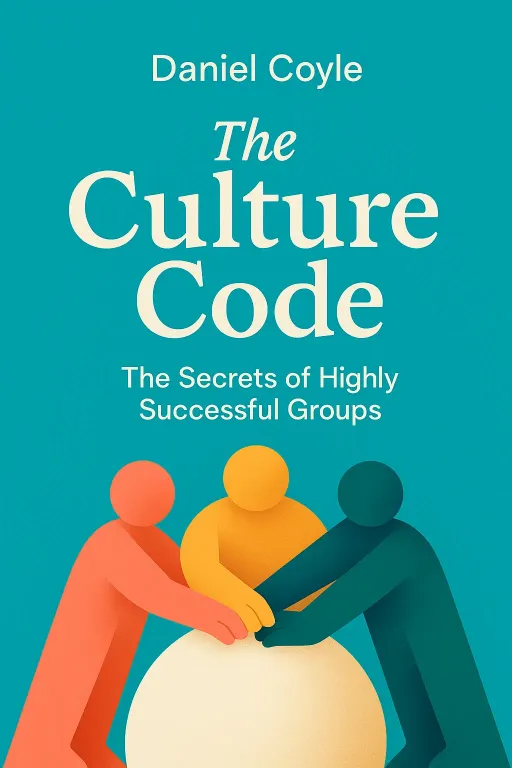
Nova: Today, we're cracking open by Daniel Coyle. And what's fascinating about Coyle is his background. He didn't start by studying apps or websites. He immersed himself in wildly diverse, high-performing groups – from the legendary San Antonio Spurs basketball team to elite Navy SEAL units and even a notorious jewel heist gang. He wasn't looking for individual genius; he was dissecting what made these groups, what fostered their collective intelligence and deep bonds. His insights, born from these real-world, high-stakes environments, offer an unexpectedly powerful lens for us UI designers.
Atlas: Okay, so he's looking at the DNA of successful, not just successful individuals. That's an interesting pivot. As designers, we’re often so focused on the one person navigating our interface. You're saying we need to think beyond the screen, beyond the single user, and start designing for the?
Nova: Exactly! The cold, hard fact is, you design interfaces for individuals, yes. Good UI often focuses on a single user's journey. But people are social creatures. We crave belonging, shared identity, and connection. Neglecting that community aspect? That's what can make your designs feel isolated, not sticky. Coyle identifies three key skills of highly successful groups: building safety, sharing vulnerability, and establishing purpose. And these aren't just for sports teams; they're the bedrock for building digital communities that truly thrive.
Deep Dive into Core Topic: Cultivating Safety in UI
SECTION
Atlas: Safety, vulnerability, purpose. Those sound like soft skills, almost psychological. But how does a button or a menu or even an entire user flow create 'safety' in a digital context? Isn't that more about human-to-human interaction, in person? For a designer, what are the tangible elements? I'm trying to see the logic of it.
Nova: That's a brilliant question, Atlas, and it gets right to the heart of why Coyle's work is so powerful here. When he talks about 'building safety,' he's describing an environment where people feel secure enough to engage, to experiment, to share, and crucially, to make mistakes without fear of judgment or severe negative consequences. In UI, this translates directly to psychological safety. Think about it: if a user is constantly worried about hitting the wrong button, deleting something irreversible, or being exposed in some way, they're not going to fully engage.
Atlas: So, it's like a well-lit path versus a dark alley. If I'm walking down a dark alley, I'm not feeling safe, I'm not exploring, I'm just trying to get out.
Nova: Precisely! So, in UI, tangible elements of safety include crystal-clear feedback – a button that changes color when clicked, a loading spinner that tells you something is happening, a clear confirmation message. It's about forgiving interactions: providing "undo" options, autosaving progress, or offering clear warnings before destructive actions.
Atlas: The "Are you sure you want to delete this?" dialog box has a new layer of meaning now. It’s not just about preventing accidental data loss; it’s about user psychological safety.
Nova: Absolutely! And it extends to transparent privacy policies, robust security measures that are communicated clearly, and effective moderation guidelines within community features. When users know the rules, understand their data is protected, and feel respected within the digital space, that builds a foundational sense of safety. It's about predictability, clarity, and control. When you design with that in mind, you're not just making an efficient interface; you're creating a secure environment where users can relax and truly participate. It's about reducing cognitive load caused by anxiety.
Atlas: I can see that. That makes sense. Designers often aim for 'delight,' but before you get to delight, you need 'don't make me anxious.' And for someone who appreciates logic and order, knowing what to expect, that predictability, is inherently safe.
Nova: Exactly. It's the silent handshake that says, "You're okay here. We've got your back." Without that, no amount of flashy animations or clever micro-interactions will get users to truly invest themselves. They'll just be passing through.
Deep Dive into Core Topic: Encouraging Vulnerability & Shared Purpose
SECTION
Nova: And once that safety is established, Coyle says the next crucial skill for successful groups is encouraging what he calls 'sharing vulnerability.' Now, this isn't about oversharing your deepest secrets in an app! It's about users feeling comfortable enough to be authentic, to ask for help, to contribute their unique perspective, or even to admit they don't know something.
Atlas: Vulnerability in UI? That sounds incredibly risky. How do we balance encouraging authenticity without opening the floodgates to negativity, trolls, or making users feel exposed in a way that’s counterproductive? For a designer, especially one who values a harmonious, logical system, that sounds like chaos waiting to happen. And how does that connect to a 'shared purpose'?
Nova: That's a crucial distinction, Atlas. It's not about forced vulnerability. It’s about creating for it within a safe space, and linking it directly to a shared goal. Think about it: why do people share their struggles in online forums or ask for advice in a community? Because they believe others can help, and because there's a collective aim—whether it's learning a new skill, solving a problem, or achieving a shared objective.
Atlas: So, the UI isn't vulnerability, but it when it's beneficial for the group's objective. That makes a lot more sense. It's about providing the right channels and contexts.
Nova: Precisely. UI can facilitate this through well-designed forums where contributions are valued and constructive feedback is encouraged. Think about collaborative tools where users co-create, or peer support features where asking for help is an integral and celebrated part of the process. Even profile customization that allows for authentic, nuanced self-expression, rather than just a sterile data sheet. The key is that this vulnerability is in service of something larger. And that "something larger" is Coyle's third pillar: establishing purpose.
Atlas: Ah, the missing link! I was wondering how these pieces connect. So, shared vulnerability often stems from a shared goal or mission. The 'why' behind the interaction.
Nova: Exactly. UI can articulate this purpose so clearly that it becomes a rallying cry. Whether it's "Join us to master a new skill," "Contribute to this open-source project," or "Connect with like-minded individuals to achieve X," when users understand they're there and they're collectively working towards, vulnerability becomes a strength. Asking a "dumb" question isn't a sign of weakness; it's a step towards collective learning. Offering a critique isn't negativity; it's refining a shared output.
Atlas: So, it's like a well-structured design sprint. Everyone knows the goal, they feel safe to throw out wild ideas, and even critique them honestly, because they're all working towards that single, shared outcome. The UI essentially becomes the framework for that shared purpose.
Nova: You've got it! Imagine a learning platform where users are explicitly told, "Your questions help everyone learn faster." Or a creative community where the stated purpose is "To inspire and be inspired." These aren't just taglines; they're design principles that inform every interaction, every button, every feedback loop. They cultivate a sense of 'we' rather than just 'me.' This moves UI beyond just individual task completion to fostering a genuine sense of belonging and collective intelligence.
Synthesis & Takeaways
SECTION
Atlas: This is fascinating, Nova. You’re essentially saying that by designing for Coyle’s three pillars—safety, vulnerability, and purpose—we're not just making interfaces, we're crafting digital environments that tap into our deeply human need for connection and belonging. For us designers, always chasing that 'aha!' moment of beauty and logic, how does embracing this 'culture code' elevate our craft beyond just pixels and perfect user flows?
Nova: It elevates our craft profoundly, Atlas. Instead of just optimizing for individual efficiency, we start designing for human flourishing. We move from mere utility to profound meaning. When you build safety, you create trust. When you encourage vulnerability, you foster authentic engagement. And when you establish a clear, shared purpose, you ignite collective action. The result isn't just a 'sticky' app; it's a thriving community, a place where people feel seen, valued, and connected. We're not just building interfaces; we're building digital homes.
Atlas: Digital homes. I like that. It resonates with that intrinsic drive to explore and connect, to build order and find beauty not just in the individual element, but in the harmony of the whole. So, the tiny step Coyle suggests for our listeners, for us designers, is to look at a current feature in our design and ask: How can I redesign this to encourage greater user connection, specifically through safety, vulnerability, or a shared sense of purpose? It's about designing for the human spirit, not just the human hand.
Nova: Precisely. It’s a powerful lens to re-evaluate our work. And when you start thinking that way, the possibilities for truly impactful, meaningful UI design are endless. It's about building bridges, not just screens.
Atlas: Bridges, not just screens. That’s a beautiful way to put it.
Nova: This is Aibrary. Congratulations on your growth!