Stop Reacting, Start Shaping: The Guide to Intentional Cultural Impact.
Golden Hook & Introduction
SECTION
Nova: Alright, Atlas, quick game for you. Five words. Describe "culture." Go.
Atlas: Oh, man. Five words? Okay, um... "Invisible rules, awkward silences, family dinners."
Nova: Oh, I love that! That's so relatable. Mine would be: "Software for human connection, unlocked."
Atlas: Software for human connection... That's a deep dive right there. Because today we're talking about how culture isn't just a backdrop, it's the actual operating system for every group, right? From our families to the biggest nations.
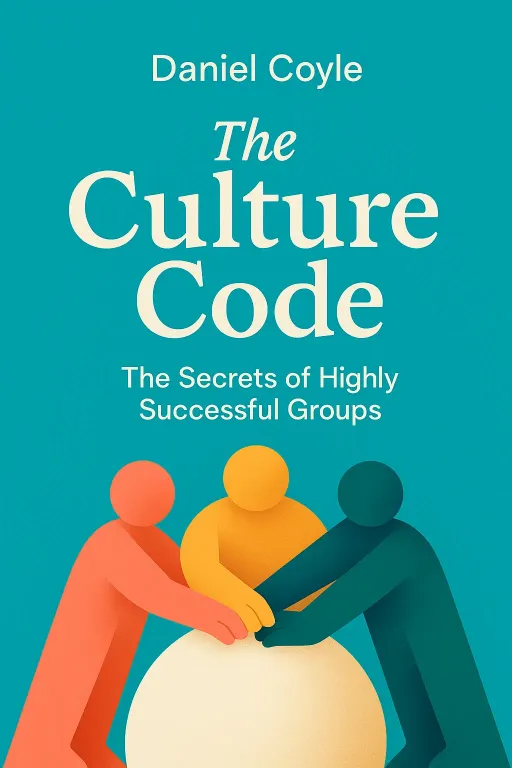
Nova: Exactly. And it’s an operating system we can actually and, rather than just reacting to its glitches. We're drawing insights from two phenomenal books that really illuminate this. First, 'The Culture Code' by Daniel Coyle. He's a brilliant journalist who spent years observing high-performing teams, from the legendary improv troupe Upright Citizens Brigade to the Navy SEALs, to figure out what truly makes them cohesive and successful.
Atlas: And then there's 'Sapiens: A Brief History of Humankind' by Yuval Noah Harari. His book isn't just history; it's this mind-bending journey through how our species came to dominate the planet, largely through our unique ability to believe in shared stories and abstract concepts. Which, when you think about it, is the ultimate cultural operating system.
Nova: Exactly. And our first core topic is diving into exactly that: how do we intentional culture? How do we move from just having a group of people to having a truly thriving, connected community?
The Operating System of Connection: Building Intentional Culture
SECTION
Atlas: So, you're saying we can actually culture? Because my instinct as, you know, a planner, is that culture just... happens. Like the air we breathe.
Nova: That's the common misconception, isn't it? But Coyle argues that while culture can certainly evolve organically, the most successful groups actively cultivate it. He distills it into three core skills: Build Safety, Share Vulnerability, and Establish Purpose. And they're not soft skills, Atlas. They're the bedrock of high performance.
Atlas: Okay, 'Build Safety' makes sense. You want people to feel secure. But 'Share Vulnerability'? That sounds a bit out there for, say, a corporate environment, or even a family where you’re trying to keep things stable. Isn't that just inviting chaos?
Nova: It's counterintuitive, but it's powerful. Coyle shares a fantastic example from a struggling tech company. The CEO was leading an all-hands meeting, and things were going poorly. Instead of putting on a brave face or blaming others, he stood up and said, "Look, I screwed up. I made some bad calls, and we're in a tough spot because of it. I need your help."
Atlas: Wow. That's a bold move. I can imagine the silence in the room.
Nova: Exactly. But here's what happened: instead of a blame game, the room shifted. People started offering solutions, admitting their own challenges, and a new sense of trust emerged. The cause was the CEO's willingness to expose his own fallibility. The process was that raw, honest admission. And the outcome? It created psychological safety, an environment where people felt safe enough to take risks, admit mistakes, and genuinely collaborate without fear of repercussion. That vulnerability actually the group, making it more resilient.
Atlas: That’s actually really inspiring. It’s like, you can plan all you want, but sometimes the most impactful moments come from letting go of that control and just being human. So this isn't about being 'nice' or avoiding conflict, it's about creating a space where people can be their authentic selves, even their messy selves.
Nova: Precisely. It's about authentic connection. And that leads to the third skill: Establish Purpose. It's not just about a mission statement on a wall. It's about a shared narrative, a reason to exist that everyone can rally behind. For the Navy SEALs, it’s not just 'fight for our country,' it’s the intense, almost spiritual bond they forge through shared hardship and a crystal-clear understanding of their collective mission.
Atlas: So, for our listeners who are navigating their own groups, whether it's a family trying to establish new traditions or a small team at work, it’s about consciously creating these spaces where vulnerability is okay, and everyone knows why they're there.
Nova: Exactly. It's about designing those subtle cues and interactions that signal, "You belong here, you are safe here, and we're all in this together for a clear reason."
The Invisible Threads: How Shared Fictions Shape Our World
SECTION
Nova: And while Coyle gives us the roadmap for to build culture in our immediate groups, Harari takes us back to the almost cosmic 'why.' Because before we had Pixar or SEALs, we had something much more fundamental that allowed humans to cooperate on a scale no other species ever has.
Atlas: That makes me wonder, what's that fundamental thing? Are we talking about, like, fire? Or language?
Nova: Even deeper than that. Harari's groundbreaking insight is our unique capacity for believing in "shared fictions" or "collective myths." These aren't lies; they're stories we all agree to believe, and they enable large-scale cooperation among strangers. Think about it: money, nations, laws, religions, even corporations – none of these exist physically. They're all powerful concepts we've collectively invented and agreed upon.
Atlas: Wait, so you're saying our entire society is built on stories we tell ourselves? That sounds a bit... fragile, doesn't it? Like if everyone suddenly decided money was just pretty paper, the whole thing would collapse.
Nova: That's the brilliance and the fragility of it, isn't it? Harari explains how early humans, living in small bands, could only cooperate with about 150 individuals – the number you could know personally. But once we started telling shared stories about gods, or tribes, or later, kings and empires, suddenly millions of strangers could coordinate their actions, build cities, and create complex societies. The cause was the cognitive revolution, the ability to think abstractly. The process was the creation and propagation of these shared narratives. And the outcome was an unprecedented level of human cooperation and dominance.
Atlas: That’s mind-blowing. So, if Coyle is showing us how to optimize our current operating system, Harari is explaining how we even got an operating system in the first place.
Nova: Precisely! And it connects directly to our lives today. A company's mission statement, a family's core values, a community's shared traditions – these are all modern iterations of 'shared fictions.' They give us a common language, a sense of belonging, and a framework for how to interact. If your family has a shared story about resilience, or generosity, or adventure, that becomes a powerful cultural operating system for them.
Atlas: So, for someone who values stability and harmony, like our listener profile, understanding these 'invisible threads' is crucial. It's not just about managing day-to-day interactions; it's about recognizing the deeper narratives that bind us, or sometimes, pull us apart.
Nova: Absolutely. It helps us see that when a group struggles, it's often because their shared fictions are either unclear, contradictory, or simply no longer serving their best interests. It makes you realize the power you have in shaping those narratives, whether at home or at work.
Synthesis & Takeaways
SECTION
Nova: So, when we combine Coyle's tactical blueprint for building safety, vulnerability, and purpose with Harari's profound understanding of how shared fictions create our reality, we get a truly holistic view of culture. It's not just something you observe; it's something you actively participate in creating and maintaining.
Atlas: That’s a huge shift in perspective. It means we're not just passengers on the cultural train; we're engineers, or at least active contributors to its design and direction. It speaks to that proactive nature of our listener, the planner, the nurturer.
Nova: Exactly. And it empowers you to be intentional. Instead of just reacting to the unspoken rules or prevailing moods of a group, you can start to identify them, question them, and consciously shape them. It's about moving from being a passive recipient of culture to an active architect of it.
Atlas: So what's a tiny step our listeners can take today? Because this is big stuff.
Nova: Start small. Observe a group you're part of today—your family, your team, even your circle of friends. Identify one shared belief or unspoken rule. It could be something like, 'we always avoid conflict,' or 'we celebrate every small win.' Then, just ask yourself: 'Is this belief truly serving the group's best interests? Is it fostering connection and growth, or is it holding us back?'
Atlas: That’s a fantastic challenge. It’s about peeling back those layers and seeing the operating system at work. If we can do that, we can start to debug it, or even upgrade it.
Nova: And that's where the real magic happens. By understanding culture as this dynamic, shapeable force, you gain incredible agency. You move beyond just reacting, and you start actively shaping your environments for deeper connection and greater resilience.
Atlas: That’s a powerful thought to leave our listeners with. What an illuminating conversation.
Nova: Indeed. For those of you who want to dive deeper, we highly recommend 'The Culture Code' by Daniel Coyle and 'Sapiens' by Yuval Noah Harari. They are truly foundational texts for understanding the invisible forces that shape our lives.
Atlas: And we'd love to hear your thoughts. What shared beliefs or unspoken rules have you observed in your own groups? Share your insights with the Aibrary community.
Nova: This is Aibrary. Congratulations on your growth!