Stop Drifting, Start Shaping: How to Influence Your Cultural Environment
Golden Hook & Introduction
SECTION
Nova: Atlas, quick question, what's your go-to strategy for influencing, say, the office thermostat setting?
Atlas: Oh, Nova, please. My strategy is a silent prayer and a strategically placed cardigan. Influencing culture? That's for CEOs and cult leaders, not us mere mortals battling the climate control gods.
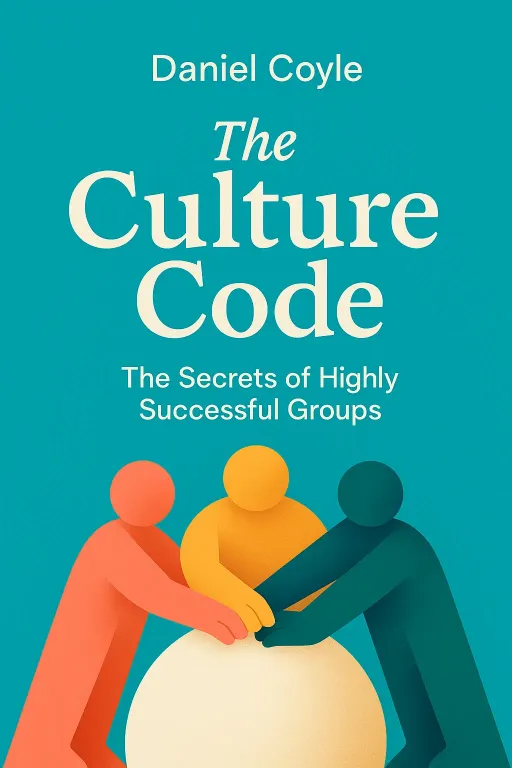
Nova: Ah, but that's exactly where we get it wrong! Today, we're flipping that script. We're talking about how to 'Stop Drifting, Start Shaping: How to Influence Your Cultural Environment.' And we're leaning on some brilliant minds for this: Daniel Coyle's seminal work,, and Everett Rogers' groundbreaking.
Atlas: Wait, so we're talking about actually the invisible rules? Like, not just surviving them?
Nova: Exactly! Coyle, for instance, didn't just study corporate boardrooms; he delved into military Special Forces units and championship sports teams to see what truly makes a high-performing culture. He came from a background as a sports journalist and writer, and his curiosity about what made certain groups excel in high-stakes environments led him to these profound insights. And Rogers literally mapped out how new ideas spread, from farming techniques to fashion trends, essentially inventing the field of diffusion studies. These aren't abstract theories; they're blueprints for how things actually work.
Atlas: That’s a great way to put it, blueprints. So, the cold fact, as you put it in our notes, is that culture isn't just a backdrop; it's a dynamic force we can influence. That feels a bit… counterintuitive for a lot of us.
Deep Dive into Core Topic 1: Culture as an Influencable Force & Case Study
SECTION
Nova: It absolutely does, Atlas. We often perceive culture as this monolithic, unchangeable entity, right? Like the weather—you can complain about it, but you can't change it. But that's a fundamental misconception. Think of culture more like a garden. It grows, it changes, and crucially, it can be tended. It's not a static entity; it's a living system of shared behaviors, beliefs, and rituals.
Atlas: Okay, but how can one person, or even a small group, really shift something so ingrained? For our listeners who are managing high-pressure teams, or trying to foster a better environment in their community group, that might feel impossible.
Nova: That’s a fantastic question, and it's precisely what Coyle’s unpacks. He identifies three key pillars: building safety, sharing vulnerability, and establishing purpose. The first, psychological safety, is the bedrock. It's the feeling that you can take risks, make mistakes, and express ideas without fear of punishment or humiliation.
Atlas: Oh, I like that. So it's not about being the smartest person in the room, it's about feeling safe enough to smart, even if it means being wrong first.
Nova: Exactly! And one of the most compelling examples of this comes from Google's Project Aristotle. They spent years trying to figure out what made their most effective teams effective. They analyzed everything: personality types, skill sets, even how often people ate lunch together. They hypothesized it was about getting the perfect mix of individuals.
Atlas: I can see how that would be the assumption. Like, if you put all the 'A' players together, you'll get an 'A+' team.
Nova: Right? But what they found was astonishingly simple, yet profound. The number one predictor of team success wasn't who was on the team, but the team interacted. Specifically, it was the level of psychological safety. Teams with high psychological safety were more willing to admit mistakes, share ideas, and take risks. They felt comfortable enough to challenge each other respectfully, to ask for help, and to innovate.
Atlas: Wow, that’s kind of heartbreaking for anyone who thought they just needed to hire more rockstars. So, what does that actually look like on the ground? Like, for someone in a typical team, what's a small signal they could send to build that safety?
Nova: It’s often in the micro-moments. It’s making eye contact when someone speaks, actively listening instead of waiting to speak, asking "What are your thoughts on this?" especially to quieter members, or even just explicitly acknowledging vulnerability. Saying, "I messed that up, here's what I learned" creates space for others to do the same. These tiny signals accumulate to create a feeling of belonging and trust.
Deep Dive into Core Topic 2: The Mechanics of Cultural Influence: Diffusion of Innovations
SECTION
Nova: And that naturally leads us to the second key idea, which is about how these new, safer behaviors actually. Because it's one thing to create a safe pocket; it's another for it to become the norm across an entire organization or community. This is where Everett Rogers and comes in.
Atlas: I’m curious, because I imagine a lot of our listeners might feel like they're constantly fighting upstream against established ways of doing things. How do you actually get an idea, or a new way of behaving, to catch on?
Nova: Rogers, through decades of research, mapped out how innovations spread through social systems. He identified five stages: knowledge, persuasion, decision, implementation, and confirmation. But what's crucial is understanding the different adopter categories: innovators, early adopters, early majority, late majority, and laggards.
Atlas: So you're saying it's not just about having a good idea, it's about who picks it up first and how they show it off?
Nova: Exactly! Think about his classic study on the adoption of hybrid corn seeds in rural Iowa in the 1930s. Farmers were initially skeptical of this new, unproven seed. It was a risk. But a few innovators, often those with more resources and a higher tolerance for risk, tried it.
Atlas: Oh, I've been there. My dad was always the first on the block to try some new gadget, usually with mixed results.
Nova: Right, and in this case, the results were good. Their neighbors, the 'early adopters,' started to observe. They saw the innovators getting better yields. They talked to them, asked questions. It wasn't about a government agency telling them to change; it was about peer-to-peer influence and visible success.
Atlas: That makes sense. It's like, you don't just spring a new idea on people and expect them to adopt it. You need champions, and you need social proof. But how do you apply that to something less tangible, like a new team ritual or a shift in communication style?
Nova: It’s the same principle. If you want to introduce a new ritual—say, starting every meeting with a "win of the week" to build positivity—you don't just mandate it. You find your innovators and early adopters within the team. Who's already enthusiastic about team morale? Who's willing to try new things? You get them on board first. Let them champion it, let their enthusiasm and the positive outcomes be visible. Others will then see the benefit, be persuaded, and eventually adopt it. It's about creating a ripple effect, not a top-down mandate.
Atlas: That's a perfect example. It shows how the Coyle framework of building safety creates the fertile ground, and then Rogers' framework of diffusion helps you strategically plant and nurture the new behaviors. It’s about finding the "early adopters" of psychological safety, for instance, and letting their success be visible.
Synthesis & Takeaways
SECTION
Nova: So, bringing it all together, what we learn from Coyle and Rogers is that influencing culture isn't about grand, sweeping gestures or waiting for someone else to lead. It's about understanding these fundamental mechanics. It's about consistent, small actions that build safety and strategically spread new norms.
Atlas: So basically you're saying, you don't have to be the CEO to change the culture. You just have to understand the science of how it works and start with those tiny steps.
Nova: Exactly! It's about moving from passively observing to actively shaping. The tiny step for today is to observe a group you're part of. Identify one small ritual or shared behavior. Think about how it started. Was it intentional? Could it be nudged?
Atlas: I'm curious, I've been thinking about this. This isn't just about work, is it? This applies to families, friend groups, even online communities.
Nova: Absolutely! The principles are universal. Whether it's a family dinner tradition, a neighborhood watch group, or how an online community moderates itself, these dynamics of safety, vulnerability, purpose, and the stages of adoption are always at play. It's about understanding the human dynamics.
Atlas: That's actually really inspiring. It gives you a sense of agency where you might have felt powerless. And honestly, that sounds like a much more fulfilling way to live, to be an active participant rather than just a bystander.
Nova: That's the goal. To empower our listeners to be intentional architects of their environments. It’s realizing that culture isn't something that happens you, it's something you're always, even unknowingly, creating.
Nova: This is Aibrary. Congratulations on your growth!