Stop Chasing Metrics, Start Crafting Culture: The Guide to Impactful Growth.
Golden Hook & Introduction
SECTION
Nova: Alright, Atlas, quick game: rapid-fire word association. I'll give you a word, you give me the first thing that pops into your head. Ready?
Atlas: Oh, I love these! My brain is prepped for spontaneous brilliance. Hit me.
Nova: First word: "Culture."
Atlas: Foundation. Non-negotiable.
Nova: Good, good. Next: "Metrics."
Atlas: Numbers. Sometimes misleading. A necessary evil, but often a distraction.
Nova: Ooh, spicy. Last one: "Impact."
Atlas: Purpose. Legacy. The reason we get out of bed.
Nova: Fantastic. You just perfectly summarized the essence of what we're diving into today, inspired by some powerful thinking on how to stop chasing those often-misleading metrics and start crafting a culture that actually drives that deep impact you just mentioned.
Atlas: That makes sense. It’s like we're constantly told to optimize, to hit targets, but then you wonder if you're building a house of cards.
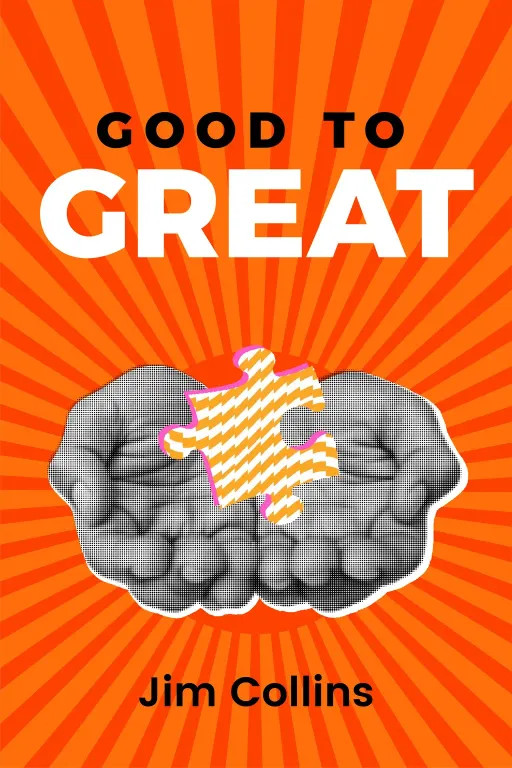
Nova: Exactly. And our guiding light today comes from the insights in a brilliant piece of work, 'Stop Chasing Metrics, Start Crafting Culture: The Guide to Impactful Growth.' It’s a compelling argument that sustainable impact isn't just about a great product, but it's forged in the crucible of your company culture. And it draws heavily from foundational works like Jim Collins' 'Good to Great.'
Atlas: Ah, Collins! That book was a game-changer. I remember it getting massive acclaim because it wasn't just another business guru's opinion; it was based on five years of rigorous research, meticulously analyzing companies that truly made the leap from good to sustained greatness. It basically gave us a scientific approach to organizational excellence.
Nova: Absolutely. It wasn't just anecdotes; it was data. And one of his most profound, yet often overlooked, insights is precisely where we need to start.
Deep Dive into Core Topic 1: The Primacy of 'Who' Over 'What'
SECTION
Nova: Collins famously argued that truly great companies focus intensely on "who" before "what." It’s about getting the right people on the bus, and the wrong people off the bus, before you even chart your destination.
Atlas: That sounds rough, but I get it. For a lot of our listeners, the 'Impact Architects' and 'Resilient Builders' out there, the immediate instinct is often to focus on the 'what' – the product, the strategy, the next big innovation. That's the tangible stuff. What happens if you get the 'who' wrong, even with a brilliant 'what'?
Nova: Well, imagine a company with an absolutely revolutionary product, truly world-changing potential. But the team developing it is riddled with internal politics, miscommunication, and a fundamental misalignment of values. They have the 'what' of the century, but the 'who' is fragmented.
Atlas: Oh, I’ve been there. It’s like trying to launch a rocket with a crew that keeps sabotaging each other's controls. The rocket might be perfectly designed, but it’s never leaving the launchpad.
Nova: Precisely. Collins' research showed that companies that prioritized people first, those who meticulously built a cohesive team rooted in shared values, were far more adaptable. When the market shifted, when challenges arose, these 'right people' could pivot, innovate, and problem-solve together, even if their initial 'what' wasn't perfect.
Atlas: So, you're saying that a stellar team can overcome a mediocre strategy, but a mediocre team will sink even the best strategy?
Nova: In essence, yes. It's about resilience. A strong culture, built with the right people, is like a highly adaptive organism. It can withstand shocks, learn, and evolve. A culture built on individual brilliance without cohesion is brittle. It might shine brightly for a moment, but it’ll shatter under pressure.
Atlas: That makes me wonder about the cost. For a founder or a leader who's trying to scale quickly, building that perfect 'who' first can feel like a slow, expensive process. Isn't there a temptation to just hire fast and fix it later?
Nova: Absolutely, that temptation is immense, especially in high-growth environments. But the hidden cost of hiring the 'wrong people' is far greater in the long run. It's not just about salary; it's about the erosion of morale, the drag on productivity, the time spent managing conflict, and the opportunity cost of what a truly aligned team could have achieved. It's a drag on your entire mission for positive change.
Atlas: So the 'who' isn't just about competence; it's about cultural fit and shared drive, especially for those trying to build a better world.
Deep Dive into Core Topic 2: Cultivating Trust Through Safety, Vulnerability, and Purpose
SECTION
Nova: And that naturally leads us to the second key idea, which details you take those 'right people' and forge them into an unstoppable collective. Daniel Coyle, in 'The Culture Code,' dives deep into the specific skills that build cohesive, high-performing groups. He identifies three: building safety, sharing vulnerability, and establishing purpose.
Atlas: Building safety, sharing vulnerability, establishing purpose. That’s a great framework. For our 'conscious leadership' listeners, who are trying to build culture intentionally from day one, those sound like abstract ideals. How do those actually manifest in the day-to-day?
Nova: Coyle reveals that it’s all about 'micro-moments.' Building safety, for instance, isn't about grand gestures. It's about consistent signals that say, 'You are safe here.' It’s the leader who listens intently without interrupting, the team member who offers help before being asked, the quick eye contact that acknowledges someone's presence. These small signals create psychological safety, making people feel secure enough to take risks and speak up.
Atlas: That’s actually really inspiring. So it’s not just a policy; it’s a thousand tiny interactions that say, 'We've got your back.'
Nova: Exactly. And sharing vulnerability is the next layer. This is where teams truly bond. It’s the leader admitting they don't have all the answers, or a team member confessing a mistake so others can learn. It’s not about weakness; it’s about authenticity. Coyle highlights that vulnerability signals trust, and it invites others to reciprocate, deepening those bonds.
Atlas: But wait, for a 'resilient builder,' someone who’s used to projecting strength and certainty, how do you share vulnerability without feeling like you're undermining your own authority or losing face?
Nova: That’s a critical question. It’s not about airing all your personal insecurities. It's strategic vulnerability. It’s saying, 'I'm struggling with this problem, and I need your collective brains to solve it.' Or, 'I made a mistake on this, and here's what I learned.' It shows you’re human, you trust your team, and you value their input. It actually authority, because it fosters ownership and collaboration, rather than relying on a top-down directive.
Atlas: I can see that. It shifts the dynamic from 'I'm the boss with all the answers' to 'We're a team solving this together.'
Nova: And finally, establishing purpose. This is where Nova's Take comes in – a conscious, intentional culture is your most powerful differentiator. When everyone understands they're doing what they're doing, and that 'why' is connected to a larger, meaningful impact, those micro-moments of safety and vulnerability become incredibly potent. Purpose provides the fuel and the direction, turning shared values into consistent action and enduring success.
Atlas: So it’s not enough to just have a mission statement on the wall. It has to be lived, breathed, and reinforced through every interaction. And it’s that deep, shared purpose that allows people to be vulnerable and safe, because they know they're all rowing in the same direction towards something truly meaningful.
Synthesis & Takeaways
SECTION
Nova: Precisely. What emerges from all of this is a powerful truth: the metrics we often chase are merely lagging indicators. The real drivers of sustainable impact, the things that truly move the needle for any 'Impact Architect' or 'Culture Weaver,' are the people you choose and the culture you meticulously build together. It’s about understanding that a thriving human system is the ultimate engine for positive change.
Atlas: That’s a great way to put it. It’s about shifting our focus from the scoreboard to the team huddle. For anyone out there who feels like they’re constantly pushing against an invisible wall, it might be time to look inwards, at the very fabric of their team's culture.
Nova: Exactly. And if you're wondering where to start, here's a tiny, actionable step: identify one core value your team champions – maybe it's integrity, innovation, or empathy – then share a recent story where that value was truly lived out. It reinforces your cultural bedrock, making it tangible and real for everyone.
Atlas: I love that. It’s not about inventing new values, but celebrating the ones that already exist within your team. For all the 'Resilient Builders' listening, this isn't just about being 'nice'; it's about building a future-proof foundation for your impactful work.
Nova: It’s the difference between a fleeting success and a lasting legacy.
Atlas: Absolutely. This is Aibrary. Congratulations on your growth!